By Dragutin Nenezic
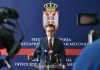
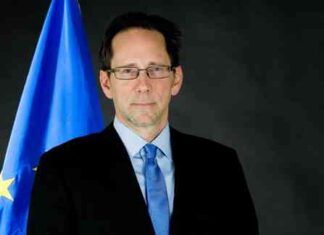
A few weeks ago, I wrote a text for this portal about something I called „Kurti’s Doctrine“, and I hoped that I would not have to write about it again. However, I could not resist commenting briefly on the interview that Kurti’s deputy and head of the negotiating team, Besnik Bislimi, gave for this portal on March 17th, given that it shows the potential destructiveness of „Kurti’s doctrine“, as well as the impotence of Belgrade’s current Kosovo policy. Shortly afterward, on the other side of the administrative line, it became clear that Belgrade’s presidential and parliamentary elections would not be held in Kosovo and Metohija, so in less than a week, Bislimi’s interview confirmed its importance for comprehending both „Kurti’s doctrine“ and the possible outcomes of the Brussels process – while it could be heard in the very same place that its foundation is dead. Finally, just before the text was to be published, Kurti reacted, in a rather unusual way, thus making the best possible introduction to the final version of this text.
„Kurti’s Doctrine“ and elections
The interview with Bislimi begins with an exclusive – he reveals details about the Brussels process that Belgrade negotiators are keeping quiet about, such as a model for solving the license plates issue. Therefore, transparency is greater on the Pristina side than is the case on the Belgrade side.
The same applies to the holding of Belgrade elections in the territory of Kosovo and Metohija. In the interview, Bislimi pointed out the conditions under which the elections could be held, which were confirmed by Belgrade only once it became clear that there was no alternative solution. Thus, it was once again demonstrated that Belgrade goes public with full information about the relations with Pristina only in situations that are perceived by the public to be crisis situations.
In terms of elections taking place in KiM, Kurti’s alleged letter to the EU is even more telling. Based on the letter, it can be seen that the problem with holding elections is semantic in nature – no one, not even Belgrade, disputes that Pristina’s consent is necessary to hold elections in Kosovo and Metohija.
However, transparency is not the primary characteristic of „Kurti’s doctrine“ – it is the complete lack of will to act in favor of Serbs in Kosovo and Metohija, even when it directly violates the agreed obligations. This is best seen when Bislimi says: „There was an agreement for that time, and they made the solution for that time,“ or when he says: „When governments make decisions, it is not wise to use the argument that there is a tradition that has worked well because not every practice that works well is also legal, and it is probably not the best practice. That is why governments change. That may be one of the reasons why we have another government because people did not believe that the solution was the right one.“
Therefore, the agreements are not there to be implemented, but because they suited someone who negotiated them at the time, i.e. the then Pristina government. If they do not suit the ones who are supposed to implement them now, i.e. the current Pristina government, they will not be implemented, instead, new ones will be negotiated. In principle, this position would not pose a problem if both sides shared it, but their stance on what was agreed is what divides them – Belgrade insists on the unconditional implementation of the agreement, while Pristina demands a revision.
Kurti’s position on the demarcation between Pristina and Podgorica also falls on this line – this agreement does not suit his new government, so he will reach a new agreement with the new government in Podgorica (if it is formed in the way he imagines).
Furthermore, Belgrade is doing that because this is what was agreed (at least nominally) in the interest of Serbs in Kosovo and Metohija, while Pristina refuses to do so with the following explanation: „If there is an agreement, it will be held. As far as we are concerned, there is no question on whether we want to make sure that we never restrict the voting of citizens who are eligible to vote in these elections. But that the elections are always held within the framework of the Kosovo Constitution and agreements that clearly emphasize territorial integrity and clearly state that elections are held for citizens outside the territory of Serbia who have the right to vote,“ i.e. because it places its constitution and territorial integrity above the interests of Serbs in Kosovo and Metohija. This shows the unnatural position of Belgrade, since it has neglected its constitution and territorial integrity in order to secure the interests of Serbs in Kosovo and Metohija, while on the other hand, Pristina has an advantage because it adheres to its (assumed) sovereignty, although, objectively speaking, it does not exist. Accordingly, the end result is such that Pristina’s position prevails, as can be seen in the example of the elections, and the interest of Serbs in Kosovo and Metohija is by no means protected.
In other words, „Kurti’s doctrine“ is a smaller issue when compared to the fact that Belgrade agrees to it by continuing to negotiate with the representatives of that doctrine, even though it is in an intrinsically worse negotiating position. This can be explained by the continuity of the government in Belgrade in the past ten years, as a result of which, at least from the point of view of that government, there is no need to revise the agreement, but that cannot justify the deep inequality between Belgrade and Pristina within the Brussels process.
Metohija and the language of „Kurti’s doctrine“
The next level at which „Kurti’s doctrine“ is presented in Bislimi’s interview is the level of language. Bislimi problematizes the use of the word „Metohija“ in the following way: „As far as we are concerned, as long as Serbia says that ‘Kosovo is part of Serbia,’ ‘Kosovo and Metohija’, we have the right to protect everyone there. It is a permanent threat of destabilization. Once you define it as a permanent threat, then, of course, from a rational point of view, such a permanent threat becomes real.“
So, the use of certain words and phrases is a threat of destabilization, so the language of „Kurti’s doctrine“ can be considered sensitive, but in relation to what? The answer is simple – to any trace of Serbs in the history of the area that Kurti claims to govern over while governing over the Serbs in that area. There is a „right to protect everyone there“, and probably Serbs as well, from the use of words that symbolize the historical presence of Serbs „there“. A group of people that, in spite of everything, remained living in a certain territory is being protected from hearing the name of the part of that territory that is used in their language. The people are being protected from their own language.
This stance is a step away from open racism, but it defends itself with a patronizing attitude towards his interlocutor: „First of all, it is unfair because I mentioned all the sources of destabilization. However, you cannot see the wood from the trees.“ This is another proof that the common feature of all proponents of the „Kurti Doctrine“ is this obscurantism/pseudo-intellectualism, which is based on the belief in one’s own superiority, either as a political party that finally took power from another party – „probably not the best one“, either as people who want to rule one territory without respecting the rights of another people with whom it shares that territory (even without their right to refer to that territory with the name they have for it in their own language).
„Kurti’s Doctrine“ as an attitude toward Serbs
In my opinion, such an attitude towards Serbs would be the essence of „Kurti’s Doctrine“ in Bislimi’s performance: „I understand your line of thinking, but I can assure you that both the government and the president feel like leaders of all citizens in Kosovo. But the citizens of Kosovo, not the citizens of Belgrade. So, whenever the president, or the prime minister, or someone else makes a statement about Serbia, it refers to those citizens that they do not represent. We never blamed the Serb community in Kosovo for the grave crimes that took place in Kosovo in 1999. We never blamed the citizens of Kosovo, but the Serb forces.“ For Bislimi, a Serb in Kosovo and Metohija can be a citizen, but only in the Pristina system. As a confirmation of this, Kurti begins his address with: „Dear citizens“, although it is clear that it is intended for Serbs – for starters, he addresses the citizens in Serbian, with Albanian subtitles, and this can be seen from the content because his address makes no sense if it is not perceived as being directed to Serbs.
Also, Kosovo and Metohija are separated from Serbia, both at the level of statehood and at the level of language. In fact, the word „Metohija“ cannot be used, because it is reserved for destabilizing the other side, so it is only a matter of time before its use will be formally sanctioned. The current attitude towards holding the Belgrade presidential and parliamentary elections falls on that line – they can be held only if Pristina allows it (and will allow it only if it is agreed again and in a way that suits it, i.e. only if Belgrade’s requests contains words Pristina finds appropriate) because in that way, the presumed sovereignty over the territory of Kosovo and Metohija is confirmed and the discriminatory attitude towards Serbs in that territory is demonstrated.
However, Bislimi generously allows Serbs something: „And that is why we say that dialogue with Serbia is not something that will solve the problem of Serbs in Kosovo, because their problems are completely different. I meet with Serbian NGOs from Mitrovica, Gracanica, Gorazdevac, etc. twice a month.“ So, the Brussels process is there to teach the other destabilizing side that Pristina is sovereign, and to force it to recognize that. Therefore, consultations with the NGO sector are reserved for Serbs in Kosovo and Metohija, because that is how the „problem of Serbs“ is solved. For Bislimi, the fact that the Pristina constitution, which is given almost magical properties in „Kurti’s Doctrine“, stipulates that Serbs have representatives in the Pristina parliament and government is less important because: „(they) are not coalition partners. They are part of the government because the Constitution demands it. I would like to have a partner who would talk to me about the problems of Kosovo Serbs as our coalition partner.“ In other words, for Bislimi and Kurti, only a Serb coalition partner is a good Serb, that is, above their constitution, there is only their political interest.
Kurti’s address is short but adequate to clearly show the essence of „Kurti’s doctrine“ – a Serb woman, president of the basic court in Kosovska Mitrovica, was suspended for attending a meeting in Belgrade, but Kurti says „it still means she was not fired.“ Kurti is grateful that the protest of Serbs was peaceful, „but I must say, it would be credible if they protested, for example, for social justice, faster development and against organized crime and corruption.“ Kurti begs them not to fall under the influence of Belgrade, because „they are not interested in the rights and welfare of Serbs in Kosovo“, and calls on „dear citizens“ to have „more trust in the Government of Kosovo“, which is dedicated to „improving the rights and well-being of all Kosovo citizens regardless of ethnicity or religion.“
So, Kurti addresses Serbs but does not mention them – except when he criticizes Belgrade. He explains that not everything is as the citizens (read Serbs) see it, in the same way in which Bislimi persistently explains various things to the editors of this portal, or in the same way in which Belgrade’s request to hold elections is edited. He represents Belgrade as malicious and himself as the opposite – very Schmidt-like for a Marxist-Leninist who pretends to teach lessons about democracy. He offers his policy as non-national and secular – although it is clear that it is deeply nationalistic, and that it is based on apartheid at all levels, starting with language. Finally, he shamelessly demands more trust for such violence against logic and honesty (at the level of language), ie legal security and life of Serbs in Kosovo and Metohija (at the level of results). It seems that the fate of Serbs in Kosovo and Metohija, according to Kurti, is determined by this very semantics.
Conclusion
At the moment I am writing this, it seems that the final outcome of this situation on the elections will be that they will not take place on the territory of Kosovo and Metohija. Srpska Lista once again hinted at its withdrawal from Pristina’s institutions, and then „suspended itself“ (which is probably another political struggle means from the same arsenal as the previously announced „reciprocity“), and Belgrade will certainly continue with the policy it has been conducting for ten years, in which the Brussels process takes the central stage, although it was noted that the so-called „Brussels Agreement“ is dead. Given Pristina’s position, as well as the EU’s lukewarm reaction to such an attitude, it may be worth considering not leaving the institutions (with the caveat that it is questionable whether this is really happening), but finally abandoning the Brussels process. Leaving the institutions, even if it happens, will not affect Pristina because it treats those institutions as a formality, while it seems that leaving the Brussels process in the current international circumstances will be relatively painless for Belgrade (or at least less painful than proceeding with it). Otherwise, the convergence of the EU and Pristina will only bury Belgrade and its current Kosovo policy deeper in the quagmire in which they currently find themselves. I think that there is a whole range of alternatives to sticking to the Brussels process, and that it is clear to all political actors, but the reasons for staying in that process are obviously stronger than the interests of Serbs in Kosovo and Metohija and the protection of their rights, which is, yet again, hidden behind semantics. In that sense, it seems that the fate of Serbs in Kosovo and Metohija is determined by some kind of semantics, regardless of who pretends to be in charge of that fate.
To anticipate the EU reaction, one only needs to follow the Twitter account @IsEUConcerned, which completely unmasks the Brussels newspeak. Every day and in every respect, the EU shows that it can only be concerned, and possibly develop some additional visions, guidelines or tools, as is the case with the current so-called strategic compass, but it is clear, at least when it comes to Kosovo and Metohija, that it will not stop Kurti from implementing his doctrine.
Related news:
Visoki Decani and ASM between „Kurti’s doctrine“ and the „Ukrainian effect“
Google Maps once again shows the wrong location of Visoki Decani
Legal framework for Kosovo Serbs tailored to Pristina (part five): NATO, EU, Council of Europe
Legal framework for Kosovo Serbs tailored to Pristina (part three): What kind of future awaits them?
Legal framework for Kosovo Serbs tailored to Pristina (part two): Energy
Preuzimanje i objavljivanje tekstova sa portala KoSSev nije dozvoljeno bez navođenja izvora. Hvala na poštovanju etike novinarske profesije.