
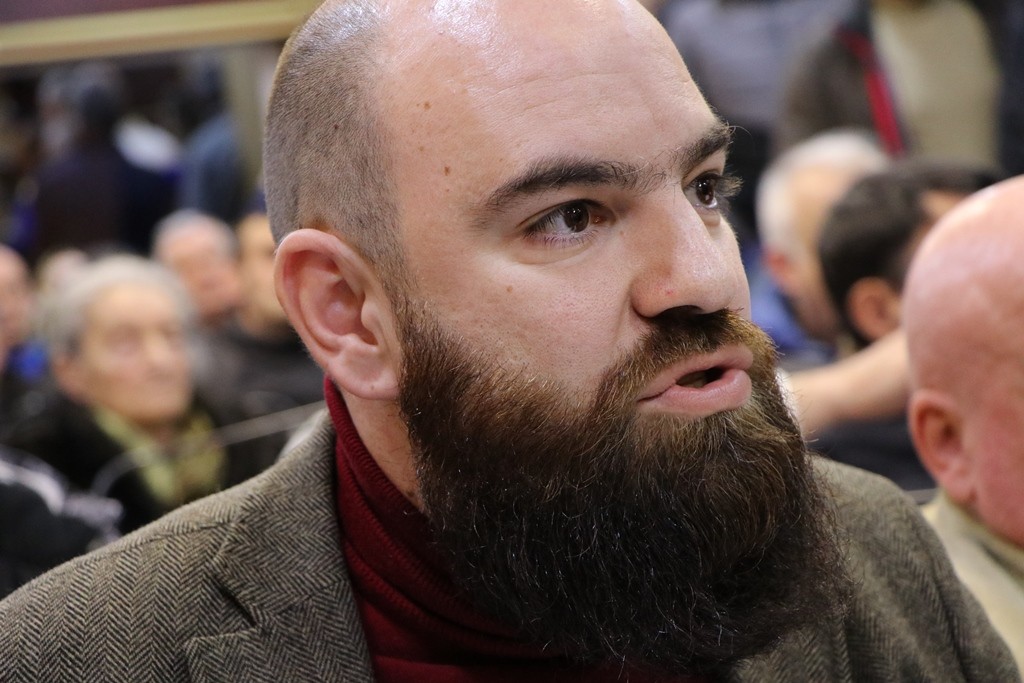
By Dragutin Nenezić
Since a solution for Ukraine still seems relatively far off, we can assume that Trump will not (again) turn his attention to Kosovo—at least not until negotiations over Ukraine (again) collapse. With that in mind, and given that the U.S. still does not have an ambassador in Kosovo (something that may be attributed either to the current state of American diplomacy or to the priorities of U.S. foreign policy), we can also assume that the situation in Kosovo is, in fact, one the U.S. does not want to change—essentially a silent implementation of the Franco-German/European agreement, something increasingly heard in our public discourse.
Starting from that assumption, I will focus this text on it, which will temporarily conclude this series—at least until territorial changes in Ukraine are formally recognized, which will certainly have repercussions for Kosovo as well.
So, what does implementation of the agreement look like? Anyone following KoSSev is surely aware of the militarization of the North, arrests, scandalous trials, assaults on women and girls, intensified inspections, sudden campaigns against illegal construction, evictions, various other provocations, and most recently, the symbolic repainting of graffiti—all of it monoethnically directed against Serbs.
In fact, in every one of these forms we see a growing institutionalization of some presumed Serbian guilt—guilt to the point of simply existing in a given space—aimed at the complete erasure of Serbs from the foundations of the Kosovo envisioned by the political West between 1999 and 2008.
To start with, the two Mitrovicas will be linked by bridges, since they are already linked by agreements, and in the future they may even be united—just as the guaranteed seats for Serbian MPs may be struck from the Kosovo constitution. All of this comes under the façade of the rule of law, which in Kurti’s interpretation—again monoethnic, only in reverse—means tenders won exclusively by one company, the construction of bridges without proper documentation, and so on.
Within the framework of the Brussels agreements, and of the still-valid Kosovo constitution, the most Serbs in such a Kosovo can hope for is a return to power in the northern municipalities, some form of an Association of Serb-majority Municipalities (ASM), and a more clearly regulated status for the Serbian Orthodox Church.
Yet even that has been undermined by Pristina—for example, the ASM was stripped of meaning by the adoption of the Law on Administrative Review of Municipal Acts (passed in December, unnoticed by anyone except a friend of mine). Meanwhile, the return of Serbs to power in northern municipalities (which I still hope will happen, despite the expected obstruction) is being offset by demographic changes in southern municipalities such as Novo Brdo or Gracanica.
Additionally, Pristina’s actions also affect the resolution of contradictions in Belgrade’s Kosovo policy, which simultaneously contains Resolution 1244, Serbian institutions, integration into Kosovo institutions, and all agreements from Brussels through the Franco-German one to the final deal that must be concluded before EU accession.
Thus, since Serbian institutions have largely been expelled through the unconstitutional abolition of the dinar, and since employees of Serbian institutions are being physically expelled from Kosovo, candidates of the Serbian List have been dismissed one by one from Serbian provisional bodies so they can stand as candidates in Kosovo elections.
In other words, what we are witnessing is the complete dismantling of the remnants of Serbian sovereignty in Kosovo—both within Kosovo itself and, to a certain extent, beyond it, through displaced institutions across the administrative boundary, the aforementioned dismissals from provisional bodies, and so forth. In parallel, there is also a gradual takeover of the North—physically, institutionally (now reaching as far as public enterprises), and symbolically—as well as demographic changes in the South.
This is, in fact, the terminal phase of forming a new Kosovo policy, hidden behind the fig leaf of Resolution 1244 (which no state institution even invokes anymore), and essentially rooted in a series of agreements from Brussels to the Franco-German plan—a policy that Belgrade has actively pursued since 2012, now mostly through inaction and silence.
The only question is whether and when that fig leaf will fall away, which may depend, among other things, on the outcome of negotiations over Ukraine. For that, too, we wait for Trump—though his spirit already looms over this Kosovo, at least since he halted the partition in 2018, and “stopped a war” just a few months ago…
All statements presented in this text are the personal opinion of the author and do not necessarily reflect the views of the editors. KoSSev is not the author of the text.
Preuzimanje i objavljivanje tekstova sa portala KoSSev nije dozvoljeno bez navođenja izvora. Hvala na poštovanju etike novinarske profesije.



: The Politics of Tacit Humiliation)