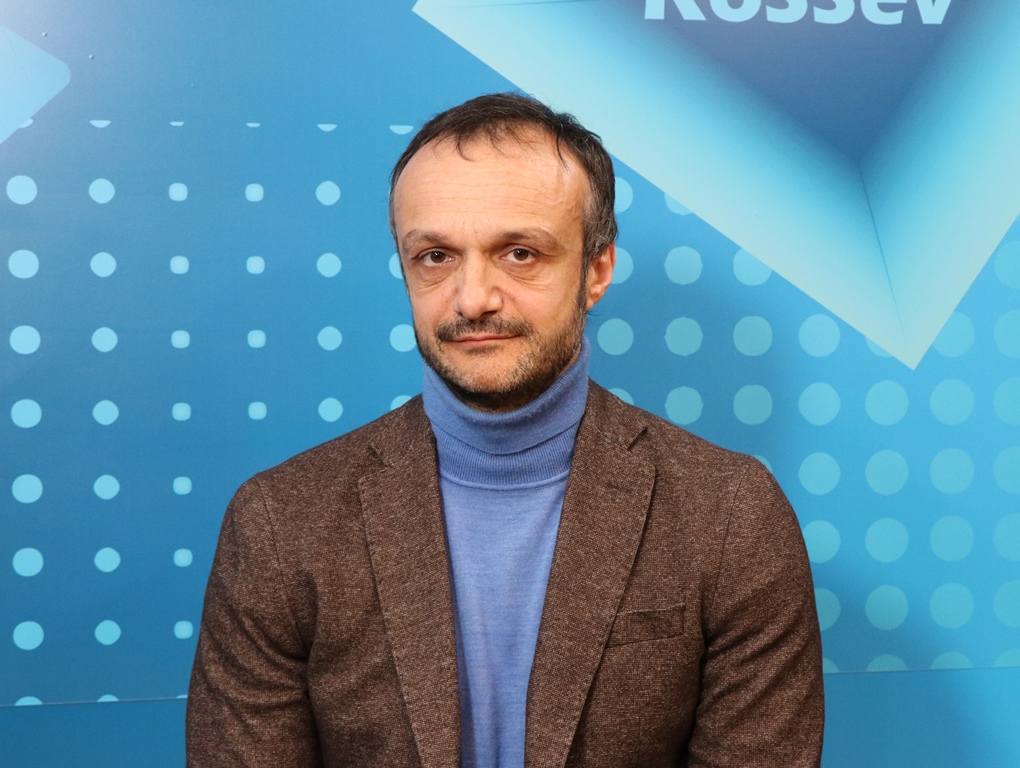
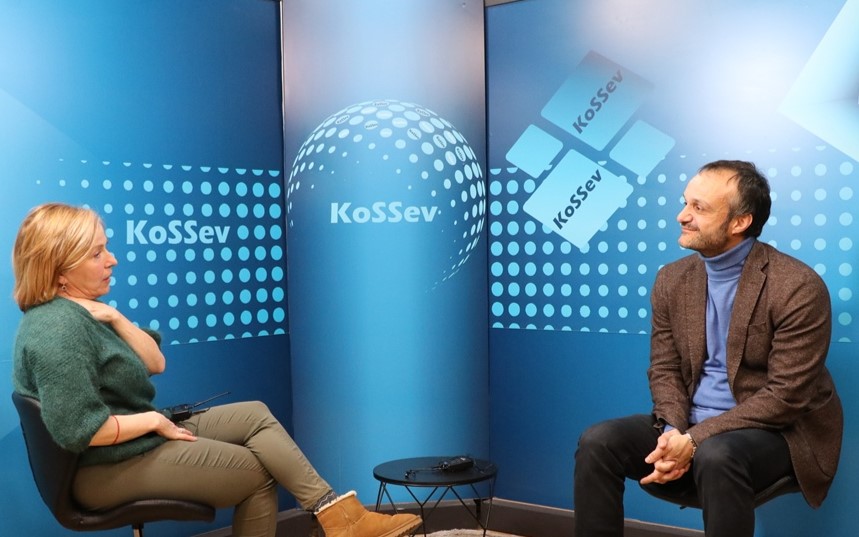
„The devil of lawlessness, corruption, crime, and constitutional violations has evidently crossed the Ibar and reached central Serbia in the form of Rio Tinto, all the way to the shelter,“ stated Professor Dejan Mirović of the Faculty of Law in North Mitrovica in an exclusive interview with KoSSev.
Professor Mirović emphasizes that Serbia, as an old European state, has for years been subjected to governance that operates outside the law. He argues that three coups have been carried out within Serbia’s legal system—the Brussels, Washington, and European agreements—each of which, in his view, represents a suspension of the Serbian Constitution.
Three Coups: The Brussels, Washington, and European Agreements
„When the highest authority—in our case, the President of the Republic, who is supposed to be the guarantor of the Constitution—usurps the competencies of the Government and Parliament and negotiates non-transparently with the international community, handing over part of the territory, that is a coup,“ Mirović stresses.
He points out that all three agreements were concluded without constitutional basis, as the Serbian
Constitution mandates that any change in borders, territorial integrity, and sovereignty must be approved by a two-thirds majority in Parliament and a national referendum.
„The Brussels Agreement led to the dismantling of Serbian institutions in Kosovo without the authorization of the Parliament or Government. It was never published in the Official Gazette, nor did the negotiators have the authority to engage in such talks. The Washington Agreement, particularly Article 15, allows Kosovo to join international organizations. This was later developed into the Franco-German plan and the Ohrid Agreement, in which the President of Serbia—responsibly, as a lawyer, I stand by this—recognized four key elements of Kosovo’s statehood as defined by the Montevideo Convention: territorial integrity, a permanent population, sovereignty, and international subjectivity,“ Mirović explains.
He claims that the European Agreement is already being implemented, as seen in the abolition of Serbian institutions in Kosovo, the process of Kosovo joining the Council of Europe, the opening of Kosovo’s mission in the Vatican, and amendments to Chapter 35 in EU accession negotiations.
„The most important proof is that the Franco-German plan and the Ohrid Agreement have become a fundamental condition for Serbia’s EU accession. Serbia has accepted this, and that’s the reality,“ Mirović concludes.
Constitutional Violations Through Oral Agreements
Mirović particularly criticizes the oral agreement between Belgrade and Pristina regarding ID cards.
„A state cannot have two types of ID cards. Furthermore, in December 2023, the Serbian Government adopted a decree recognizing Kosovo license plates, yet this decree was never published in the Official Gazette. The President is using propaganda techniques to convince the public that this is some kind of victory when, in reality, he has simply recognized Kosovo’s license plates.“
Criminal Liability for the President?
Mirović agrees that one of the main demands of the ongoing student protests in Serbia is the insistence on respecting the Constitution.
„The President of the Republic has led a propaganda campaign suggesting that international law does not exist and that only power relations matter. Thanks to the younger generations and the students leading the protests, people are beginning to realize that if you disregard international law, you will eventually disregard domestic law as well,“ Mirović states.
He highlights that the three agreements related to Kosovo are obligations that Serbia has undertaken, despite being inconsistent with domestic law. However, he points out that under the 1969 Vienna Convention on the Law of Treaties, the President of the Republic has the authority to accept international agreements, even if they contradict national laws.
Article 7 of the Vienna Convention, confirmed by international rulings such as the 2002 case of Nigeria vs. Cameroon, grants heads of state the ability to assume obligations beyond internal legal constraints. The only legal way to annul these agreements is to establish the criminal liability of the President of the Republic and prove, under Article 50 of the Vienna Convention, that the agreements were the result of corruption.
He stresses that parliamentary declarations and references to the Serbian Constitution hold no weight in international law, but that Serbia could legally challenge these agreements if corruption in their conclusion is proven.
Kosovo Serbs Cannot Be a Bargaining Chip for a Better Future
Mirović believes that the majority of members of the Serbian Progressive Party (SNS) were aware of the consequences of these agreements.
Laza Kostić once said that Serbia lost sovereignty in order to be sovereign. Unfortunately, the Serbian Progressive Party has gathered the worst elements of the Radicals, Democrats, and DSS. Whether the President has worn them down with propaganda or they have simply grown tired, I don’t know—that is a question for sociologists. But he has convinced them that life will be better if Kosovo is no longer part of Serbia
He emphasizes that constitutional violations are not limited only to the issue of Kosovo and Metohija.
„The devil of lawlessness, corruption, crime, and constitutional violations has evidently crossed the Ibar and reached central Serbia in the form of Rio Tinto, all the way to the shelter. Constitutional violations cannot be confined to Kosovo and Metohija. Our 100,000 brothers and sisters, both north and south of the Ibar, cannot be used as a bargaining chip for a better future. This is why people rose up against Rio Tinto, and now they are protesting against this as well,“ concludes Professor Mirović.
Mirović: Serbian Students – A Generation of Resilience, Justice, and Solidarity
Preuzimanje i objavljivanje tekstova sa portala KoSSev nije dozvoljeno bez navođenja izvora. Hvala na poštovanju etike novinarske profesije.