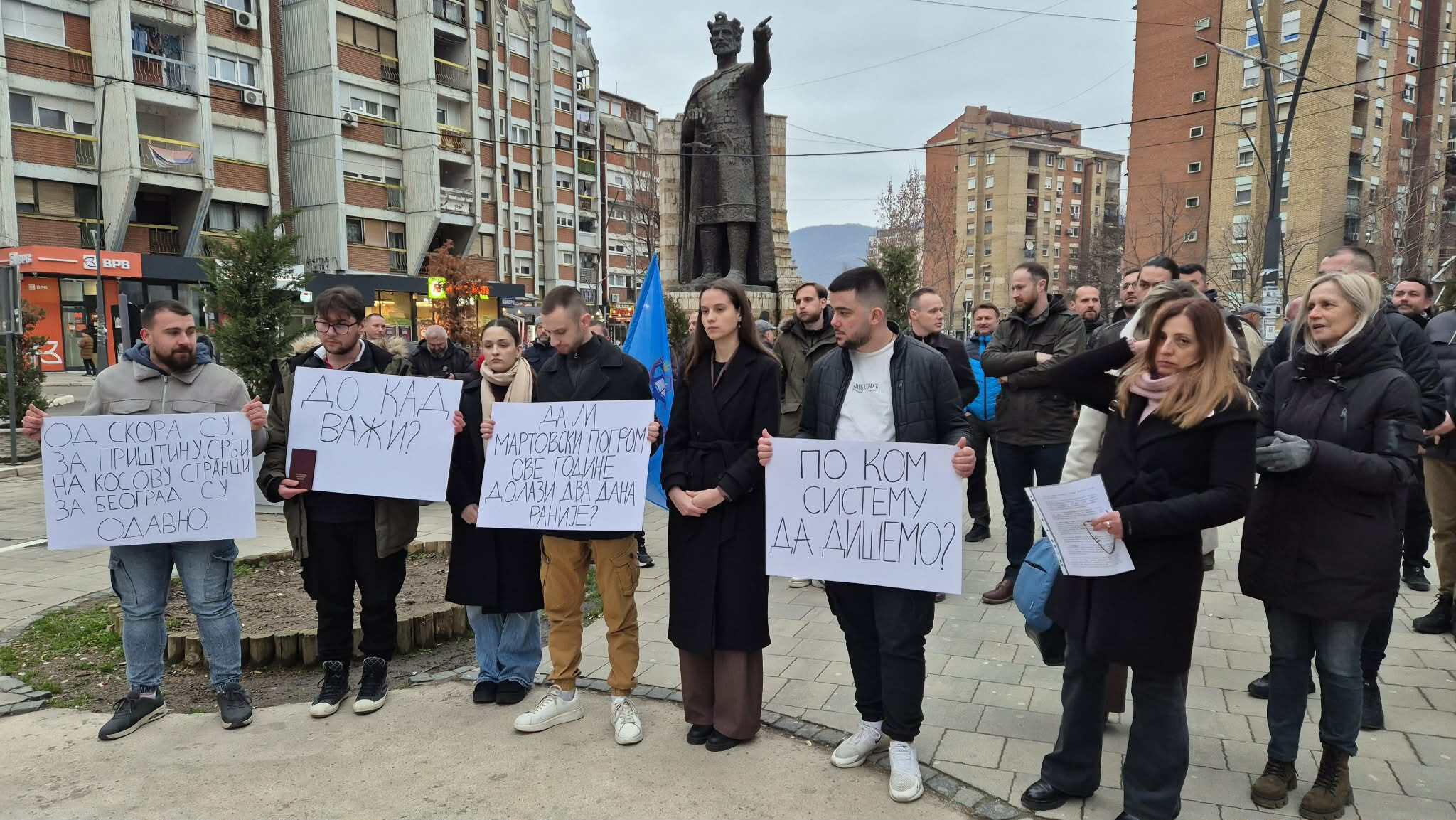
A student-led protest under the banner “Silence Is Not Golden” was held today in central Mitrovica, highlighting rising concerns among the local Serbian community over planned integration of education and healthcare systems into Kosovo’s administration.
The gathering, which took place in front of the monument to Prince Lazar at 4 p.m., lasted approximately 30 minutes and drew around 40 participants, including students, academics, activists, and representatives of opposition political parties. Police presence was minimal.
Прикажи ову објаву у апликацији Instagram
Voices of the Protest
The rally featured speeches from three key figures: philosophy student Dimitrije Rakočević, lawyer Milena Jevtić, and chemistry professor Branka Petković from the Faculty of Natural Sciences and Mathematics.
Opening the event, Rakočević emphasized that the protest was about survival, not partisanship. “We stand here a year after the first student protest in Mitrovica, seeking justice for victims of two systems and a third that watches carefully and calculatively. These victims are the last remaining Serbian institutions in Kosovo and Metohija,” he said.
Rakočević accused both Serbia and Kosovo of neglect: “One system has forgotten and abandoned us, the other does not recognize us as students, often treating many as illegal residents on the land where we were born and raised.” He urged the so-called third system—the international community—to intervene against the enforcement of laws on foreigners and vehicles, claiming that without such action, “we will no longer exist here.”
He appealed directly to students and professors, whose ability to protest had been suppressed for a year, stating: “It is no longer a question of who is on which side—it is about our survival. Stand up, because who will if not us?”
Legal and Administrative Concerns
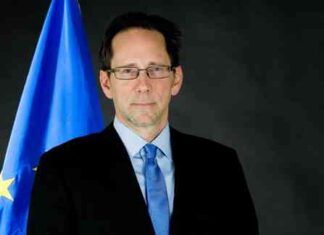
Lawyer Milena Jevtić highlighted the administrative uncertainty facing Serbian institutions in Kosovo, including warnings of the integration of healthcare and education systems into Kosovo’s administration. She cited the German ambassador, Jörn Rode, who publicly clarified that the integration was not mandated by the Ohrid Agreement, yet Serbia had allegedly agreed to its terms.
Jevtić stressed that the protest was about fundamental rights, not geopolitics: “Silence is complicity. We are tired of political games that turn our lives into pawns. We demand protection for our university, our right to education, and our ability to live and work here with dignity.”
Academia Under Pressure
Professor Branka Petković framed the protest within a broader fight against systemic repression. She warned that academic neutrality in such circumstances equates to fear-driven complicity:
“A university that does not cultivate critical thought and protect its students ceases to be a university.”
She praised students and academics for resisting pressure, advocating for the protection of Serbian communities in Kosovo, and criticized the unilateral moves by Pristina authorities, especially concerning the law on foreigners.
Petković called for clear safeguards: protection for students and staff, transparent communication on laws affecting work and education, and the restoration of genuine academic autonomy. She also emphasized the responsibility of the international community to uphold human rights and foster a multiethnic society.
Civil Society Support
Miodrag Marinković, director of the NGO CASA, expressed concern over the perceived silence of Serbian authorities in Belgrade, describing the situation in Kosovo as an “existential threat” to local Serbs.
Ivan Vučković, leader of the GI “Koreni” and councilor in Leposavić, underscored the importance of standing with the youth against the new regulations on foreigners and vehicles, criticizing the Serbian List for failing to address these issues.
Dejan Nedeljković of GI “Sever za sve” framed the protest as a moral duty: “This was not a political gathering, but a stand against the closure of the University in Pristina and the forced integration of education and healthcare systems in Mitrovica.” He warned that only a fraction of citizens were present, suggesting widespread apathy in the community.
Public Sentiment and Symbolism
Protesters carried banners questioning the legality and fairness of the proposed laws, with slogans such as:
“Until when will this last?”
“Will the March pogrom come a day earlier this year?”
“Which system are we breathing under?”
“For Pristina, Serbs in Kosovo are foreigners; for Belgrade, they have long been so.”
The rally reinforced a sense of urgency among local Serbs about their cultural, educational, and civic survival, highlighting the gap between administrative decisions and grassroots realities.
The “Silence Is Not Golden” gathering in Mitrovica underscored the escalating tension surrounding the integration of Serbian institutions into Kosovo’s system. Speakers called for active resistance, accountability from both Serbian and Kosovan authorities, and an engaged international community. As Petković concluded:
Students and individuals here still have the power to speak out and defend their right to education, work, a dignified life, and survival in these lands.
Preuzimanje i objavljivanje tekstova sa portala KoSSev nije dozvoljeno bez navođenja izvora. Hvala na poštovanju etike novinarske profesije.