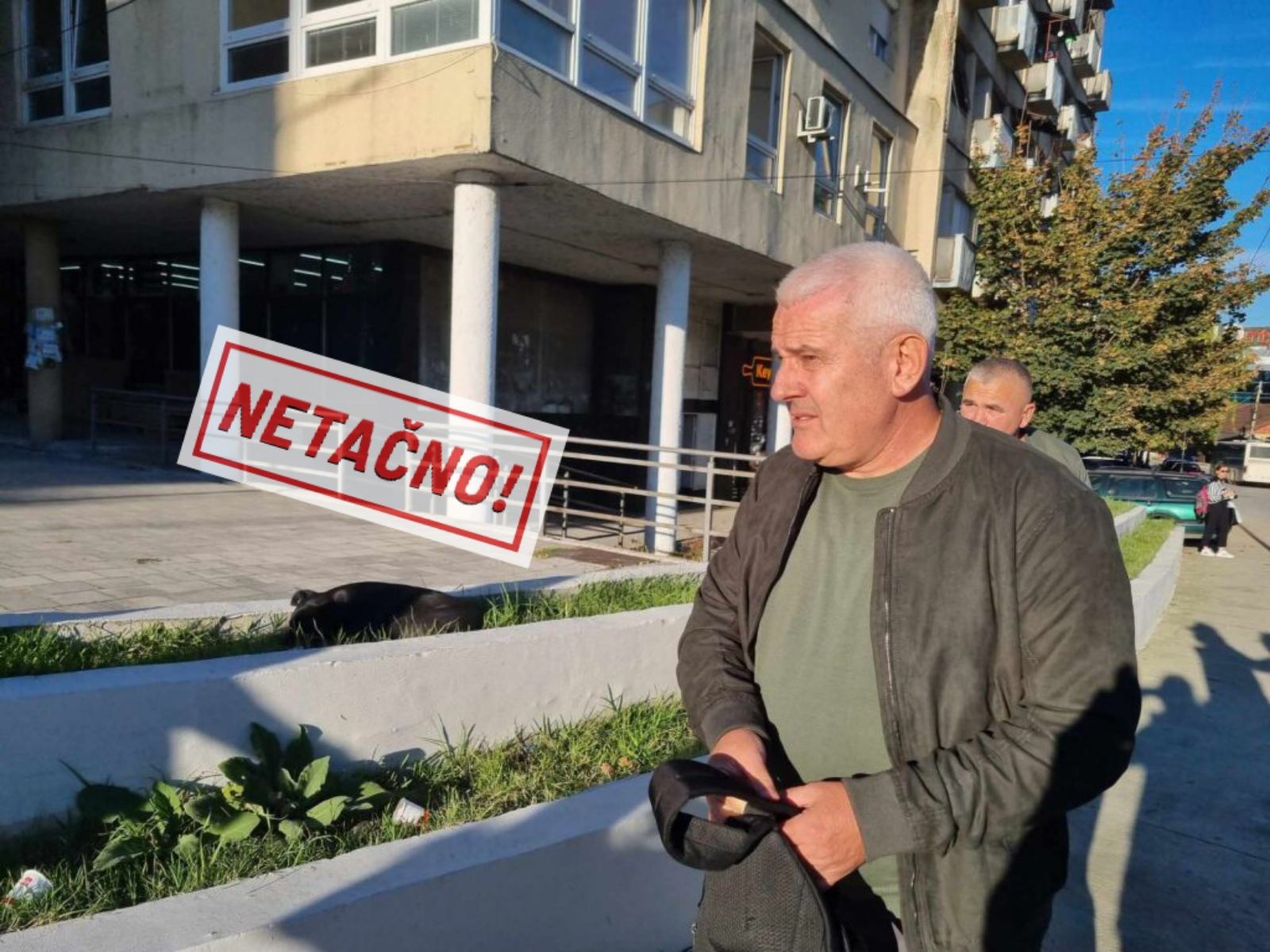
In recent years, a growing trend of sensationalist headlines followed by disappointing, content-lacking articles has plagued the media landscape in Belgrade. Tabloids often draw readers in with dramatic titles, only to leave them feeling misled. A recent example highlights this issue, focusing on the coverage of events in Kosovo.
Alo, a well-known tabloid, published a headline last week that read: „ŠOLAK SYMPATHIZERS HAIL KURTI’S MAN Calling him ‘a minister’ and express joy over the fact that ‘Radoičić is no longer there’!“
The story targeted the media outlet Nova.rs, accusing it of siding with Kosovo’s officials and celebrating the absence of controversial figure Milan Radoičić.
In reality, the article in question on Nova.rs was a straightforward report, re-sharing content from KoSSev, a portal focused on events in northern Kosovo.
The report covered a visit by Kosovo’s Interior Minister, Xhelal Sveçla, to North Mitrovica.
During his visit, Sveçla was asked by a KoSSev journalist about his frequent trips to the area. He replied, “It wasn’t like this before because the situation was different. There’s no more Radoičić here, and now it’s safe.”
The Nova.rs headline was derived from this exact statement: „Minister Sveçla in a New Venue in North Mitrovica, Says He Knows Nothing About the Incident: ‘No More Radoičić, Everything is Safe Now’.“
It was a simple relay of the minister’s words, without any added commentary or bias.
However, Alo claimed that Nova.rs was implicitly recognizing Kosovo’s independence and, even more boldly, that they were celebrating Radoičić’s absence.
The tabloid described Nova.rs as part of a media network owned by businessman Dragan Šolak, which they alleged supported anti-Serb narratives.
The article went as far as to label Sveçla as “Kurti’s bulldog,” a derogatory term for his association with Kosovo’s Prime Minister, Albin Kurti.
Alo’s claims, however, lack any substantial backing. The article failed to explain how Nova.rs supposedly „celebrated“ Radoičić’s absence or how its reporting demonstrated support for Kosovo’s statehood.
Furthermore, the tabloid’s suggestion that calling Sveçla a „minister“ was a form of implicit recognition of Kosovo’s independence was neither explained nor defended.
This type of coverage is not an isolated case. Sensationalist headlines are becoming a common feature of pro-government media in Serbia, particularly when covering sensitive topics like Kosovo. Such headlines may attract clicks, but they also distort the truth, often leaving readers confused or misled.
In this instance, Alo’s portrayal of Nova.rs as biased or unpatriotic serves as a reminder of how some outlets prioritize drama over accuracy.
By focusing on bombastic narratives rather than sticking to facts, these tabloids contribute to a polarized media environment.
The risk is that readers, especially those who only glance at headlines, form misinformed opinions, reinforcing the very divisions that these articles exploit.
Preuzimanje i objavljivanje tekstova sa portala KoSSev nije dozvoljeno bez navođenja izvora. Hvala na poštovanju etike novinarske profesije.