By Dragutin Nenezić
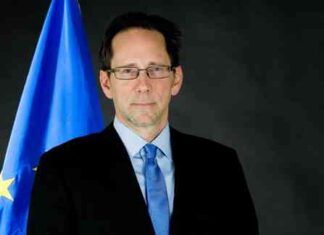
On Saturday morning, statements were issued first by Peter Sorensen and Albin Kurti, followed by several Serbian politicians. Since everyone interprets the agreement in their own way—and I consider it beneath my dignity to engage with interpretations that insult one’s intelligence—the safest approach is to look at what the EU has officially published, as this remains the only authoritative source so far:
-
Temporary residency permits will be issued to workers and students for an initial period of 12 months.
-
Serbian-issued documents dated up to March 15 will be recognized by Kosovo authorities, allowing registration in the Kosovo civil registry in accordance with Kosovo law. It remains unclear what it means that registration will only be available to those “eligible” based on the facts of their civil status, for instance, whether marriages recognized solely under the Serbian system up to March 15 will be accepted. It is, however, clear that Serbian documents issued after March 15 will not be recognized by Kosovo authorities.
What does this actually mean?
Firstly, the fear of enforcing the Law on Foreigners has been mitigated through the agreement, albeit in a way that does not strictly follow the law itself, but rather the negotiated arrangements (for example, we have heard that municipalities will submit lists of individuals without including the accompanying documentation normally required by law).
It remains uncertain whether this will be further formalized through secondary legislation (it seems likely, since the law itself cannot be amended while the Kosovo Assembly is inactive), and what will happen after the one-year period expires.
Kurti also mentioned a three-month deadline for registration in the Kosovo system. Overall, the agreement resembles the approach proposed in the NGO Casa analysis and can be characterized with the phrase from that analysis: “without excessive formalism.” The validity of the list-based mechanism may be addressed another time.
Secondly, is this integration?
The Serbian-system institutions themselves are not directly affected by the agreement (nor was that intended under the law), but the individuals who work or study in them are. They will be issued permits and documents within the Kosovo system, and in that sense, there is no doubt that the agreement integrates these individuals into the Kosovo administrative framework.
Regarding institutional integration, the EU statement is particularly telling:
“We have taken note of the plans of the Government of Kosovo to integrate Serbia-supported health and education institutions within the Kosovo framework, fully in line with prior Dialogue agreements and other EU and regional commitments.”
Thus, the EU—as mediator and guarantor in the Brussels process—considers the integration of institutions to be anticipated by the agreements reached.
Thirdly, what is the nature of this agreement?
It appears, not only from the EU statement but also from Kaja Kallas’ tweet announcing another high-level meeting, that the agreement is treated either as a formal agreement within the Brussels process or, at the very least, a de facto agreement (the term “agreement” is explicitly used).
The agreement certainly has the power to guide the implementation of the law; otherwise, it would not have been reached one day before the scheduled enforcement date. It is very likely that this arrangement will be criticized within Kosovo’s political arena.
As for the University, the agreement does not directly affect its status (which was never the legislator’s intention). Considering the active role of municipalities in implementing the law, it can be assumed that a solution for the University will be sought over the next year, effectively returning to the Ahtisaari Plan (Annex 3, point 7.23):
“The municipality of Mitrovice/Mitrovica North shall have authority to exercise responsibility for this public Serbian language university.”
This may require an amendment to Article 138 of the Serbian Higher Education Act, which designates the Republic of Serbia as the founder of the University, but will necessarily involve a form of transfer of founding rights from Serbia to the North Mitrovica municipality within the Kosovo system, alongside ensuring funding for the University.
Overall Analysis
This process highlights several new aspects in the dialogue: additional informality (and arguably legal ambiguity) of the agreement, a return to Ahtisaari’s framework (until the Community of Serbian Municipalities is formed), and a significant level of interpretive flexibility, allowing each party to claim domestic political victories—Kurti for enforcing the law and promoting integration, Belgrade for preserving peace and institutions, and the EU for implementing the agreement. In reality, all claims are partially valid: the agreement is being implemented, it entails integration, and it represents a step forward.
Serbian-system institutions will continue to exist until they are formally transferred into Kosovo’s framework, and the implementation will be smoother than it could have been, as everyone will be recognized for residence (both in Kosovo and within the Kosovo system) during the initial 12 months.
In essence, this is no different from previous developments regarding license plates: from the stance of “no surrender, KM remains,” we have now reached a situation where the KM plate no longer exists, and those with RA plates will need to alternate entry and exit every three months, unless a new agreement is reached.
Funding—the key issue for Belgrade—will likely dominate negotiations in the coming period. Could things have been handled differently? Probably, but the circumstances are as they are. History will judge who remained silent, who lied, and who acted.
In the meantime, the Serbian population in Kosovo will breathe a temporary sigh of relief, receive an additional 20,000 dinars from the Serbian state, and consider where their children will attend school and where they will receive healthcare, all amid a cacophony of media and political narratives.
One might conclude: nothing truly new in Kosovo.
All opinions expressed in this article are the author’s own and do not necessarily reflect the editorial stance of KoSSev. KoSSev is not the author of this text.
Preuzimanje i objavljivanje tekstova sa portala KoSSev nije dozvoljeno bez navođenja izvora. Hvala na poštovanju etike novinarske profesije.