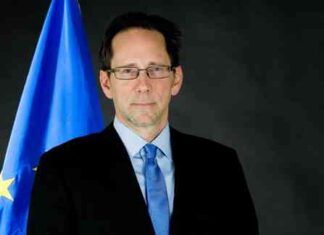
By: Ilir Deda
Dear Saša,
As I was reading your text, it struck me that we are talking about the same Europe, but from two different historical moments. You start from the Europe of twenty years ago, when democratic transition was believed to have a clear direction and EU membership represented its final destination. I increasingly believe that we live in a different Europe and a different time, in which neither democracy nor European integration functions according to the rules we once took for granted. That is why I do not think the question today is whether democracy is more important than EU integration or EU integration more important than democracy, but what to do when neither democracy nor integration functions in the way we expected.
Democracy and European integration have never been two separate processes. European integration did not come as a reward after democratic transformation. Spain, Portugal, and Greece did not become stable democracies and only then enter the process of European integration. It was precisely the European framework that helped consolidate their democratic institutions. The same applies to much of Central and Eastern Europe after the fall of communism.
In today’s world, democracy is no longer a goal that is achieved once and for all. It has become a space of constant political struggle. In the past, democratic transition was assumed to have a clear direction and a relatively predictable outcome. Today, we live in a time in which even within the European Union democratic institutions, the rule of law, and political pluralism are not permanently secured. Democracy has become a process that must constantly be defended, renewed, and redefined.
We see democratic backsliding in some member states. We see the rise of populism, political polarization, foreign influence, and disinformation. We see that membership in the European Union is not, by itself, a guarantee of democratic progress.
That is precisely why European integration can no longer be viewed simply as a reward for a successfully completed transition. It is increasingly part of a broader political space in which democracy itself is preserved, developed, and adapted to new challenges.
In one respect in regards to Serbia, you are undoubtedly right. No Franco-German document can solve the problem of political will in Serbia. If the authorities in Belgrade do not want European standards and European integration, no integration plan will automatically create them. At the same time, a lack of political will in Serbia cannot be a sufficient reason for the European Union to abandon the search for a better model for the entire region. Because the question today is not only what Serbia wants from Europe. The question is also whether the European Union still wants enlargement as a political project or merely as a declarative goal. That is why I do not see the Franco-German proposal as a reward for regimes, but as an attempt to create a different relationship between reforms and the benefits of reforms, where every serious reform should bring a visible step closer to Europe – not because governments deserve it, but because citizens need to see the purpose of the process.
Regarding entering “through the back door”, I think the problem is not the door – the problem is that the region has been standing in the hallway for more than twenty years and that over time, it has begun to get used to waiting. After so long, the question is no longer whether the door is large or small, but whether it opens at all. To me, what is far more humiliating is a situation in which generations spend their entire political lives waiting for something they are no longer sure will ever arrive.
Of course, no European policy can solve authoritarian tendencies if citizens themselves do not want to change them. On that, you are completely right. But I am not convinced that the alternative is any better.
If we take the last two decades as our measure, the politics of waiting has produced neither stronger democracies nor faster progress toward the European Union. Above all, it has produced fatigue, cynicism, and emigration. The politics of waiting – or “strategic patience” – has not succeeded. That is why I do not see the Franco-German proposal as bypassing democracy. I see it as an attempt to break the vicious circle in which democracy waits for Europe, and Europe waits for democracy. After twenty years of waiting, perhaps it is time for both to start moving toward each other.
Warm regards,
Ilir
Into the EU through the back door, out of democracy through the main gate
Preuzimanje i objavljivanje tekstova sa portala KoSSev nije dozvoljeno bez navođenja izvora. Hvala na poštovanju etike novinarske profesije.