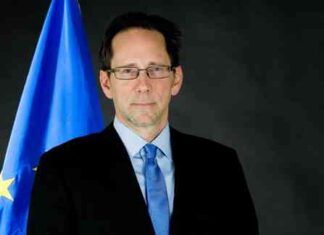
Dear Saša,
Northern Kosovo today could have been a place where the state is recognised through institutions that solve problems, rather than through the force with which decisions are enforced. A place where citizens know whom to turn to, in which language they can receive an answer, and how they can challenge a decision they believe to be unfair or unjust.
It would all have begun on 5 December last year, when the newly elected Serb mayors took their oaths of office and assumed their duties in North Mitrovica, Zvečan, Zubin Potok and Leposavić. The Government of Kosovo would not have presented their return as its own victory. It would have understood that integration does not end when Serbs enter municipal buildings, but that this is precisely when the obligation begins to enable their genuine participation in institutional life. The Serb mayors would have accepted that their return did not mean restoring the situation that existed before the collective withdrawal from the institutions in 2022.
During their very first week in office, the Government would have invited them to a working meeting. No ceremony, no grand political messages and no cameras. The conversation would not have been easy. The mayors would have spoken about distrust, the sense of insecurity and decisions being made without the involvement of local authorities. The Government would have spoken about legality, sovereignty and the obligations of municipalities. They would not have agreed on the past, nor on many issues in the present. But they would have agreed to talk and to seek solutions to the accumulated problems in the north through regular consultations.
That is how a new relationship between the central and local authorities would have begun to take shape. The new municipal leaderships, together with the central institutions, would have reviewed the decisions, projects and obligations they had inherited. Not everything could have been resolved immediately, but it would have been established what fell within municipal responsibility, what belonged to the central level and where a joint decision was required.
Citizens would have been able to obtain documents in their own language at municipal offices. An official would have understood a citizen’s request, and the citizen would have understood the institution’s explanation. An Albanian resident would not have had to wonder whether the new Serb municipal authorities would treat them as unwelcome, just as a Serb citizen would not have felt like a stranger in their own municipality.
Bilingualism would not have been a sign on the wall, but the way the institution worked.
Disagreements would have remained, but there would have been no more imposed decisions. A specific procedure would have been established for resolving disputes between ministries and municipalities. If a ministry considered a municipal decision unlawful, it would have submitted a reasoned legal objection and requested that the decision be reconsidered. The municipality could then have amended the decision or defended its legality.
If no agreement could have been reached, a court would have decided.
The police would have assisted in enforcing clear and enforceable decisions. They would not have been tasked with resolving disputes over jurisdiction in the street. A police officer who speaks Serbian would not have been an exception, but an essential part of policing in a Serb-majority community. Knowledge of the language and the community would have been treated as a prerequisite for effective police work. Through its conduct, the police would have had to earn the community’s trust.
When Nenad Rašković from Dren reported that police officers had beaten him in his home, taken him into the woods and tied him to a tree, the response would have been immediate – from a clear and unequivocal condemnation by the political leadership to action by the justice system. The prosecution would have gathered evidence, while the public would have regularly received verified information about the progress of the investigation. Establishing individual responsibility is not an attack on the police, but a way of protecting its integrity.
At Gazivode, efforts to build trust would have faced their most difficult test. The discussion about Gazivode would not have ended with individual buildings. The Government, the Municipality of Zubin Potok, the local community and „Ibar-Lepenac“ would have jointly prepared a plan for the protection and development of the area surrounding the lake. Gazivode could have become an example showing that the protection of the public interest and respect for citizens’ rights do not have to be in conflict.
Such a north would not have been free of political conflict. The Serb List would have remained close to Belgrade, while the Government of Kosovo would have continued to insist on its constitutional powers. But there would have been a clear line between political disagreement and institutional arbitrariness and deliberate obstruction. The Serb mayors would have been expected to respect the legal order under which they had accepted their mandates, while the Government would have been expected to treat them as legitimate local authorities, rather than as temporarily tolerated representatives of a hostile political agenda.
Such a north would not have proven that the major political questions had disappeared. It would have proven that people do not have to wait for those questions to be resolved before they can live more normally, safely and with greater dignity.
Kosovo does not need another victory over its own citizens. It needs a victory over its own habit of treating dialogue as a weakness. And a state that seeks the trust of its citizens must first show and prove that it is worthy of that trust.
Sincerely,
Ilir
Preuzimanje i objavljivanje tekstova sa portala KoSSev nije dozvoljeno bez navođenja izvora. Hvala na poštovanju etike novinarske profesije.