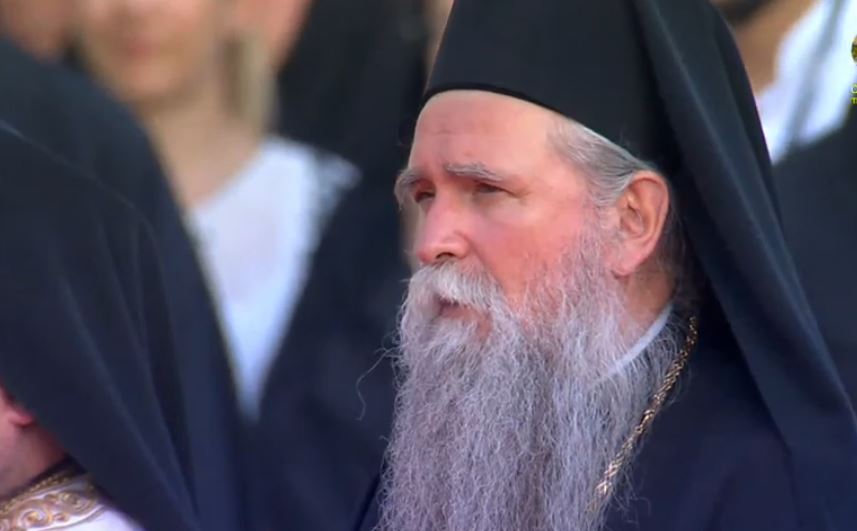
The Franco-German proposal (cf. the EU agreement) is unacceptable if it is defined as a framework for any negotiations on the status of Kosovo, and if Kosovo is treated as an independent state, Metropolitan Joanikije of Montenegro and the Littoral told Radio Svetigora ahead of the upcoming Vucic-Kurti meeting in Ohrid.
„That agreement was not signed by Serbia. However, if the text of the agreement is defined as a framework for negotiations and if Kosovo is treated as an independent state, then this is unacceptable,“ the Metropolitan said in an interview for Radio Svetigori on the occasion of the 19th anniversary of the March 17th ethnic violence against Serbs, known to the Serbian public as the „March pogrom“.
The Metropolitan said that the „Agreement on the path to normalization between Kosovo and Serbia“ was initiated by the same countries that guaranteed peace and security to the Serb people and their holy sites in Kosovo.
He then accused the German contingent of KFOR of „failing to lift a finger“ while Albanian extremists burned and demolished churches and monasteries, adding that the French „allowed“ Devic to be torched.
During the same interview, the Metropolitan said that „the duplicity that the Germans and the French showed at that time must not be forgotten.“
„There is even less security for our people and their holy sites in Kosovo and Metohija with the so-called Franco-German proposal,“ Metropolitan Joanikije concluded.
On the other hand, in a joint op-ed for Belgrade-based Blic and Pristina-based Koha, the advisers of the French president, the German chancellor, and the Italian prime minister underlined: Serbia should come to terms with the fact that Kosovo is a neighboring country, while Kosovo is obliged to provide protections for Serbs, to take steps to establish the Association of Serb-majority Municipalities and provide guarantees for a high level of protection for Serbian religious and cultural heritage.
In his criticisms, the Metropolitan did not mention Italy.
This is perhaps the first opinion of this kind voiced publicly by a Serbian Orthodox Church dignitary regarding the document drawn up last September when the aforementioned advisors (aside the advisor to the Italian PM) presented it to Vucic and Kurti.
After the public reacted, demanding to know „why the Church is remaining silent“ to the latest developments in Kosovo, and after the text of the agreement was agreed in Brussels, the Serbian patriarch addressed the public earlier this month through a sermon at the beginning of the Easter fast. Prayers for Kosovo were also said, but only after right-wing groups announced marches in protest of the agreement.
Although the patriarch responded to criticism and name-calling in his sermon, he did not express a clear position on the agreement and negotiations.
Preuzimanje i objavljivanje tekstova sa portala KoSSev nije dozvoljeno bez navođenja izvora. Hvala na poštovanju etike novinarske profesije.