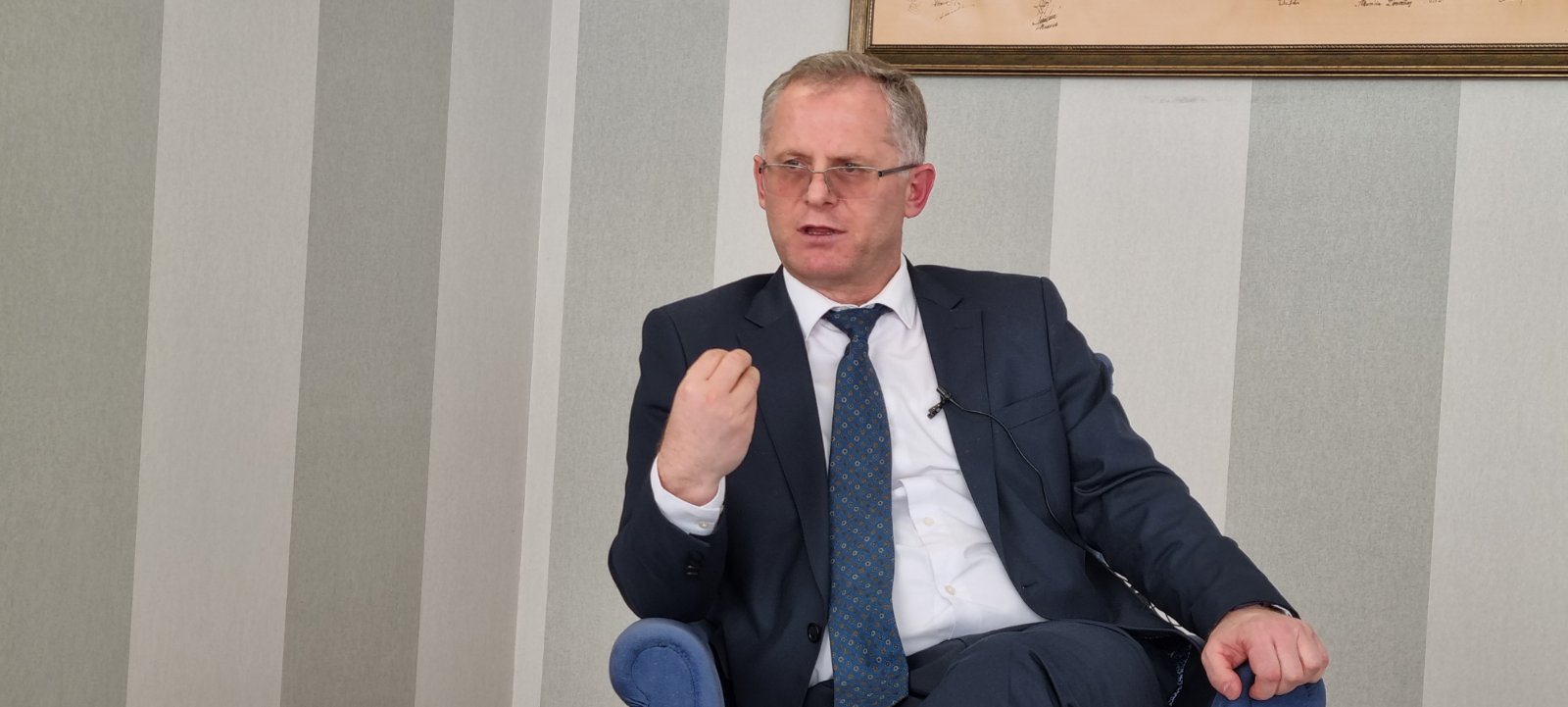
Serbia’s Supreme Court has dismissed an appeal filed by Ragmi Mustafi, former president of the National Council of Albanians, over alleged hate speech by Serbian official Aleksandar Vulin. The ruling has ignited criticism within the Albanian community, who interpret it as tacit approval of discriminatory language against Albanians. Vulin, a prominent Serbian political figure and current Deputy Prime Minister, has repeatedly referred to Albanians as „Shiptars“—a term considered derogatory. Kosovo’s Deputy Prime Minister, Besnik Bislimi, also condemned the decision, stating it „deepens concerns“ over the safety and rights of the Albanian minority.
The case dates back to 2019 when the National Council of Albanians initiated legal action against Vulin in response to his repeated use of the term „Shiptar“ to refer to Albanians, particularly in reference to those from Kosovo.
According to the Council, Vulin’s language constitutes hate speech and promotes hostility towards the Albanian community. Despite the allegations, the High Court in Belgrade ruled in 2020 that the term did not constitute a „severe form of direct discrimination“ or a violation of hate speech laws. This decision was upheld by the Appellate Court in 2021 and ultimately supported by the Supreme Court’s recent dismissal.
Mustafi responded publicly to the Supreme Court’s ruling, calling it “a painful reminder of the bitter reality” that, as he sees it, the Serbian judiciary remains a “political hostage,” unwilling to condemn language that fosters division and hatred toward the Albanian community. He announced plans to escalate the case to Serbia’s Constitutional Court and, if necessary, the European Court of Human Rights in Strasbourg.
“This judgment exposes a justice system that fails to defend basic human rights,” said Mustafi in a statement shared on Facebook.
He argued that the term “Shiptar” is not merely a word but a tool to demean, exclude, and criminalize Albanians, deepening ethnic divides. Mustafi further criticized the judiciary for allowing a high-ranking government official to use such inflammatory language with impunity.
“Instead of condemning a figure who promotes discriminatory approaches and incites violence against the Albanian community, the justice system has effectively shielded him,” he added.
In the wake of this decision, Besnik Bislimi, Deputy Prime Minister of Kosovo, also weighed in, condemning the Supreme Court’s stance. Bislimi voiced his concerns over the security and rights of the Albanian minority in Serbia, saying that this judgment “deepens concerns regarding the safety of the Albanian minority.”
Vulin has previously defended his choice of language, claiming that the term „Shiptar“ is not offensive and asserting that Albanians in Kosovo use it among themselves.
„I’ll consider this lawsuit a compliment for my consistency and relentless pursuit of truth,“ Vulin stated, dismissing the allegations as an attempt to silence him.
“This is the term they use for themselves, so I don’t see why it should be offensive.”
Discrimination & hate speech are now a norm in Serbia. Apparently it is legal under Serbian law to use derogatory terms against Albanians. The ruling from the Serbian Supreme Court on the statements of DPM Vulin deepen our concerns regarding the Albanian minority rights & safety. pic.twitter.com/Ky2OFsciqt
— Besnik Bislimi (@BislimiBesnik) November 4, 2024
Vulin’s comments continue to generate controversy. Since 2019, he has frequently employed the term in official addresses, even during his tenure as Defense Minister and later as head of Serbia’s intelligence agency.
Legal experts and rights advocates note that, in previous rulings, Serbian courts have deemed the term „Shiptar“ as hate speech when used in media or public forums.
In a notable 2018 verdict, the Higher Court in Belgrade found that the use of the term constituted a violation of hate speech laws in a civil case involving the publication Informer, where the term was labeled as „politically incorrect and offensive toward Albanians.“
Preuzimanje i objavljivanje tekstova sa portala KoSSev nije dozvoljeno bez navođenja izvora. Hvala na poštovanju etike novinarske profesije.