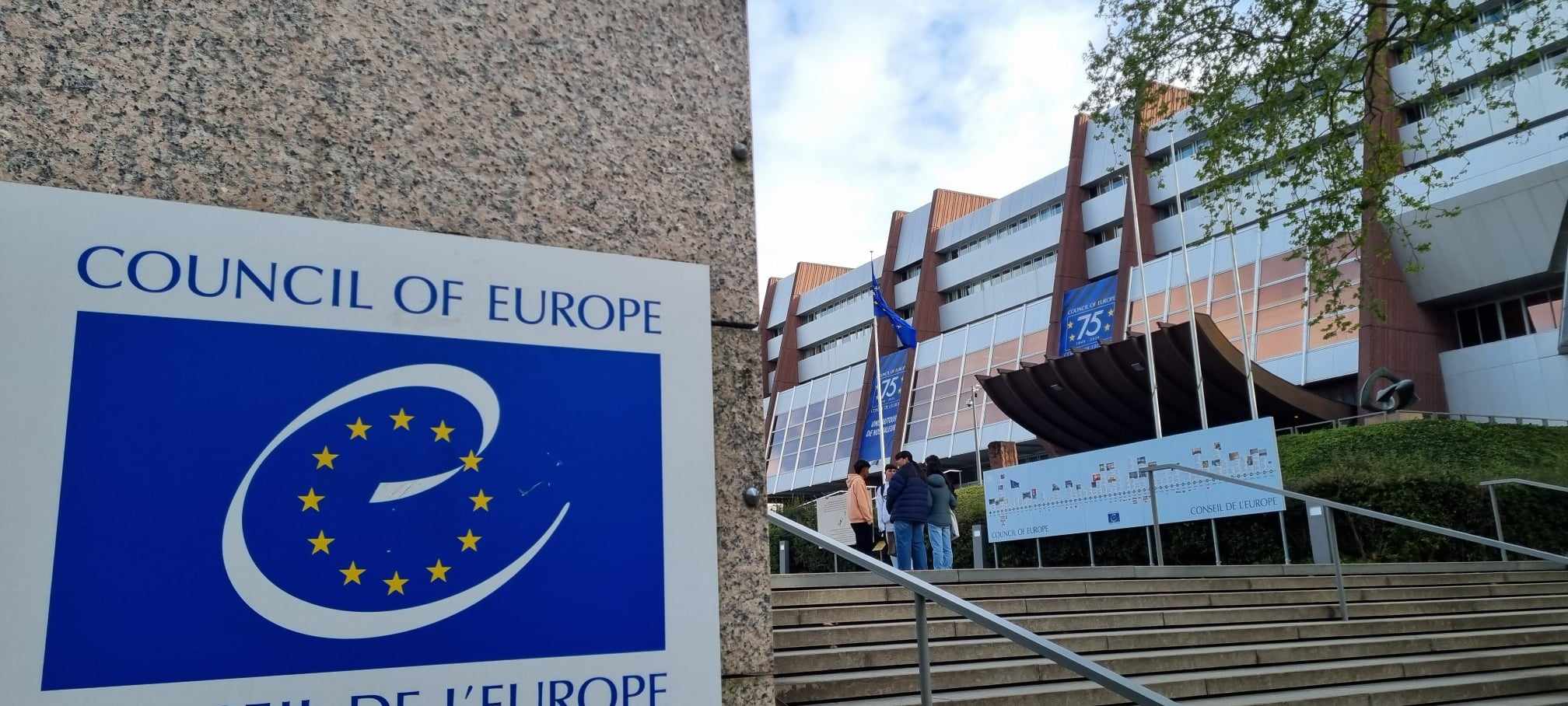
Kosovo is currently not on the agenda of the Committee of Ministers of the Council of Europe, which will meet on May 16th in Strasbourg, the director of the communications department of the Council of Europe, Daniel Holtgen, confirmed for KoSSev.
The Committee of Ministers of the Council of Europe is set to meet on May 16th and May 17th in Strasbourg. Despite expectations that the issue of Kosovo’s membership would be on the agenda, whereby Kosovo would be admitted to this organisation by a majority vote, that did not happen.
When asked if he could confirm that Kosovo was not on the agenda, and whether the agenda was final, Holtgen briefly replied: „Yes, this is the case.“
When asked to clarify whether there could be a change and whether the issue of membership could still be included in the agenda by the 16th, Holtgen answered: „Changes can never be excluded.“
Conditions
After the rapporteur’s report on Kosovo’s possible membership in the Council of Europe, Dora Bakoyannis, was adopted in Strasbourg last month, which recommended the admission of Kosovo to CoE, there is still one more step left – the vote on Kosovo’s membership by the committee of European ministers.
Many have been skeptical about whether Kosovo would receive the majority of votes by the ministerial committee – the same voting that can de facto influence whether Kosovo’s membership will be included on the agenda.
The President of Serbia recently shared an estimate of the collected votes between 29 and 33, while 31 is needed for a majority vote.
In response to this, European officials expect Pristina to fulfill at least part of the obligations on the establishment of the Association of Serb-majority Municipalities.
However, the establishment of the ASM is defined as a post-accession obligation. For the admission of Kosovo to the Council of Europe, the Kosovo authorities only need to show a „tangible effort“ towards the establishment of the ASM, such as by sending the draft statute to the Constitutional Court for evaluation.
With the latter, international officials have been persuading the Kosovo authorities for months now to forward the draft statute. The same draft statute prepared by the EU.
In a joint letter to the Council of Europe before the previous vote on April 16, Albin Kurti, Vjosa Osmani and Glauk Konjufca undertook to do so. The report of the rapporteur for the issue of Kosovo’s possible membership in the Council of Europe – Dora Bakoyannis – was adopted by the majority of votes in Strasbourg, which recommended the admission of Kosovo to this European body.
Western diplomatic offensive, Kurti refuses to be conditioned with forwarding of the ASM statue
The last attempts to persuade Kurti to adopt a more constructive attitude, in favor of Kosovo itself, took place this Monday as well.
During the holiday, ambassadors of five Western countries and the EU met with Kurti in his office, where they discussed Kosovo’s potential membership in the Council of Europe.
And while the international side emphasized that it would help Kosovo in fulfilling the conditions, which were determined by Bakoyannis’ report, Kurti reiterated that Kosovo has not only fulfilled everything but, moreover, stated that the Kosovo government does not accept being conditioned by anything.
„The process of normalizing relations with Serbia is taking place in Brussels, not in Strasbourg, it should not be mixed up,“ he said the day before yesterday during the government session in Pristina.
Gabriel Escobar doesn’t think so. ASM and the Council of Europe are very connected, the US envoy for the Western Balkans underlined at this week’s media briefing.
The concerns that Kosovo may not receive the required votes in the Council of Europe were raised by the fact that the Association of Serbian Municipalities and other demands related to the Serbian minority have not been resolved, Escobar said. He underlined that he cannot understand why Pristina is refusing to fulfill the legal obligation to form the ASM. Moreover, he encouraged Kosovo to cooperate closely with its partners, noting that this obligation „will certainly have to be fulfilled“.
Several Pristina-based media outlets recently reported that the government in Pristina does not accept conditionality, as well as previous reports that France, Germany and Italy directly condition their support at the Council of Ministers with the sending of the draft constitution of the ASM to the Constitutional Court. Germany is especially vocal, that is, its ambassador in Pristina, who sends the same message almost daily: Germany’s support for Kosovo requires it to take a tangible step towards the ASM.
The opposition called on Kurti to listen to and coordinate with these close Western partners of Kosovo. They criticize Kurti for his statements that he does not accept conditions for membership in CoE.
Finally, the Kosovo Minister of Administration and Local Self-Government, Elbert Krasniqi, met with the head of the Council of Europe office for Kosovo, Mary Ann Hennessey today. He repeated the claim of his colleagues and the head of government in Pristina that the Report of Eminent Lawyers and other relevant reports prove that Kosovo has met all the conditions and criteria for formal CoE membership.
Instead of conditioning, PR makes contacts with Serbs
During this time, Kurti and his associates are stepping up their public efforts to send a message about communicating with the Serbian community.
On May 1st, a national holiday, Kurti met with the vice presidents of the northern municipalities, three of whom are ethnic Serbian women. The Kosovo Minister for Communities and Return, Nenad Rašić, as well as the Minister of Administration and Local Self-Government, Elbert Krasniqi, were also present at this May Day ceremony. Kurti said that they told him “that they see Kosovo’s membership in the Council of Europe as an important step for strengthening their municipalities.“
The Kosovo PM then personally, speaking in Serbian, informed the Serbian community about the „good news“, namely the new decision of the Kosovo MIA to allow citizens with Serbian driver’s licenses that were issued for the administrations in Kosovo, which are illegal for the Kosovo authorities, to switch to Kosovo driver’s licenses.
Yesterday, Kosovo Minister of Health, Arben Vitia, met with health and municipal directors from the north within the Kosovo system, most of whom are ethnic Serbs.
Will Kurti „miss the chance?
In this week’s column, Koha Ditore columnist Demush Shasha compared the importance of Kosovo’s admission to the significance of the visa liberalisation process for Kosovo, or what he calls the „missed chance“ at that time due to the resistance to delimitation with Montenegro (led by Self-Determination) which has since then led to Kosovo losing „international prestige“.
„The events of 2016 were the best example of the strategic myopia of the country’s political class. Today, in 2024, we risk a repeat of 2016 and another strategic failure,“ writes Shasha.
„Kurti made it clear that they cannot count on his constructiveness in the dialogue in case of failure of Kosovo’s membership in the Council of Europe,“ this analyst writes, adding:
„Prime Minister Kurti entered a rather dangerous game. The use of the terminology ‘irreparable damage’ is a very high diplomatic standard. It is a de facto political threat. A kind of political HIMARS (cf. multiple rocket launcher) if you will, like in the famous Russian roulette scene in the movie ‘The Deer Hunter’, Kurti stepped into the role of Robert De Niro – ready to play all or nothing.“
Preuzimanje i objavljivanje tekstova sa portala KoSSev nije dozvoljeno bez navođenja izvora. Hvala na poštovanju etike novinarske profesije.