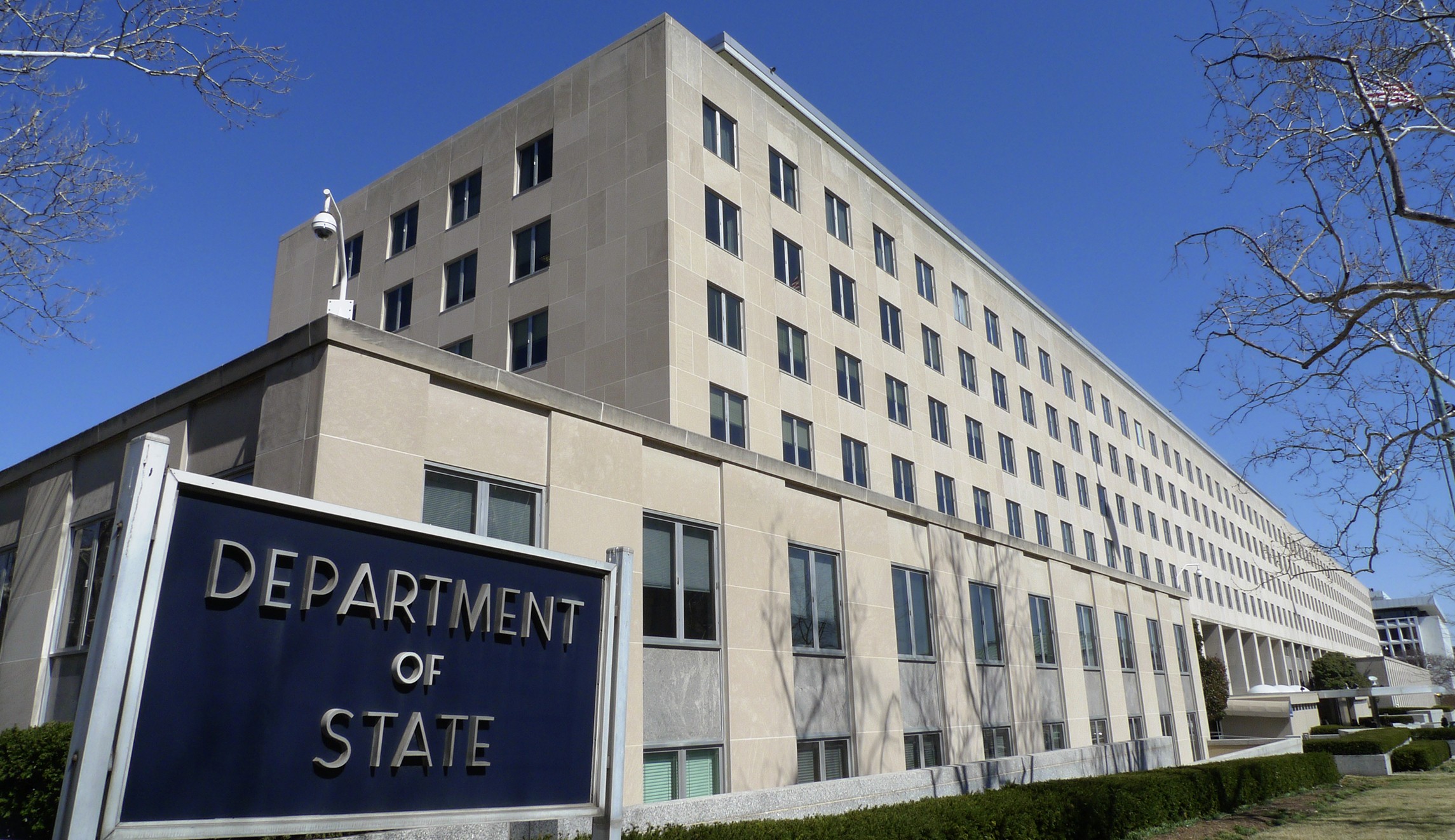
The U.S. State Department’s latest annual human rights report finds that there were no significant changes in the human rights situation in Kosovo in 2024, nor any credible reports of major violations. It also notes that while the government took credible steps to identify, investigate, prosecute, and punish officials accused of human rights abuses, these measures were applied inconsistently.
The 2024 report is notably shorter than in previous years — 18 pages compared to last year’s 45 — and states explicitly: “There were no reports the government conducted arbitrary arrest or detention.” This contrasts with frequent complaints from Kosovo Serbs of arbitrary arrests.
With one exception (data on missing persons), Serbs are mentioned mainly in connection with arrests for war crimes, on one hand, and on the other — when criticizing these and other arrests as arbitrary or pointing to lengthy pretrial detention.
Nine Serbs Arrested for War Crimes; Criticism Over Proceedings
The largest section of the report — alongside freedom of the press — is the chapter “War Crimes, Crimes Against Humanity, and Evidence of Acts that May Constitute Genocide.”
By December 2 last year, nine ethnic Serbs had been arrested on suspicion of war crimes, the State Department notes.
According to data cited in the report, the Kosovo Special Prosecution (SPO) filed “eight indictments for war crimes against eight persons in Kosovo and five indictments in absentia.”
The Humanitarian Law Center in Pristina (HLC) assessed that “resolution of conflict-related crimes committed in Kosovo between 1998 and 2000 remained problematic,” pointing to insufficient resources and lack of regional cooperation.
The HLC and victims’ representatives said that in war crimes cases “the individual actions of the accused were frequently not clearly outlined but instead often generalized as actions of a group,” which, according to observers, “created the perception that a group member was being convicted for the wrongdoing of other individuals.”
“Kosovan Serb community representatives criticized war crimes arrests, questioned the merits of the charges, and claimed some arrests were associated with property disputes,” the report states.
The report also notes that from January 1 to December 2, the Basic Court in Pristina “convicted four former members of the Serbian forces of war crimes.” Among them was Duško Arsić, “an ethnic Serb, sentenced to 13 years for the expulsion of ethnic Albanians from their homes, looting, burning property, physical and psychological mistreatment, and killing of ethnic Albanian citizens in 1999.” However, “on September 30, the Appellate Court overturned Arsić’s conviction and ordered a retrial.”
Also convicted was Časlav Jolić, an ethnic Serb, who “received eight-year prison sentence for abusing civilians, including beating three ethnic Albanian citizens in the Istog/Istok territory in 1998.”
In the same period, the Basic Court in Pristina also convicted Muhamet Alidemaj, an ethnic Albanian, to 15 years for “participating in the Izbica massacre,” and Ekrem Bajrović, an ethnic Bosniak, to 12 years for “beatings, torture, and killings of Albanians in Istok in 1990.”
Specialist Chambers
The report also references ongoing trials at the Specialist Chambers in The Hague against former KLA leaders Hashim Thaçi, Kadri Veseli, Jakup Krasniqi, and Rexhep Selimi, as well as convictions of Pjeter Shala and Salih Mustafa.
On July 16, 2023, the court found former KLA member Pjeter Shala guilty of arbitrary detention, torture, and murder, sentencing him to 18 years. On September 10, 2024, Salih Mustafa’s sentence for similar crimes was reduced for the second time — from 22 to 15 years.
Missing Persons
As of November 26, the Missing Persons Commission recorded 1,607 individuals still missing from the war and post-war violence; an estimated 70% are Albanians and 30% Serbs, Roma, Ashkali, Egyptians, Bosniaks, Gorani, Montenegrins, and others. By December 2, 2024, that number had dropped to 1,596.
Conflict-Related Sexual Violence – Only Until June ’99
The Kosovo government extended the mandate of its Commission for the Verification and Recognition of Survivors of Sexual Violence during the conflict until May 2025.
Since 2018, the Commission has awarded compensation to over 1,671 survivors, including 75 by September 5 this year. The report also makes note of an estimated number of 20,000 victims of conflict-related sexual violence. NGOs from Kosovo note the slow pace of application processing.
The report points out that the law does not recognize any sexual violence committed after NATO’s intervention in June 1999 as conflict-related, nor does it guarantee free or adequate healthcare for survivors — despite post-war crimes, particularly against Kosovo Serbs and other non-Albanians.
Freedom of Expression
While the constitution and law guarantee freedom of expression, they allow restrictions to prevent incitement to violence or hatred. Critics say this is applied arbitrarily.
The report recalls the case of three Montenegrin citizens detained on November 26 for a license plate reading “Kosovo is Serbia,” following a religious ceremony in the Visoki Dečani monastery.
At the same time, in the section on the prohibition of arbitrary detention, the report explicitly states: “There were no reports the government conducted arbitrary arrest or detention.”
By September 17, police had recorded 19 incidents of “incitement of hatred and ethnic division.” According to the report, such incidences included multiple cases of graffiti targeting ethnic Serb and Albanian communities, flag burnings, the distribution of pro-Serbia pamphlets, vandalism of an Orthodox church, the display of photographs of pro-Serbia paramilitaries and the phrase “no surrender” written in Serbian, damage to a mosque, and distribution of leaflets suggesting how to attack police.
Police Conduct
The National Preventive Mechanism against Torture investigated six complaints against prison staff, while the Police Inspectorate of Kosovo handled cases involving abuse, excessive force, bribery, and domestic violence.
Representatives of the Serb community expressed concerns about police behavior, particularly in the north. Two officers were suspended in October 2023 over alleged misconduct and excessive force against a Kosovo Serb in North Mitrovica, only to be reinstated in December.
Pressure, Censorship, and Attacks on Media
The Association of Journalists of Kosovo (AJK) reported 53 cases of physical or verbal attacks, pressures, cyberattacks, or smear campaigns against journalists and media outlets. According to AGK, government officials, including the prime minister and members of the ruling party, participated in campaigns aimed at undermining public trust in the media.
Journalists often resort to self-censorship due to political pressure and threats from organized crime, with some abandoning investigative work altogether for safety or financial reasons.
A controversial law on the Independent Media Commission, criticized for enabling political influence, was struck down by the Constitutional Court in April 2025.
Working Conditions and Labor Rights
While Kosovo’s labor law sets minimum wages above the poverty line and provides for a 40-hour work week, paid leave, and maternity leave, violations remain common, particularly in construction, mining, textiles, and the informal economy.
Official data show that 71% of employees work 40–48 hours a week, while nearly 8% work over 60 hours, often without overtime pay. Women earn less than men for the same work. The informal sector, estimated at 32% of GDP, remains the largest source of labor rights violations.
Preuzimanje i objavljivanje tekstova sa portala KoSSev nije dozvoljeno bez navođenja izvora. Hvala na poštovanju etike novinarske profesije.