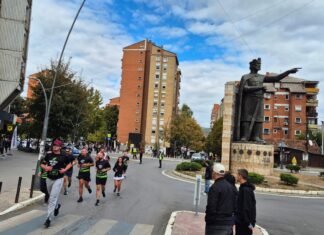
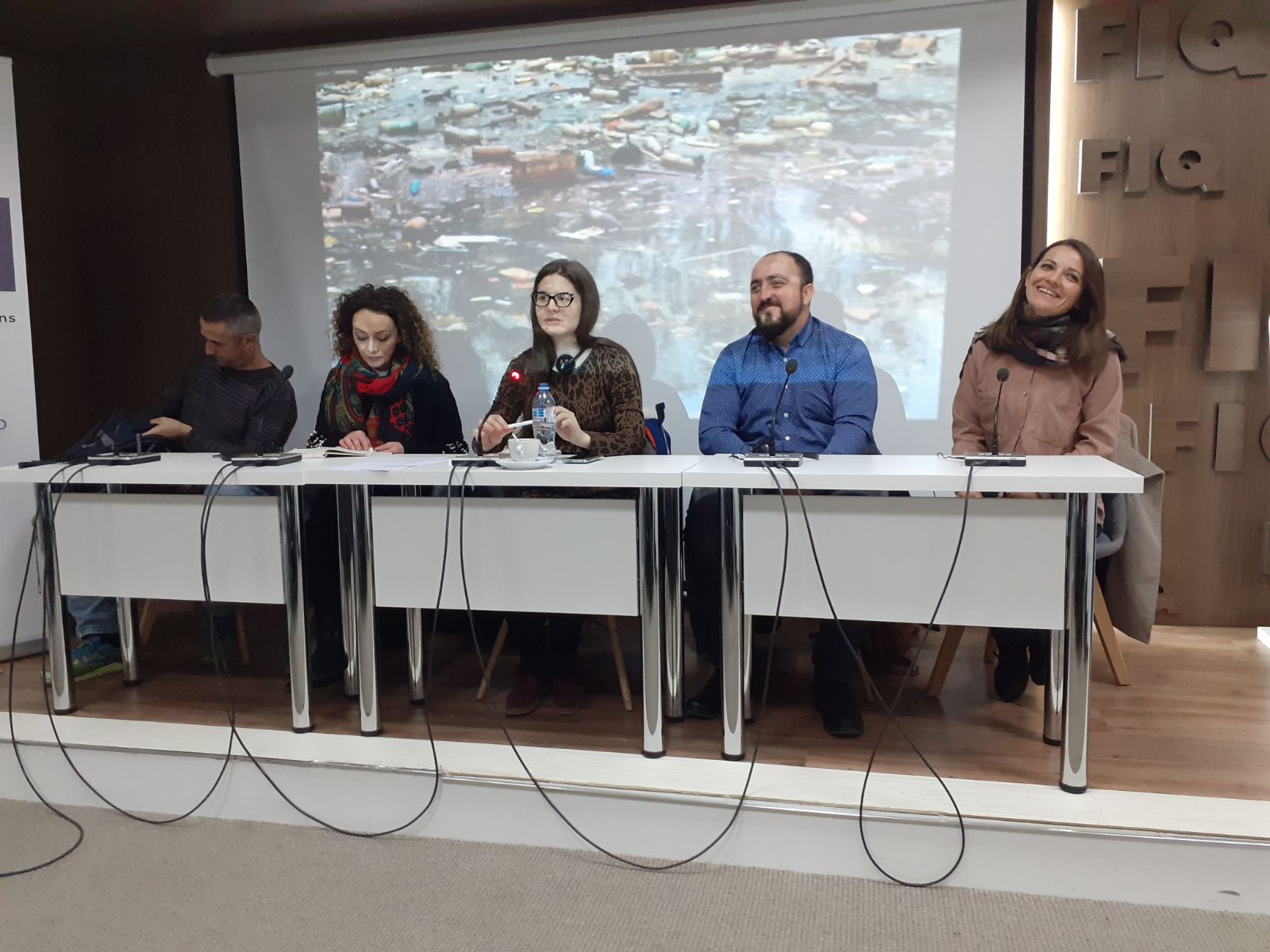
 Illegal dumping, illegal logging, underdeveloped infrastructure, illegal construction of residential and tourist facilities, construction of MHPPs and general pollution of rivers are some of the main ecological issues discussed during today’s debate organized in Pristina on the occasion of the International Mountain Day.
International Mountain Day was first established by the United Nations back in 2003 to create awareness about the importance of mountains to life, which cover 27% of the earth’s surface, and are home to 1.1 billion people, but also a quarter of all known plant life and animal species.
Unfortunately, mountains are endangered, not only because of climate change, but also because of abuse and negligence – was stressed out today in a debate between nature lovers who met in Pristina, organized by the KoSSev portal and the Alpine Club Pristina with the support of the International Organization for Migration (IOM) and the British Embassy in Pristina.
The discussion was attended by representatives of the Shara Mountaineering Association from Prizren, the GuideKS Association of Travel Guides, representatives of the Gracanica Tourist Organization, representatives of the Novo Brdo Tourist Organization, the Alpine Club Podgorov, the Bjeshkatr Alpine Club from Malisevo and the participants of the J-Coders Tech Heros project.
The beauty of Kosovo’s mountains seen through camera lenses of mountaineer Miroslav Lazarevic from Kosovska Mitrovica
Lack of road infrastructure
According to Rudina Lila from the GuideKs tourist guide association, the preconditions for promoting Kosovo as a tourist destination are limited, primarily due to Kosovo’s “underdeveloped infrastructure.”
„Organizing a tourist tour, which includes, for example, climbing Djeravica would be unreasonable, bearing in mind that, in the absence of road infrastructure, you must first walk for two hours before you start climbing. We are dealing with unfinished, dangerous roads, partly destroyed by water,” Lila warned.
 Illegal dumping
Valdete Collaku of the Shara Mountaineering Association, however, said that illegal dumping is the real obstacle for enthusiasts and nature lovers, adding that members of the association have to regularly check the tour routes because they often become illegal dumping sites.
“We check the routes because we never know when we will find unpleasant sights of illegal dumping, especially in parts inhabited by a larger population. Unfortunately, it is difficult to preserve the pristine nature in which most people do not even understand the mountain,“ Collaku said.
Mini hydroelectric power plants
Collaku also drew attention to another danger to the Shara Mountain’s ecosystem – the construction of a MHPP in the Strpce region. Members of the association, along with the locals, have been protesting against the construction for months now. Collaku, however, said that she does not believe that citizens’ efforts will be met with an appropriate response from institutions.
A resident of Strpce who attended the discussion raised suspicion that permits for the construction of these plants were issued as a result of corruption at the competent institutions at all levels. He also drew attention to the police violence suffered by Strpce residents on two occasions while trying to prevent the construction of MHPP.
River pollution
Nazmi Hasanramaj of the Alpine Club Pristina and one of the organizers of the debate addressed the problem of river pollution. Hasanramaj cited the villages near the Bistrica River as an example, whose residents “cannot even bathe in the river because of the pollution, let alone use it for drinking or feeding livestock.”
This river pollution is a result of numerous illegal sewage and wastewater connections. Institutions, however, often claim that the problem cannot be solved as these illegal connections are hard to find.
As a solution, Hasanramaj proposed an application be developed which would be used by guides and nature enthusiasts to report these and other environmental problems to the media, as well as to the competent authorities.
Half the people on the planet rely on drinking water from the mountains every day, since as much as 70% of fresh water comes from the mountains. As a rule, the closer the rivers are to populated areas, the more polluted they are. For example, the inhabitants of Laplje Selo village in the Gracanica municipality have been asking the authorities for months to resolve the problem of the pollution of the Gracanka River.
„There are multiple sources of river pollution. In addition to the tailing pit from two mines, there is a problem of chemical spills in the Gracanka River. These chemicals come from Ajvalija,“ Boban Petrovic from the TO Gracanica underlined, adding that identifying another polluter, believed to be located between Laplje Selo and Ajvalija, is the biggest problem so far.
In addition to the river pollution, the Gracanica municipality also faces the problem of illegal dumping sites which occur as the result of negligence of citizens – Petrovic said.
At the end of the discussion, the Center for Social Initiatives, which created the Albanian-Serbian language learning platform – Voc-Up – prepared a short Serbian language lesson.
Preuzimanje i objavljivanje tekstova sa portala KoSSev nije dozvoljeno bez navođenja izvora. Hvala na poštovanju etike novinarske profesije.