The Diocese of Raska-Prizren announced that it was once again prohibited by Kosovo authorities from accessing its church and holding a religious ceremony for Feast of the Ascension of Christ on May 24th. They added that it was done without any legal basis, continuing serious violations of the religious rights and freedoms of the Serbian Orthodox Church (SOC) in Kosovo.
The Diocese wrote in a press release that: “Several days before the Ascension Feast, the Diocese of Raska-Prizren, with the best intentions, informed the Kosovo police about the planned religious ceremony at the Christ the Savior Cathedral in Pristina on May 24th, for the purpose of securing the religious gathering and organizing vehicle parking.”
They added that on Wednesday, the SOC parish in Pristina was informally, and only verbally, informed by the Kosovo police that the Serbian Orthodox Church was prohibited from holding the Ascension Day liturgy in our Christ the Savior Cathedral in Pristina.
“Our priest was verbally informed that the Kosovo authorities are banning the carrying out of religious ceremonies in our cathedral in Pristina ‘as long as the lawsuit brought by the University of Pristina against the Diocese of Raska-Prizren continues,’ as well as due to alleged and unspecified security reasons,” they add, noting that no written decision was given to the priest on this occasion.
In 2018, the University of Pristina initiated a lawsuit against the Diocese of Raska-Prizren over the land.
“It has since been stalled due to a series of procedural reasons.”
The Diocese underlined that it is important to emphasize that before a binding and final court decision, the legal owner of the property, and especially of a religious object, cannot be denied access and use of a place of worship anywhere in the democratic world.
“According to the international principle of ‘presumption of innocence,’ which applies to both criminal and property issues, the existence of a dispute cannot be a reason to prevent the free use of property which is legally still listed in the cadaster as the property of the SOC, and especially not for violating the statutory rights to freedom of assembly and religious ceremonies clearly defined in Kosovo’s legislation. Otherwise, anyone could arbitrarily dispute property and violate basic religious and human rights with false accusations. Therefore, according to all international standards, SOC property is inviolable until a court process potentially proves otherwise, and all legal remedies are exhausted.”
The Diocese of Raska-Prizren stated that this issue was highlighted in the 2022 United States State Department Report on Religious Freedom in Kosovo – “which indicates an existence of systematic violation of the legally regulated religious rights of the SOC.”
Meanwhile, the Kosovo police have failed to provide a written response to the concerns raised by the SOC. Moreover, they have not issued a written prohibition on worship that is substantiated by any sort of judicial decision.
According to the Diocese, this is primarily because there are no valid legal foundations for issuing such a prohibition.
“Consequently, the ban was merely articulated verbally, implying the risk of a potential incident if the Church were to exercise its constitutionally protected right to freedom of worship.”
“On this occasion, the Diocese of Raska-Prizren is voicing its strongest protest against the flagrant violation of our religious rights and the abuse of laws by the Kosovo police, who are legally bound to ensure freedom of assembly, worship and the security of religious sites. The Diocese is committed to utilizing all legal avenues to resolve this issue in strict accordance with the law.”
They assessed that “serious discrimination” against SOC is evident and escalating.
“By prohibiting this gathering, refusing to implement a number of legal and judicial obligations towards the SOC, and denying access to clergy and believers to some religious sites in the territory of Kosovo, a serious and escalating situation of religious, ethnic, and legal discrimination is clearly evident”
They state that daily attempts are made to further undermine the rights of the SOC, reiterating the necessity for it to have enhanced legal protection.
“This is crucial in order to prevent the future misuse of rights and laws, especially religious freedoms, by Kosovo institutions.”
Kosovo Police has yet to react to the allegations of the Eparchy of Raska-Prizren. KoSSev portal also reached out to this institution via email.
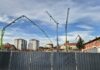
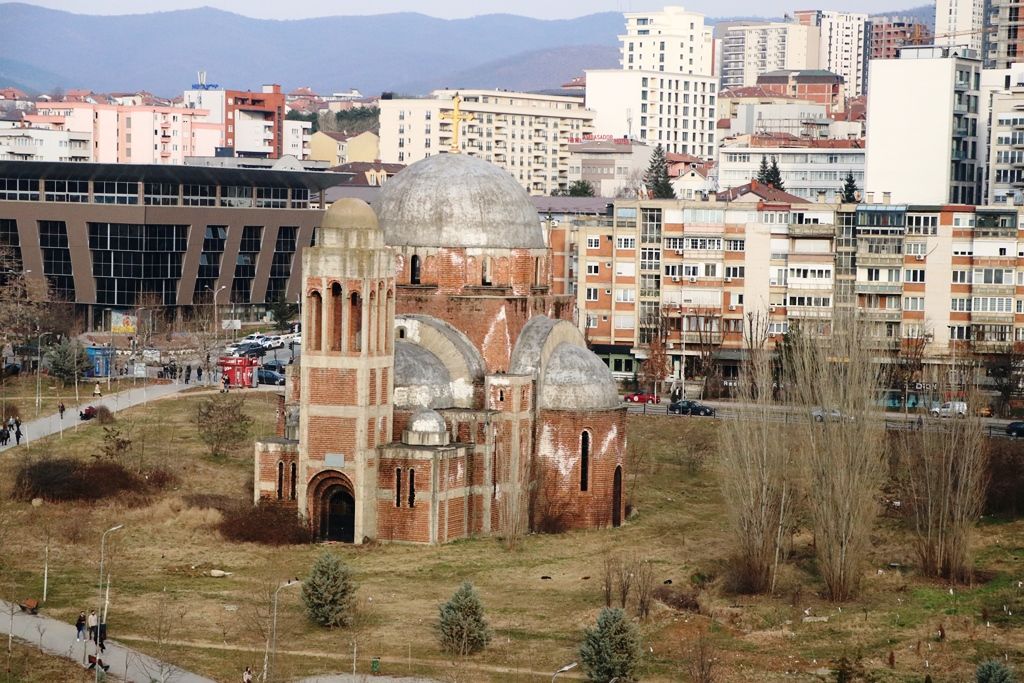
The unfinished Church of Christ the Savior in Pristina has been a frequent subject of articles in the Kosovo media and politicians’ speeches for years. Claims are made that it was an illegally built temple linked to the time of Slobodan Milosevic, due to which initiatives for its demolition, as well as court proceedings, were launched.
On the other hand, the Eparchy of Raska-Prizren states that it has detailed documentation with permits and sources from the cadaster that it is the owner of the land and the unfinished building, and that the documentation related to the construction of the church, as well as the ownership of the land, has been submitted to all international institutions in Kosovo.
The Church of Christ the Savior, whose construction began in 1990 only to be suspended in 1998 due to the outbreak of war in Kosovo, was repeatedly subjected to attacks, while several attempts were made to place landmines in or around the church. At one point, the church was even used as a public toilet. A music video was filmed at the site, and in 2015, and the walls of the church served as “rock-climbing walls.”
In June 2021, the Patron Saint’s Day celebration was held in this church for the first time in 23 years. The liturgy was led by Bishop Teodosije of Raska and Prizren and attended by a small group of Orthodox believers, which was interpreted by Pristina as a provocation.
Protests soon followed and graffiti was sprayed on the door of the unfinished church: „Jesus hates Serbs“ and „The symbol of chauvinism is becoming a holy site, with the blessing of Albin Kurti“.
However, no celebration of the Patron Saint’s Day was held the following year.
As Stanisa Arsic, the parish priest of Pristina, confirmed for KoSSev at the time, the Kosovo police prevented them from doing so. The head of the Kosovo Office, Petar Petkovic, also made the same allegations.
Preuzimanje i objavljivanje tekstova sa portala KoSSev nije dozvoljeno bez navođenja izvora. Hvala na poštovanju etike novinarske profesije.