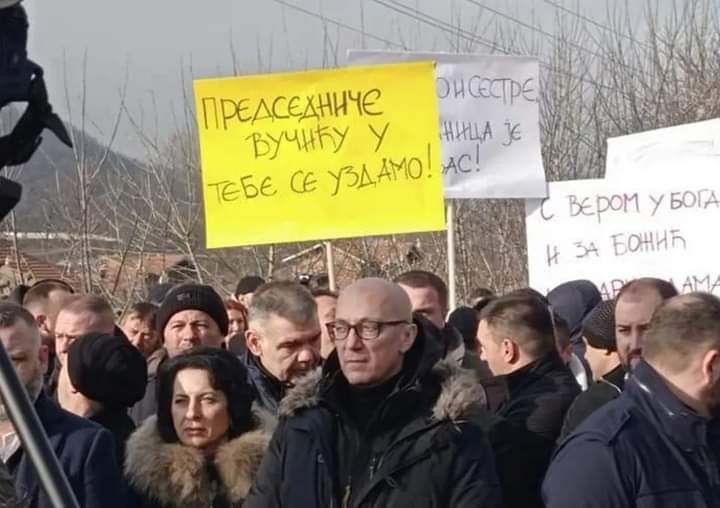
Exactly three years ago today, the barricades in northern Kosovo were removed, bringing an end to a 20-day road blockade that had followed the collective withdrawal of Serbs from Kosovo institutions—the police, the judiciary, and municipal authorities in the North, as well as certain institutions at the central level. The decision to dismantle the barricades came after an agreement with official Belgrade, and the events at the time marked a turning point for the political and security situation in the North.
The barricades were removed in a synchronized manner, without intervention by the Kosovo Police, in the presence of KFOR and a large number of media outlets. That day, roads in North Mitrovica, Zvecan, and Zubin Potok became passable again, and hospitality venues resumed normal working hours. Kosovo Prime Minister Albin Kurti stated at the time that “those who set up the barricades also decided themselves to remove them.”
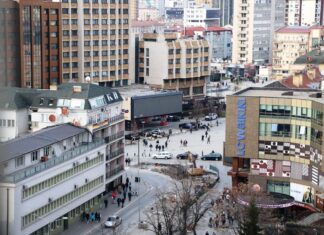
The removal of the barricades took place in the context of the already ongoing withdrawal of Serbs from Kosovo institutions—a move that, in the years that followed, has increasingly been described even within the Serbian community itself as a strategic and almost irreparable mistake. It was precisely this vacuum that enabled the ruling Self-Determination (Vetëvendosje) movement to assume full institutional and administrative control over the North—territorial, security-related, and governance-wise—significantly altering both the appearance of the northern municipalities and the everyday lives of their residents.
While the Albanian community largely describes these changes as “liberation” and the “unification of Mitrovica,” most Serbs still view them as unfavorable, accompanied by a sense of lost political influence and institutional protection. This reality is also marked by a high level of insecurity, despite the official narrative from Pristina that Serbs have been freed from “Serbian criminals,” allegedly led by Milan Radoičić.
Meanwhile, Kosovo held snap general elections on Sunday—the second this year and the fourth overall, including the second round of local elections. In all of these electoral cycles, the Serb List participated once again. While it took part in the February elections under conditions of an institutional boycott, primarily to preserve parliamentary mandates, the situation changed in the local elections and the most recent general vote: Serbs returned to local self-government in the North, to institutions that now operate under the portrait of Kosovo President Vjosa Osmani and the Kosovo flag.
There are still no Serbs in the judiciary or the police in the North, aside from newly recruited personnel.
In these elections as well, the Serb List achieved a convincing victory within the Serbian electorate. It won 41,823 votes—more than 3,000 votes more than in the February elections—despite the fact that the withdrawal of Serbs from institutions has meanwhile been widely recognized as a political miscalculation.
This “miscalculation” and the resulting vacuum further eroded the international image of Serbs in Kosovo. Contributing to this were clashes with KFOR in May 2023, the attack in Banjska—publicly acknowledged as having been carried out by the Serbian side—and an incident on the Ibar–Lepenac canal a year later, in 2024, for which Kosovo authorities accuse Belgrade, a claim Serbia denies. At the same time, proceedings are ongoing before Pristina’s judiciary against three Serbs in connection with this case.
This period was also marked by mass arrests and detentions of Serbs, including over the installation of the barricades.
Just a few months after the removal of the barricades, Serbia also accepted new international obligations through a document known as the “European Agreement on the Path to Normalization of Relations between Kosovo and Serbia.” Although Serbian President Aleksandar Vučić strongly rejected interpretations that this amounted to recognition of Kosovo, part of the public sees the document as de facto recognition of Kosovo’s independence, as well as an interim step toward a final agreement.
In the meantime, the “normalization of relations between Kosovo and Serbia,” that is, this agreement, has been officially incorporated into Chapter 35 of Serbia’s EU accession negotiations.
The election results further illustrate the paradox of the Serbian political scene in Kosovo: despite the changed reality on the ground, the loss of institutional power, the strong consolidation of Self-Determination’s rule in the North, and Serbia’s new international commitments, support for the Serb List among Serbs has remained almost untouched—and has even strengthened.
At the same time, Albin Kurti’s Self-Determination further consolidated its position, achieving a stronger result than in the February elections, with around 49.3 percent of the vote and a projected 56 parliamentary seats.
Tatjana Lazarević
Read more:
Preuzimanje i objavljivanje tekstova sa portala KoSSev nije dozvoljeno bez navođenja izvora. Hvala na poštovanju etike novinarske profesije.