Igor Popović, acting deputy director of the Serbian Government’s Office for Kosovo and Metohija, has reached a plea agreement with the Kosovo Special Prosecution Office this week, admitting guilt to charges of “inciting discord and intolerance.”
The indictment and the plea agreement have been submitted to the Basic Court in Pristina, the prosecution confirmed, as did Popović’s lawyer. The Serbian side, which had previously denied any wrongdoing, has not publicly responded to the development.
KoSSev reached out to the Office for Kosovo and Metohija for comment on whether Popović had consulted with officials in Belgrade prior to his plea deal, and what the official response was — if any — to secure his release. We received no reply.
His lawyer stated earlier that it was not the time for public comments while the proceedings were ongoing.
Janjić: A Severe Blow to the Government
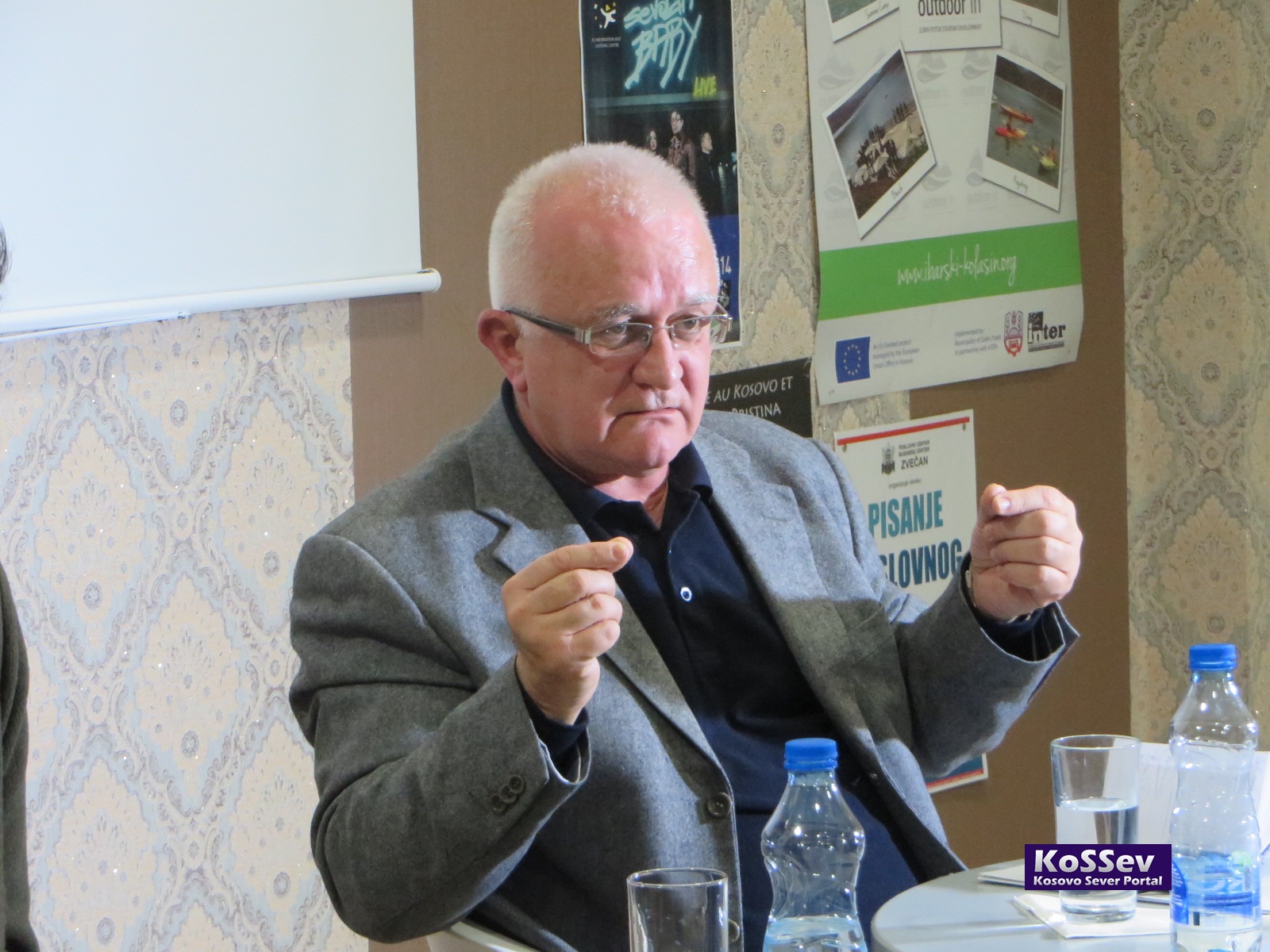
Dušan Janjić, director of the Forum for Ethnic Relations and a long-time Kosovo affairs analyst, said that the ramifications of Popović’s admission of guilt are already visible — and multiple.
“One is even, in a way, positive,” Janjić noted. “It may serve as a wake-up call for part of the Serbian community in Kosovo and Serbia regarding the competence and integrity of their government officials. That level has been critically low for quite some time now.”
He went on to highlight deeper issues, including a lack of understanding of official policy among state officials and a dissonance between individual actions and Serbia’s current political narrative on Kosovo.
Since 2016, Janjić explained, Serbian officials have adopted a form of “newspeak” — a language that presents Kosovo’s institutions as illegitimate by routinely using the phrase “so-called” when referring to Kosovo’s police, courts, or government. Popović’s plea deal directly contradicts this official discourse.
“In a functioning state, a detained official — if unable to consult directly — should at least know the official line of the government,” Janjić said, adding that this represents “a serious blow to the current leadership.”
He argued that the case demonstrates the need for the Serbian government to abandon its propagandistic vocabulary and instead focus on preparing officials to engage constructively and realistically.
Challenge to Serbia’s Kosovo Narrative
Janjić also raised concerns about the broader implications for Serbia’s diplomatic stance, particularly in light of UN Security Council Resolution 1244.
“According to that document, the KLA (UÇK) was to be demilitarized, not treated as a terrorist organization. Labeling them as such is a political choice made by the Serbian government since 2016 to justify its internal narratives,” Janjić explained. “That doesn’t mean the KLA didn’t commit crimes.”
He believes Popović’s plea highlights Belgrade’s lack of seriousness in dealing with the Kosovo issue, reflected in the kind of personnel it appoints to sensitive positions.
Janjić warned that this incident may delegitimize Serbian leadership in the eyes of international stakeholders who are being assured that Belgrade is committed to peace and reconciliation.
“Let’s be clear,” he said. “The current authorities in Serbia — not to be confused with the state itself — do not represent the policy of Serbia as defined by the Constitution, the law, or the Brussels agreements.”
According to Janjić, the international community increasingly sees the Serbian government as detached from both its citizens and the state’s long-term interests.
Setting a Precedent
Most troubling, Janjić warned, is that this case could now serve as a precedent for the Kosovo authorities in dealing with future cases.
“There’s no more ambiguity — a guilty plea is an admission,” he said.
Janjić sees the case playing directly into the hands of the ruling Self-Determination party (Vetëvendosje), especially in its efforts to formalize the KSF as Kosovo’s army.
Asked whether Kosovo’s government is likely to document and use this and other recent plea deals involving Serbs — on charges such as terrorism, hate speech, and espionage — as political leverage, Janjić responded:
“They’re not the only ones. Croatia has done the same. Bosnia and Herzegovina is locked in a similar conflict over secessionism. This will undoubtedly become part of a wider strategy — from war reparations to genocide accusations. The consequences will be serious, and Popović has caused major damage.”
Whether Popović acted independently or with instructions from his superiors remains unclear. Janjić said both scenarios are plausible.
“I can believe he had input from above, but I can also believe — based on what I observe daily — that we tend to overestimate the competence of our leadership. Especially that of its top figure.”
He concluded his commentary for KoSSev with a sobering assessment: “Popović’s action reflects the complete absence of any coherent policy from Belgrade on Kosovo — with no vision beyond the next 48 hours.”
Silence in Belgrade
Following Popović’s arrest, Serbian officials, including those from the Office for Kosovo and Metohija and the foreign minister — himself a former official in the same office — demanded his immediate release in a meeting with the Quint and warned that no further dialogue would take place until he was freed.
President Aleksandar Vučić said Serbia would “respond harshly,” and accused Kosovo’s Prime Minister Albin Kurti of pushing for conflict.
However, the official response to Popović’s guilty plea — which directly contradicts Belgrade’s earlier claims of innocence — has been silence.
Likewise, there has been no reaction to the media campaign in Kosovo following Popović’s arrest. Kurti accused Serbia of systematic attempts to destabilize Kosovo and sabotage EU-led dialogue, with Popović at the center of these allegations.
Albanian-language media claimed Popović had recorded meetings in Brussels and cooperated with Serbian intelligence services. For days, outlets in Pristina published alleged content from his confiscated phone — including audio recordings, messages with intelligence officials, and references to individuals charged with war crimes.
Vlajić Warns of Misuse of Plea Deals as Serbian Official Admits Guilt in Kosovo
Preuzimanje i objavljivanje tekstova sa portala KoSSev nije dozvoljeno bez navođenja izvora. Hvala na poštovanju etike novinarske profesije.