Written by: Jelena L. Petković
Because it is their will.
“He was the idol of my life. A great love, great understanding. We lived in perfect harmony, without a shred of conflict. He was a great humanist, loved people, lived for others. To him, the patient was always right. A skilled diagnostician, a practical man, and careful with the ill. He spent thousands of nights at the hospital. At home, we lived for that moment when he would tell us a life had been saved.”
The pauses between these words were filled with deep sighs.
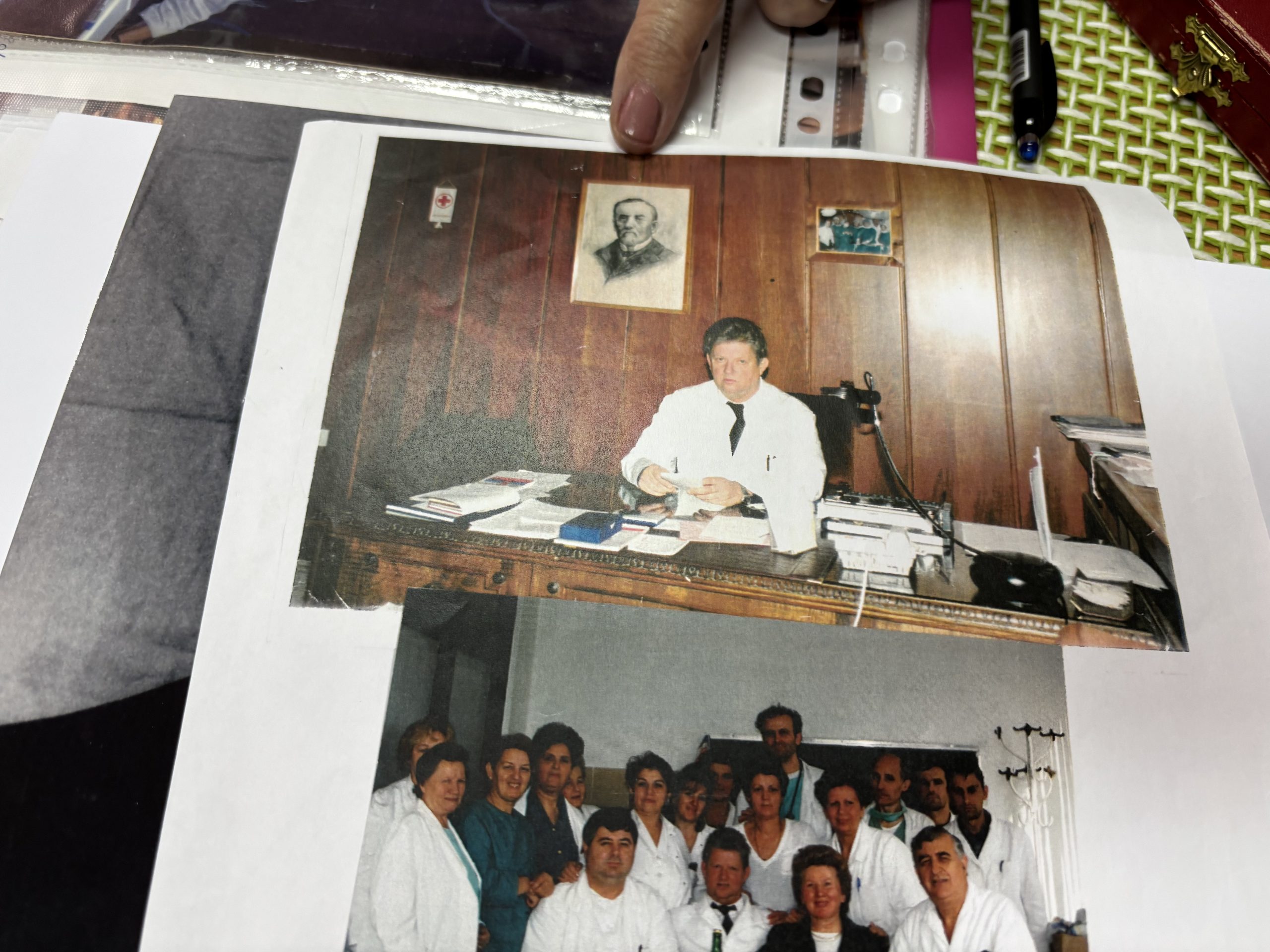
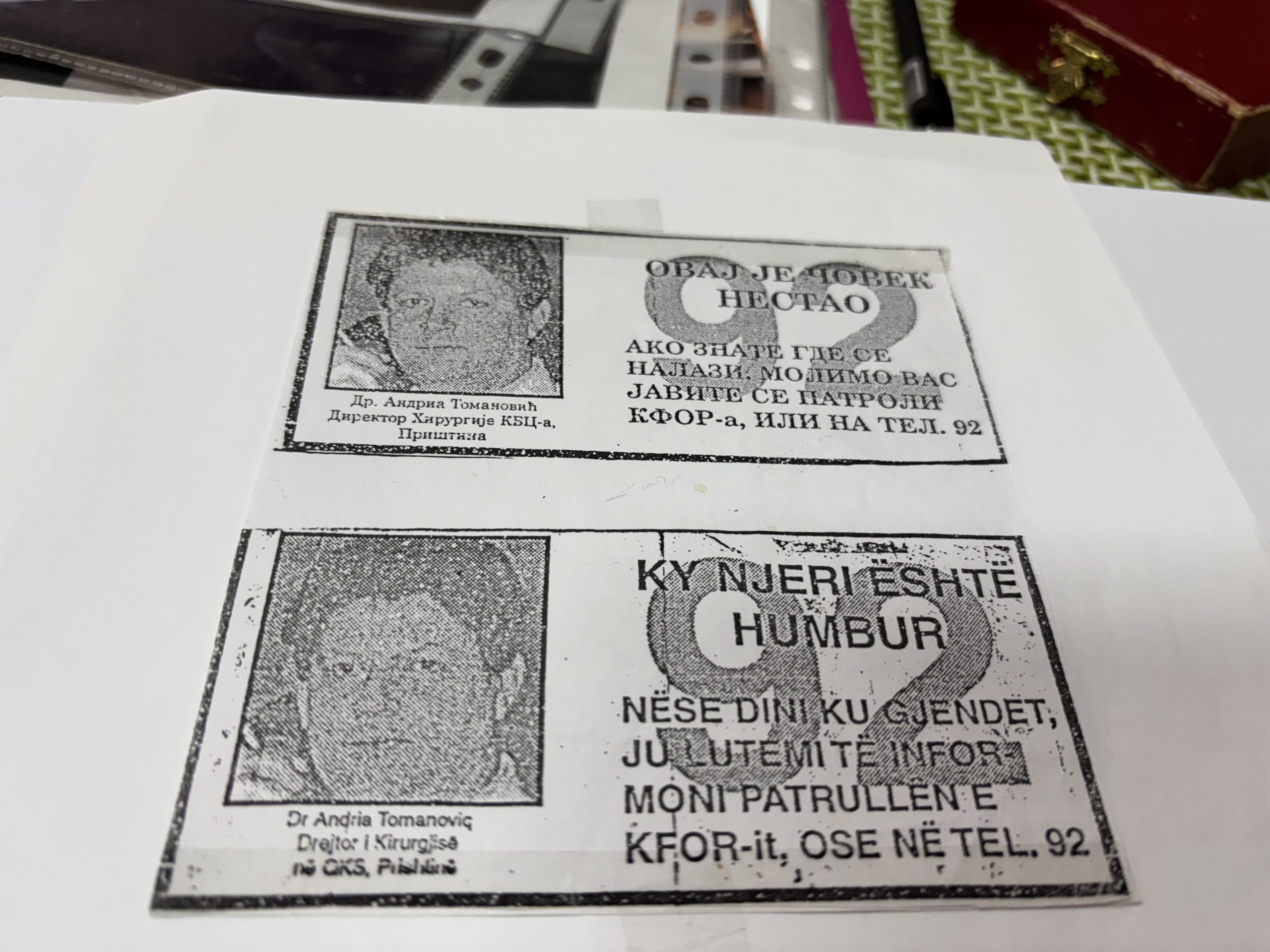
Verica Tomanović is the wife of Andrija Tomanović, a surgeon, head of the Surgical Clinic in Pristina, and a full professor at the Faculty of Medicine in Pristina. He was kidnapped on June 24, 1999. He was 63 years old. Since then, he has been considered missing.
In front of Verica Tomanović lies extensive documentation. As the president of the Association of Families of Kidnapped and Missing Persons, she carries the fate of many who, a quarter of a century later, still live with the agony of one question—where are they?
Stacks of folders on the shelves are notes from hundreds of meetings, pleas, appeals, empty promises, and years of deepening wounds. There is no person, organization, or mission that Verica, as president of the Association, hasn’t approached, pleading for the truth.
Hans Hækkerup, the Special Representative of the UN Secretary-General in Kosovo, made promises. She remembers the head of UNMIK’s investigative unit, Malcolm Stark, offering families a pile of excuses. Families testified in the U.S. Congress, but…
“It was known that many detained Serbs were kept in villages, where many prisons were private, where people were tortured in various ways. No one investigated, and the camps were never found. Not a single person was saved. The year 2008 was the most critical. Carla Del Ponte published her book about the Yellow House and revealed that around 300 people were transported to Albania, where they met the most tragic and monstrous fate. Dick Marty’s report was accepted by the Council of Europe. Then in 2012–2013, we had frequent meetings with EULEX representatives—they investigated our cases, but we got no answers,” says Verica Tomanović for KoSSev, adding that EULEX “transferred all the cases to the Kosovo prosecution, and now we don’t know what has happened since.”
The International Commission on Missing Persons (ICMP) estimates that around 4,500 people went missing by the end of the conflict in Kosovo in June 1999, and today about 1,700 are still listed as missing.
The International Criminal Tribunal for the former Yugoslavia (ICTY) did not bring Verica Tomanović the truth. She hoped it might come from the Kosovo Specialist Chambers and Specialist Prosecutor’s Office in The Hague.
At the very beginning of the search, in 2002, three key protocols were signed: on cross-border repatriation of identified remains, on the exchange of forensic experts and expertise, and on joint verification teams for hidden prisons.
Ten years later, in 2012, the issue of finding the missing was highlighted as the most important topic to launch the newly begun Brussels negotiations.
Another eleven years passed before Belgrade and Pristina, through the signatures of Aleksandar Vučić and Albin Kurti in May 2023, agreed to cooperate on locating and identifying those still listed as missing.
Another year and a half passed before chief negotiators Petar Petković and Besnik Bislimi agreed in December 2024 to appoint a commission to implement the Declaration on Missing Persons.
Since then—not a single meeting has been held.
“We kept expecting the signed declarations in London, Washington, and Brussels to yield results, but the political situation does not allow it. We insisted on swift resolution because both Albanian and our families have suffered and grieved enough. It’s high time we all knew the truth,” appeals Verica Tomanović, but…
“Given my 26 years of experience, I believe many promises were false. They are prolonging the process as much as possible, maybe for reasons unknown to us.”
A Society That Stops Caring
Every visitor—since no one enters this place by accident—is met by the eyes of missing people from the photos on the walls of the Association’s office in Belgrade. Eyes, noses, mouths, hair of the disappeared reflect in a mirror. Not time, but society is what forgets.

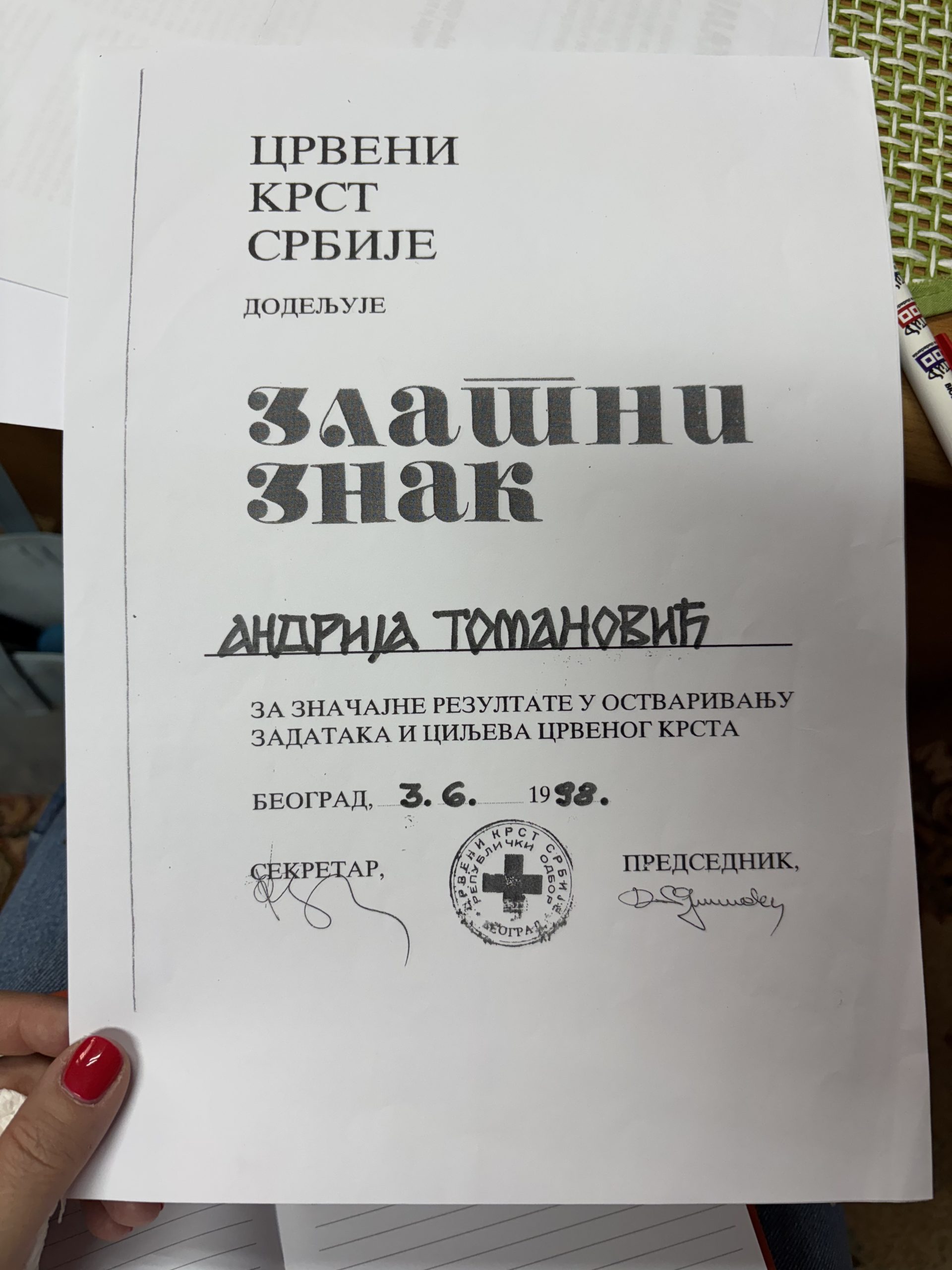
Verica spoke while clutching a medal for humanitarian work, awarded by the Red Cross of Yugoslavia. A golden treasure and one of the many documents commemorating Andrija.
“I’ll remember that tragic day for the rest of my life,” she continued, recalling the promise of a British lieutenant colonel who had guaranteed Andrija’s safety.
It was June 24. It was 1 p.m. Tomanović had just finished his hospital shift. He told his daughter Jelena that he was heading home.
“He got dressed and walked toward the hospital gate. Two unknown men approached him and forcibly pushed him into a car. Around the gate and hospital entrance were staff and KFOR soldiers, stationed at five checkpoints throughout the Clinical Center courtyard. No one reacted to the abduction of a man everyone in Pristina and the surrounding area knew. After that, a dreadful silence.”
A night of horror followed. A million phone calls to the home phone. Godparents, friends, neighbors—no one knew anything.
“Andrija had great faith in those people. He believed he had done good. He walked freely around the hospital and city. They stabbed us in the heart. I wonder if any of the people whose lives he saved daily said a kind word about him—if anyone offered him a hand? Andrija was dignified and true to himself. He wanted to prove that a person must remain a human being until the end of life.”
Andrija believed in people and false promises, rejoiced in life together, his wife recalls. His last words were: “See you tomorrow, we’ll do rounds together.”
Kidnapped and Killed
“It was April 21, 1999. Serbian forces surrounded our entire village—Nakarada, in Kosovo Polje. They took 16 members of our family—my husband, his brothers, and all his male relatives. For six years, we didn’t know where they were. Later we found out they were killed that same night and buried in the village of Pomazatin, in Kosovo Polje. Then their bodies were moved to Batajnica, in Serbia. Many body parts are still missing, and we haven’t found them yet,” recounted Sherife Mirena, wife of the murdered Nazif Mirena, in a single breath.

She spoke quietly, full of sighs, in the offices of the Missing Persons Resource Center in Pristina.
That evening, they turned to their Serbian neighbors for help.
“We all went to a Serbian family nearby. We went to a house where there were soldiers getting dressed… They told us they didn’t know anything specific about our loved ones. They told us to go to the police station… After that, we were just acting based on the information we got from people—some said they were in prison, some said they were here or there. We didn’t know where to go because we had nowhere to go. It was wartime, and we didn’t dare go outside,” she continued with difficulty.
For six years, they didn’t know her husband and the other men from the family had been killed.
“People around us knew, but no one had the courage to come and tell us. When they were buried in Pomazatin, someone found the ID card of one of the Mirena family members. They knew, but no one could come and tell us—because it was just us women and children left,” Sherife told KoSSev.
She remembers every moment when she went to Pomazatin with two other people. There, she claims, she found Nazif’s cap.
“As soon as I saw the cap, I said: ‘This is Nazif’s cap.’ The neighbors who came with me said it wasn’t, maybe to stop me from believing it. They said: ‘Your husband isn’t the only one who had a cap like that,’” says Sherife Mirena.
She claims that the families were constantly told their loved ones were in prisons.
“They would call us to go meet some man at Merdare, to go see him in prison in Serbia. I wanted to go, but my children wouldn’t let me. They said: ‘They killed Dad, and now you want to go there too?’ Until the remains were found, through the government, we didn’t know anything. We gave as much money as we could to people who claimed to help—some lawyers—we gave them 100 Deutsche Marks back then, but we never learned anything for certain,” she says.
“I would also like to speak,” added Fetije Mirena, who, alongside Sherife, waited for years to learn the terrible news.

“My husband’s name was Nezir Mirena. He was born in 1964. He was 35 years old. He studied geomatics, but at the time he worked in security at KEK (Kosovo’s Electricity Corporation). He was a calm and family-oriented man. We were married for 12 years. He never had, nor were we ever interested in, anything connected to war. What mattered to him was his wife, his children, and his parents. He was a good man to me, and I believe he was to others too. And just like that, they took him away,” said Fetije, wiping away tears while speaking to KoSSev.
“We searched everywhere,” she continued.
“Wherever we heard talk—‘they’re here’, ‘they’re there’. We gave a lot of money. My sister-in-law was contacted and told her son Mentor would be brought to the border. She gave 40,000 Deutsche Marks to a lawyer in Serbia who promised to bring the boy—one day, then another—telling her to go to Merdare and wait to see him.”
It was all deception, she adds with a hopeless shrug.
“They ruined entire homes, our hearts—nothing alive remains within us. For us, this is just a passing life, lived in darkness.”
Fetije Mirena is the mother of four children. If she were to start telling everything, she says not even 500 pages would be enough to describe the horror and suffering her family endured. She shows a photo on her phone of a young, beautiful woman in a wedding dress—standing in a cemetery. Her daughter didn’t have a wedding, she simply went to her father’s grave.
“As mothers, we suffered immensely. You can never see our children truly happy or joyful.”
Previously, it was reported that “on April 21, 1999, a group of paramilitary formations disembarked from a train in Kosovo Polje. Dressed in black, armed and masked, they entered homes…”
Sherife emphasizes that there has never been a trial for this crime.
“No one ever called us—neither the Hague Tribunal nor any other court—and what still hurts is that the war criminals have not been found. We will always demand that they be brought to justice.”
She believes that an investigation would reveal who the killers were.
“Our neighbors were Serbs,” adds Fetije Mirena, heartbroken.
“We hope that the fate of our loved ones will soon be uncovered. I hope both Belgrade and Kosovo will work on this—and that, just like for Albanians, the fate of missing Serbs will also be revealed. We met with Serbian mothers and wives—we parted ways with kindness and respect.”
“There could be pressure on Serbia, but there isn’t. There are many missing persons, and it seems the criminals have forgotten them—but we never will,” emphasized Sherife Mirena in Pristina.
They Haven’t Been Identified
“The problem lies in Pristina. They refuse to carry out identifications,” said Verica Tomanović in Belgrade.
On the occasion of the International Day of the Disappeared, August 31, 2024, the Humanitarian Law Center, on behalf of the RECOM Reconciliation Network, presented the book “Dignity for the Missing” about 1,636 people missing in connection with the war in Kosovo. From a press conference, an appeal was made to both governments to double their efforts to identify the human remains in the Pristina morgue.
The International Commission on Missing Persons (ICMP) states on its website that it has collected DNA samples from 97 percent of families of the missing necessary for the identification process. However, in more than 1,700 cases—including around 400 sets of remains located in the Pristina morgue—a match could not be established.
In April 2022, EULEX informed the public that it was working with Kosovo authorities to review all human remains stored in the Pristina morgue.
With the intention of inquiring about the results of this three-year effort, and to focus specifically on the topic of identification and the work of EULEX’s forensic teams so far, KoSSev contacted the mission in early May of this year, requesting a short interview with the head of EULEX’s forensic team, Dr. Luísa Marinho. They replied that she was unavailable and would respond at a more appropriate time.
Over the years, errors have been discovered in the identification process, especially during the period when classical identification—i.e., visual recognition—was used.
Due to such cases, Verica Tomanović recalls, families requested the re-exhumation of around 2,000 buried individuals. This is especially delicate, she adds, because the families had already erected gravestones.
She says that the only one who listened to her was Bajram Qerkini, president of the “Parents’ Voice” association from Mitrovica, later also the director of the Missing Persons Resource Center in Pristina. He insisted that this process be carried out.
Verica Tomanović points out that this led to the discovery of 13 mistaken identifications.
“A mother’s heart aches the same, whether Albanian or Serbian,” is the sentence by which Bajram Qerkini will be remembered. He passed away in early 2025 without ever learning the fate of his son Reshat, whom he searched for over 26 years.
Qerkini and Milorad Trifunović, coordinator of the Association of Families of Kidnapped and Missing Persons in Kosovo—who passed away in 2020 after searching since 1998 for his brother Miroslav—will be remembered as the duo who made a huge and important step forward by joining forces and founding the Missing Persons Resource Center in Pristina.
They will be remembered for their brave appearances, in which they consistently emphasized that politicians are obstructing the process of uncovering the fate of the missing, but that the families will never give up.
Mistakes
Mistakes were made even by those entrusted with this sensitive task.
Due to a series of oversights by UNMIK, the family of Rajko Milenković from Kosovska Mitrovica received his remains only in 2014—14 years after he was found, and more than a decade after a positive DNA match.
Milenković disappeared on November 14, 1999, in the village of Bukos, in the Vucitrn municipality. His remains, found in Vucitrn, were buried in Pristina. According to a UNMIK document titled “International Criminal Tribunal for the Former Yugoslavia,” the body was exhumed in June 2000 at the Dragodan cemetery.
Although there was a DNA match, UNMIK’s Department of Forensic Medicine “mistakenly” handed over Milenković’s remains in 2003 to an Albanian family—those of the missing B.K. from Klina.
There was speculation that the remains were moved to the morgue in Orahovac or Suva Reka, but the UNMIK Advisory Human Rights Panel reached the following conclusion:
“It appears to the Panel that from the time UNMIK authorities realised that the mortal remains of Mr Rajko Milenković were lost, all contacts with the family and UNMIK authorities were halted.”
Only in the second half of 2013, following the insistence of the UN’s Advisory Human Rights Panel in Kosovo and an appeal by the Milenković family, was the “mistake” corrected.
Declaration as a Last Hope
A declaration signed at the end of 2024 obliges Belgrade and Pristina to cooperate in locating and identifying hundreds of individuals still listed as missing from the 1998–1999 conflict.
Political will remains a key obstacle in resolving the issue of the missing, emphasizes Bekim Blakaj, executive director of the Humanitarian Law Center Kosovo, who was the first to recommend that the issue of missing persons be placed on the Brussels dialogue agenda.

“Even after the joint declaration by Kosovo’s Prime Minister Kurti and Serbian President Vučić, not a single provision has been implemented. Not even one meeting of the jointly agreed commission has taken place. Despite claims that the issue of the missing is humanitarian, everything continues to be treated as political.”
In an interview with KoSSev, he stressed that identifications in recent years have been progressing very slowly, concluding:
“If things continue at this pace, there will be no meaningful progress.”
It is a fact, he emphasizes, that the search for the missing has gone on 26 years after the war.
“Kosovo institutions must be much more proactive in resolving the issue of human remains at the Forensic Institute morgue in Pristina. On the other hand, it is suspected that there may still be mass graves in Serbia. The Serbian side must seek out this information, carry out exhumations, and return the bodies to the families.”
Families of the missing are victims too, Bekim Blakaj constantly emphasizes.
Dangerous Consequences for Society
In its 2022 report “Memorialization: Its Role and Importance in Dealing with the Past,” the Humanitarian Law Center Kosovo particularly emphasized the importance of memorialization and examined how it looks in practice.
“And it’s terrifying. In Serbia, where mass graves were located—in Batajnica, where 755 bodies of Kosovo Albanians were found—there isn’t a single stone, plaque, or marker of memory. In Kosovo, as you know, at the site where two journalists disappeared, a small memorial plaque is damaged or stolen every year. These places must be marked, for all missing persons. Until we build that awareness, politicians and society will continue to view the issue of victims one-sidedly.”
A lack of awareness sows new danger. Societies that fail to confront the past sincerely will pay the price in the future.
“We can measure this through our project on informal youth education, within which we organize a summer school for transitional justice,” explains Bekim Blakaj, and adds:
“In recent years, we’ve noticed that young people born after the war—those without any personal experience—are becoming increasingly radicalized. They get their information from family or the media. It’s clear that we’re moving in a bad direction, creating generations with prejudices and no accurate knowledge of the past. Unfortunately, this creates the potential for another cycle of violence in the future. Even without violence, it’s abnormal to live with such completely opposing views of the past. Of course, the first step is accepting the truth and recognizing the victims—regardless of which side they were on.”
Families must be at the center of dealing with the past.
Comfort Center
Families of the missing are often financially unstable, socially marginalized, and psychologically exhausted.
They need their stories to be heard. This is why the Humanitarian Law Center Kosovo is one of the key institutions for them.
The other is the Missing Persons Resource Center in Pristina.
“The Resource Center opened its doors to us. We shared our hardships there. They pointed out things we didn’t know—where things were and what the procedures are,” said Fetije Mirena, explaining that both she and Sherife found new hope and support there. Thanks to the center, they were able to share their stories in Belgrade and Niš.
“We will go wherever it’s necessary,” they emphasize.
There are 25 registered organizations or associations of families of the missing in Kosovo, but only a small number are truly functional, notes Nataša Božilović, program manager at the Missing Persons Resource Center.

Symbolically located in the Pristina bus station building, the center is a safe space where families—regardless of religious or ethnic background—come to share their stories and connect with one another.
“The path to healing, reconciliation, and a somewhat normal life begins with recognizing each other’s victims,” says Božilović, and continues:
“For years, families were exploited and neglected by various institutions. They eventually realized they needed to turn to each other and join forces toward a common goal.”
Božilović describes how political dynamics affect this process:
“We all know that post-conflict societies are very fragile, and that statements from top officials significantly influence the situation on the ground. When relations between Belgrade and Pristina are calm—without public quarrels or inflammatory rhetoric—the atmosphere among families is different. As soon as things escalate at the top, we feel it in our work with families. Government representatives must be careful and cautious in their actions and statements—they can cause great harm to the families of victims.”
Her colleague, Megim Mamović, nods in agreement.

Regardless of everything, the Missing Persons Resource Center continues to organize meetings and discussions.
“These two ladies,” said Mamović, referring to Fetije and Sherife, “and other families are in poor health.” He gestured toward the door, through which the Mirena family women had just exited, hurrying back to work.
“Psychosocial support is crucial. Family members need to be heard and to talk to one another. At the last workshop, there was an 80-year-old woman who had never before been invited to speak. She had lost both her son and daughter. She came, shared her story, and felt relief,” Mamović emphasizes.
Double Victims
Investigations into abductions and disappearances were under the direct mandate of the United Nations Mission in Kosovo (UNMIK), which held executive authority under Resolution 1244 until 2008. At that time, the police and judiciary were entirely under UNMIK’s control.
Since 2008, executive authority over the rule of law—as well as responsibility for investigating and prosecuting crimes—has been in the hands of the European Union Rule of Law Mission in Kosovo (EULEX). Starting in 2014, EULEX gradually transferred its executive mandate in the fields of investigation and justice to Kosovo’s institutions.
Institutions under international authority made a series of errors and oversights, for which no one has accepted responsibility or offered a proper explanation. The usual excuse was that UNMIK staff changed or rotated frequently and didn’t know what had been done just a few days earlier.
It appears the issue was a lack of management, guidelines, and communication—both internal and external. In other words, total disorganization and chaos. Whether there was a political motive or simply complete irresponsibility at both individual and higher management levels remains unclear.
A tragic example is the disappearance of journalist Marjan Melonaši, reported missing in September 2000 to the International Committee of the Red Cross, the Red Cross of Yugoslavia, the Ministry of Internal Affairs of the Republic of Serbia, and also to UNMIK.
UNMIK did not open an investigation until five years later, in 2005. A UN mission police officer opened an investigative file only to close it the same day. UNMIK did not question anyone regarding this disappearance. The investigative “effort” was merely pro forma, not genuine.
UNMIK did nothing in the case of the disappearance of journalist Marjan Melonaši, as is detailed in the opinion of the Human Rights Advisory Panel (HRAP).
This panel was established in 2006 in Kosovo in response to human rights violations recorded by UN human rights bodies, the Organization for Security and Co-operation in Europe (OSCE), Amnesty International (AI), Human Rights Watch (HRW), and following severe criticism from the Council of Europe (CoE) and the European Commission for Democracy through Law (“Venice Commission”).
Upon leaving Kosovo, Marek Nowicki, an internationally recognized human rights lawyer and former Ombudsman in Kosovo, wrote in the final report of the UNMIK Human Rights Advisory Panel, which he chaired and in which he documented numerous investigative failures: this is a case of double victimization — of the crime itself, and of the lack of effective investigation by UNMIK.
This clearly documented summary did not appear to shake the authorities. There is still no progress on the issue of locating missing persons.
“I respond to this with deep sorrow and compassion for all the victims, whether Albanian, Serbian, or Roma. The obligation to effectively search for the missing and to prosecute the perpetrators was obvious. The right to life, the most fundamental human right, demands it. In Kosovo, it was first UNMIK’s duty, then that of the Kosovo authorities and the EU mission. The result, unfortunately, is almost nothing. I can summarize it with the words ‘a massive, painful failure’ — on all our parts,” Nowicki told KoSSev.
The lack of investigation is itself a violation of human rights.
“In the context of Kosovo, we are dealing with the most serious violations of Article 2 of the European Convention on Human Rights (ECHR), which guarantees the right to life. It obliges protection against deprivation of life and the effective prosecution of perpetrators. Authorities must do everything to ensure that those responsible are brought to justice and punished. The guarantees of this right are enshrined in the constitutions of all European states and in the ECHR, and they must be upheld everywhere — Kosovo should not be an exception,” concludes Nowicki, who has also served as an expert for the Council of Europe’s Human Rights Directorate and the Venice Commission.
In opinions published from 2010 to 2016, the Human Rights Advisory Panel (HRAP) found that complaints from families seeking truth and justice were justified. HRAP recommended that the head of the UNMIK mission issue a public apology to the families and that EULEX continue the investigation. It also called on the United Nations to provide compensation to the victims’ families and to inform the public about it.
That has not happened.
“The families of the victims must continue to demand further investigation, even though as time goes on, it becomes increasingly difficult to achieve the expected results. Authorities cannot be absolved of this until all avenues of prosecution are exhausted. This requires public pressure, including from the media. I see an important role for the Ombudsman’s institution in this regard,” Nowicki notes.
The Role of the Media
The media have mostly played a negative role — even when they don’t use hate speech, they report only one side, thereby reinforcing extremist views, observes Bekim Blakaj, executive director of the Humanitarian Law Center Kosovo, and emphasizes:
“Except for a few positive examples.”
Veran Matić, former director and editor-in-chief of B92 television and president of the Association of Independent Electronic Media (ANEM), says there has never been a genuine, professional, and intensive search for the missing — most have been found as part of war crimes investigations, not as a response to the needs of families and society.
“It has always been a secondary issue, both in culture and in the politics that govern our societies. Also, the search for the missing is tied to the work of the war crimes prosecutor’s office, so when someone wants to testify, they think about whether they’ll have legal trouble, even if they had nothing to do with the crime. There’s a kind of hesitation, especially when dominant political narratives protect their own criminals.”
Still, the media can play a vital role in uncovering the truth.
“The documentary about the abduction in Sjeverin, produced by B92, exposed that monstrous killing, and after it aired, arrests were made and indictments filed. Through our programs about facing the past, we tried to raise public awareness from a humanitarian and human perspective,” he recalls.
In recent years, especially focusing on missing persons in Croatia, Matić emphasizes how crucial it is to connect the search for the missing with individual faces and humanity — not just statistics.
“Recently, the body of a Croatian man, Mijo Radić, was found — I was involved in his search. The search lasted 34 years. So, it really is possible, with a certain degree of political will.”
B92 also aired the series “Good People in Evil Times”, based on Svetlana Broz’s book, about people who risked their lives to save fellow citizens of other ethnicities. But even then — and today — some of the heroes of that series still seek anonymity because they face problems to this day.
“The root of the issue is that the questions of wartime relations and the missing are permanently political issues, used in political battles as an extension of wars that haven’t truly ended. We see rhetoric that suggests armed conflict could resume tomorrow,” Matić stresses and adds:
“In recent years, we’ve returned to this cold war climate. There is no cooperation, no serious interest in locating the missing, and time is passing. Every month there are fewer chances, fewer witnesses, and fewer people who can provide information. It’s as if someone wants it to stay that way.”
The media cannot physically search for the missing, but they can create space for policies that make it easier for officials to fulfill their duties.
“This is not just an ethical issue. Every media outlet has an obligation to address the hardest questions facing our societies in different ways — and when producing investigative pieces and publishing information, all missing persons should be mentioned. They are all our missing, and we as journalists and professionals must treat them that way.”
Serbeze Haxhiaj, an investigative journalist with BIRN who has worked for years on security and war crimes issues, is almost the only journalist who regularly covers the topic of all missing persons in Albanian-language media in Kosovo.
“In Kosovo, as in other post-conflict societies, people often prefer to see only one side as the victim. Many of my stories reflect reality — but that reality is not always welcomed, especially when it exposes crimes committed by all sides. I often receive comments labeling me a ‘spy,’ ‘pro-Serbian,’ or someone trying to ‘balance’ the crimes. These labels don’t bother me personally. What truly worries me is the political mindset — and the fact that most media and civil society, on all sides, still appear unwilling to confront the past and work toward a peaceful future,” Haxhiaj told KoSSev.
The media and journalists largely reflect the reality of a country and its society, she adds.
“But it’s possible — and necessary — to break this cycle of animosity. There should be no fear of being vilified or labeled a public enemy. Nearly two decades after the war, media in Kosovo and Serbia should be louder in advocating for peace and regional stability. Unfortunately, they are still not ready to take on that role.”
When media report on missing persons, each side usually sticks to their own version of the truth.
“Missing persons remain one of the most painful chapters of the war. The fact that each side seeks answers only for ‘their’ missing does not help close this chapter. The problem goes beyond media readiness to report or people’s willingness to seek truth and justice. On the Serbian side, this issue could be resolved more easily if wartime archives were not still classified as confidential. At this point, it seems that international pressure is the most effective way forward,” she says, and concludes:
“Political will is essential. But society also has a role — it must push political leaders to act humanely and end the suffering of thousands of families. Most of those who disappeared were civilians, taken solely because of their ethnicity.”
This pain cannot be healed without truth, and truth cannot emerge without political courage.
“I wish I knew where he is now. To find his remains, to bury him with dignity — because he deserved that,” is the sentence echoed by every mother, wife, and sister who is still searching.
Can people live together before the issue of the missing is resolved?
“It’s impossible,” many KoSSev interviewees responded.
And why don’t the authorities resolve the issue of the missing?
Because it is their will.


This text was created as part of an initiative that strengthens intercultural cooperation between Kosovo and Serbia, which is financed by the European Union. The content of the text is the sole responsibility of the KoSSev portal and does not necessarily represent the views of the European Union or other collaborators on the project.
Preuzimanje i objavljivanje tekstova sa portala KoSSev nije dozvoljeno bez navođenja izvora. Hvala na poštovanju etike novinarske profesije.