The year 2025 was marked by a deep disconnect between political messaging coming from Belgrade and Pristina and the actual processes unfolding on the international stage and within domestic politics.
At the beginning of what is now a past year, Serbian President Aleksandar Vučić, for the second time in a short span, announced new withdrawals of recognition of Kosovo, claiming that two countries “from wonderful continents” and “larger than Serbia” would revoke their recognition, which would bring the total number of such states to more than 28. At first glance, this appeared to be a continuation of Belgrade’s long-standing derecognition campaign. In reality, it remained only a rhetorical framework – throughout 2025, there was no concrete confirmation of any such moves. On the contrary.
Although Vučić reiterated several times during the year that new derecognitions would follow “soon,” this never happened. Instead, after years of stagnation and even a period of withdrawals, Kosovo received four new international recognitions within a single year – from the Bahamas, Syria, Sudan, and Kenya.
This series of recognitions represented a significant diplomatic shift for Pristina, while at the same time directly contradicting the narrative Belgrade had been building over previous years.
At the same time, the Serbian president introduced a new practice in his political communication: Kosovo was mentioned increasingly rarely in his public appearances. A topic that had dominated almost every one of his addresses for decades practically disappeared from the political agenda.
On the other side of the line – a border for some, an administrative line for others – Kosovo Prime Minister Albin Kurti entered 2025 with a notably self-confident message: “This century belongs to Albanians; this decade belongs to Self-Determination.” That statement was accompanied by messages about a “new era of the Kosovo state,” which Kurti repeated several times in public addresses, including at the end of 2024, when he emphasized that Kosovo had achieved “significant results in building a stronger and more internationally recognized country.”
These messages served as a prelude to the regular parliamentary elections held on February 9, in which Self-Determination once again emerged victorious. However, despite the electoral success, Kurti failed to form a new government, prolonging the political crisis and turning the institutional vacuum into one of the defining features of the year.
As a result, Kosovo ended 2025 in almost the same political condition in which it began – with a caretaker government and the unresolved issue of a new parliamentary majority. This prolonged crisis, which only partially resembled similar stalemates in 2014 and 2020, led to a blockage of key reforms, including those related to the rule of law and the integration of the Serbian community, something the European Union explicitly highlighted in its Kosovo progress reports.
Nevertheless, Kurti also closed the year with electoral confirmation of his political dominance. In snap elections held on December 28, following two rounds of local elections in October and November, Self-Determination achieved a significantly more convincing victory than at the beginning of the year – with nearly 51 percent of the vote, close to half a million voters, almost 100,000 votes more than before, and the highest number of votes ever won by a single political option in Kosovo.
In doing so, Kurti fulfilled the symbolic promise embedded in his campaign slogan from early 2025, while the institutional crisis simultaneously remained unresolved. This duality – electoral triumph on one hand and institutional paralysis on the other – clearly illustrates the deep polarization of the political scene among Albanian political parties, elevates populism to the level of an unavoidable mainstream, and continues to sustain fertile ground for divisions between the Serbian and Albanian peoples.
The Year Through the Eyes of Readers: KoSSev’s Most Important Stories
In a year in which political processes oscillated between symbolic messaging and institutional deadlock, KoSSev readers paid the most attention to topics that directly raise questions of identity, political responsibility, and attitudes toward Kosovo. The three most-read stories did not stand out solely by readership figures, but also reflected the broader context of regional tensions, where everyday life intertwines with symbolic and political conflicts, as well as the aforementioned further antagonization between Serbs and Albanians.
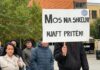
Ahead of the Serbia–Albania Match in Leskovac, Albanian Fans Unfurl a Banner: Our Leskovac, Albanian Land
The most-read article of the year, with 87,583 views, was published in October, ahead of the 2026 World Cup qualifier between Serbia and Albania in Leskovac. The trigger was a banner displayed by the Albanian fan group “Plisat” during a match between Prishtina and Balkani, depicting Leskovac as Albanian territory, in line with the idea of so-called Greater or ethnic Albania. As Koha noted in an article originally titled “In Serbia, the portrayal of Leskovac as Albanian land by ‘Plisat’ hurts,” the message sparked strong reactions among Serbs, who viewed it as an open provocation, especially in the context of the upcoming match between the two national teams.
Although sports fans were aware – to their disbelief – that the match had been moved from Belgrade to Leskovac to avoid offensive chants directed at the Serbian president, the authorities had an elegant justification: security. The Serbian national team suffered a heavy defeat, with Rey Manaj scoring in first-half stoppage time, a goal that Albanians celebrated almost as if it were a victory on the battlefield.
Surgeon Dugalić: I Publicly Renounce Colleagues Who Allowed Vučić into Intensive Care
The second most-read article of the year, with 68,486 views, was published in March and concerned a public statement by Vladimir Dugalić, professor at the Faculty of Medicine and surgeon at the First Surgical Clinic of the University Clinical Center of Serbia. The occasion for his statement was a visit by Serbian President Aleksandar Vučić to patients from North Macedonia who had been transferred to Serbia for treatment following a serious accident in Kočani.
After the tragic event in Kočani, in which dozens of people were severely injured and lost their lives, Serbia accepted a number of patients for treatment. They were placed in intensive care units at medical institutions in Belgrade. It was precisely here that the controversy arose: Vučić’s visit to the intensive care unit, accompanied by cameras and media, to see patients with severe burns provoked strong reactions within part of the professional community. Dugalić described the visit as “shameful political propaganda,” stating that allowing politicians into intensive care units constituted a gross violation of medical ethics, professional standards, and patients’ rights.
Professor Vladimir Dugalić, one of Serbia’s most respected surgeons, a professor at the Faculty of Medicine and former head of the Second Department of the First Surgical Clinic at the University Clinical Center of Serbia (UCCS), became a prominent public figure in 2025 due to his sharp criticism of the health system leadership and political actors in Serbia. In addition to condemning the Serbian president’s entry into intensive care units to be photographed with severely injured patients from Kočani, he also publicly supported student protests. His criticism had consequences for his professional position – Dugalić was removed from his post as head of department.
Throughout the year, legal proceedings unfolded over his dismissal: the court ruled that it had been unlawful, while Dugalić sought reinstatement as the Clinical Center resisted full enforcement of the decision. At the end of 2025, his employment contract was terminated after he refused to sign an unlawful annex, after which he announced that he might continue his career outside state institutions until the “regime changes.”
Serbian Foreign Ministry Condemns the Bahamas’ Recognition of Kosovo
The third most-read article of the year, with 49,180 views, was published in December, on St. Nicholas Day, after Kosovo President Vjosa Osmani announced that the Bahamas had recognized Kosovo’s independence and established diplomatic relations with Pristina. Serbia’s Ministry of Foreign Affairs responded with a sharply worded statement, describing the Bahamas’ decision as a violation of the United Nations Charter and UN Security Council Resolution 1244.
Although the Ministry announced it would use “all available means” to protect state and national interests, the statement did not specify concrete measures, instead focusing on condemning the recognition and calling on the Bahamas to reconsider their decision. The news gained additional weight because the Bahamas’ recognition was part of a broader wave of new recognitions of Kosovo during the year, following a multi-year pause. Although Kosovo was largely removed from the focus of the Serbian public during 2025, the fact that the text featuring the reaction of the Serbian authorities became the third most-read article on KoSSev, published at the very end of the year and on St. Nicholas Day – when, as the saying goes, half of Serbia celebrates St. Nicholas while the other half attends a slava – shows that the readership of this portal remains interested in Serbia’s policy toward Kosovo.
Most-Read Articles by Month
On the ground, the past year, in addition to four electoral cycles, was marked by the continued consolidation of Self-Determination’s authority in the north, through the ongoing closure of Serbian institutions and actions by municipal and police authorities.
The readership statistics for these articles refer only to monthly figures, not annual totals.
January: The Flag Is Gone
Largest Serbian Flag Removed from the Multimedia Center Building (23,448)
When, on January 17, 2025, KoSSev reported that a large Serbian state flag had been removed from the building of the Multimedia Center in North Mitrovica and replaced with a significantly smaller flag of the Serbian Orthodox Church, whose church is located nearby, the move was not perceived by the local public as an isolated incident. On the contrary, it was understood as a logical continuation of a months-long wave of closures of institutions operating within the system of the Republic of Serbia, as well as the gradual removal of symbols of Serbian statehood in Kosovo, particularly in the north.
The large Serbian flag had been installed in 2022, ahead of the visit of then Serbian Prime
Minister Ana Brnabić to North Mitrovica, and in the meantime had become one of the most
visible visual markers of the Serbian state’s presence in the city’s urban space. The Multimedia Center, a facility covering around 3,000 square meters, was opened on June 27, 2022, ahead of Vidovdan, and was declared a gathering place for young people and for development initiatives in the fields of technology, digitalization, and culture.
However, during January 2025, the center began to empty out – employees were told not to come to work anymore, according to numerous unofficial sources cited by local interlocutors, while citizens testified that one institution after another, from the library to the museum, ceased to function. This was just part of a four-year wave of closures of Serbian institutions, whose number has now reached around one hundred services. Due to its strong symbolic charge and political context, the article about the removal of the flag was the most-read on KoSSev in January 2025, with 23,448 readers accessing it on the website.
February: The International Arena, ‘Domestic Style’
In February 2025, the attention of KoSSev readers was largely focused on the relationship
between the United States and its Western allies toward Kosovo, as well as on how internal political tensions in Serbia were reflected on the international stage.
The most-read articles that month dealt precisely with external messages, security warnings, and political interpretations that went beyond the local framework.
Freezing U.S. Aid, Reduction of Military Presence in Kosovo Would Have Greater Consequences (24,614 readers)
One of the most-read news items in February was KoSSev’s translation of an article by Koha on the decision by the United States to freeze part of its financial assistance to Kosovo for 90 days, accompanied by a warning that any reduction in the U.S. military presence could have serious consequences.
The news was published at a time of heightened tensions between Pristina and Western allies, triggered by a series of unilateral moves by Kosovo authorities, particularly in the north of Kosovo. The article stated that the decision concerned a portion of U.S. aid allocated to Kosovo and that Washington’s message was linked to security issues and the need for coordination with international partners.
Koha pointed out that any reduction in the U.S. military presence would have broader security implications, which made the news particularly relevant in the context of stability in Kosovo.
Tadić: The Serbian Delegation in Munich Is Peddling the Claim That Russian Services Are Behind the Protests (20,456 readers)
Alongside this topic, significant reader attention was also drawn to a statement by former
Serbian President Boris Tadić, given in response to claims that the Serbian delegation at the Munich Security Conference had presented the protests in Serbia as activities orchestrated by Russian intelligence services.
Tadić stated that such an interpretation of the protests was inaccurate and politically motivated, emphasizing that it represents an attempt to explain domestic dissatisfaction in Serbia through external influence. He warned that this approach delegitimizes the protests in the eyes of the international public and sends a misleading picture of the causes of civic discontent in Serbia.
In February, this news was read in the context of Serbia’s attempts to explain its internal political situation through a security discourse that is easily understood by Western forums, but also as evidence of divisions within the political elite over how the protests should be interpreted and perceived internationally. Tadić’s criticism ran parallel to similar debates during the 2019 protests against Rio Tinto, when allegations of foreign influence were likewise used to discredit domestic discontent.
Overall, February 2025 on KoSSev was marked by stories viewed through an international and security lens, focused on external messages and their impact on the domestic political narrative. The combination of external pressure on Kosovo and Serbia’s attempts to frame internal dissatisfaction through a security discourse palatable to Western audiences gave February a strong foreign-policy dimension. Readers recognized in this overview a broader picture of regional instability and international relations, which helps explain the high readership of these articles.
March: Everyday Life Behind Barriers and Freedom of Movement as a Key Issue
Kilometer-Long Line at Jarinje (32,718 readers)
March 2025 on KoSSev was defined by reporting on freedom of movement, this time through the everyday experience of citizens on the ground. A kilometer-long queue of vehicles at the Jarinje administrative crossing quickly became the most-read story of the month, as it clearly illustrated how political decisions and administrative measures directly affect people’s lives.
Hours-long waits, traveler frustration, and a long line of cars served as reminders that the
crossings – borders for some, administrative lines for others – remain among the most sensitive points in relations between Belgrade and Pristina. For many who cross Jarinje, Brnjak, or Merdare daily for work, medical reasons, or family obligations, such situations are part of their routine.
The article functioned simultaneously as traffic information and as a symbol of the broader problem of the non-normalized lives of Serbs in Kosovo. KoSSev readers recognized their own daily reality in it – waiting, uncertainty, and the feeling of being hostages to political processes.
For this reason, the March queue at Jarinje dominated readership in 2025.
Reporteri: Court Orders Kurti to Appear for Questioning at the Special Prosecutor’s Office on March 4 (32,314 readers)
At the end of February, news published by the Pristina-based portal Reporteri that a court had ordered Kosovo Prime Minister Albin Kurti to appear for questioning before the Special
Prosecutor’s Office on March 4 quickly attracted considerable attention from KoSSev readers as well. The reason was not only that the case involved the sitting prime minister, but also the context of the proceedings, which relate to the events in Banjska.
According to Reporteri, the court order was issued at the request of the Kosovo Special Prosecutor’s Office after Kurti had previously failed to respond to a summons. Although the prime minister had earlier stated that he was willing to be questioned, he insisted that this take place in his office, while the prosecution demanded that he appear on its premises. This dispute once again opened the question of the relationship – one might even say the conflict – between the executive and judicial branches in Kosovo. Echoing similar cases from 2022, the news was also read as a signal of political tensions, pressure, and allegations of interference in the work of the judiciary, which is why it secured a prominent place among KoSSev’s most-read February articles.
April: Closure of Institutions, International Reactions, and Lines of Political Conflict
German Embassy: Abrupt Closure of Institutions Unacceptable, Additional Information Being Collected (38,950 readers)
April 2025 on KoSSev was marked by the continuation of coordinated actions by Kosovo
authorities on the ground, which directly affected the daily lives of the Serbian community and simultaneously provoked more visible reactions from international actors. The closure of Serbian institutions was at the center of readers’ attention.
When KoSSev reported on April 25 on the position of the German Embassy in Pristina that the “sudden closure of institutions providing basic social services is unacceptable,” the news immediately became the most-read article of the month. The trigger was police action in Leposavic and Strpce, during which institutions of the Republic of Serbia were closed or sealed, including the Health Insurance Fund, the Pension and Disability Insurance Fund, the Employment Service, and the company “Kopaonik Put.”
While Kosovo authorities described these facilities as “parallel and illegal institutions,” the Serbian List and the Office for Kosovo and Metohija argued that the actions represented a gross violation of existing agreements and a direct attack on the existential rights of Serbs.
Within this clash of narratives, Germany’s reaction carried additional media weight.
Two days later, the OSCE also responded, warning that obstructing access to basic social services, without sustainable alternatives, disproportionately affects non-majority communities and carries the risk of escalating tensions.
Vučić Announces New Law – The State to Fund Private Universities: We Will Break the Monopoly of State Institutions (22,478 readers)
Parallel to developments in Kosovo, April also saw strong reader interest in news from Belgrade, after Serbian President Aleksandar Vučić announced a new law under which the state would begin financing private universities. Although the issue is not directly related to Kosovo, it was read as part of a broader process of reshaping the education system and political influence over higher education.
The announcement about “breaking the monopoly of state universities” raised questions about university autonomy, the introduction of market logic into education, and the long-term consequences for the public sector. In the context of already existing pressures on the academic community in Serbia, the news was interpreted not only as a reform or economic measure, but also as a signal of a shift in the government’s relationship toward institutions that traditionally enjoy a high degree of independence.
Taken together, April 2025 on KoSSev showed how key political decisions – whether originating in Pristina or Belgrade – are directly reflected in the everyday lives of citizens and institutions. It is precisely in this intersection of events on the ground and the broader political picture that readers recognized the reasons for heightened interest, confirming that issues of institutional survival, rights, and autonomy remain among the most sensitive topics in Kosovo.
May: Serbs in the Kosovo Police and KLA Veterans Against the Specialist Chambers
Sveçla: 210 New Serbian Police Officers Recruited in Kosovo, Not a Single Albanian in Preševo, Bujanovac, or Medveđa (16,312 readers)
May 2025 on KoSSev was marked by issues of security and institutional control, particularly in the context of the composition of the Kosovo Police and the authorities’ stance toward international justice. One of the most-read news items concerned a statement by Kosovo’s caretaker Minister of Internal Affairs, Xhelal Sveçla, who said that 210 new members of the Serbian community had been recruited into the Kosovo Police in the most recent hiring rounds, while not a single Albanian had been admitted in the municipalities of Preševo, Bujanovac, and Medveđa.
Sveçla stated that Serbs and other non-majority communities make up around 10 percent of Kosovo Police personnel, with Serbs accounting for more than half of that figure. He further specified that nearly 120 new police officers had been recruited in the northern region, 79 of whom are of Serbian nationality, a development he framed as consistent with the policy of so-called reciprocity advocated by the Self-Determination Movement and with the broader effort to sever Serbia’s influence over Kosovo institutions.
The article was also read in light of events from late 2022, when Serbs collectively withdrew from Kosovo institutions, including the police, accompanied by the message “Enough is enough” and the symbolic removal of police uniforms in front of cameras.
In the meantime, demands for their return have not been met. Kosovo authorities maintain that there will be no return of the old staff and are seeking to replace them with new personnel. At the same time, around 800 Albanian police officers, together with special units, have been deployed in northern Kosovo, a point repeatedly emphasized by Prime Minister Albin Kurti. In parallel, Kosovo has invoked measures taken in 2021 in the Preševo Valley, confirming a cycle of reciprocal actions in the region.
KLA Veterans in a Letter to the EU Commissioner: We Are Among the Strongest Supporters of Justice, the Specialist Court Resembles an Inquisition (11,862 readers)
Another highly ranked news item in May 2025 concerned a letter sent by “veterans of the Kosovo Liberation Army” to the Council of Europe Commissioner for Human Rights, Michael O’Flaherty. In the letter, the veterans addressed the work of the Kosovo Specialist Chambers in The Hague, stating that the court, in their view, “resembles an inquisition.”
As reported, the veterans argued that through prolonged pretrial detention, procedural abuses, restrictions on the rights of the defense, and disregard for the institution of the Kosovo Ombudsperson, the Specialist Chambers are “losing the character of a judicial institution grounded in European values.”
They emphasized that the accused are being treated in a manner which, in their assessment, undermines the presumption of innocence and fundamental human rights.
In May, this article served as an introduction to the later media reactivation of the topic of the Specialist Court, which would intensify from autumn 2025 onward, with the start of the defense’s presentation of evidence in the cases against Hashim Thaçi and other defendants, as well as a series of protests organized across Europe and in places where the Albanian diaspora lives.
June: Interethnic Disputes?
Pristina Seeks Clarification from Official Belgrade over the Detention of a Former Special Unit Member (40,161 readers)
One of the most prominent news stories in June 2025 was published on June 9, when KoSSev reported that Arbnor Spahiu, a former member of the Kosovo Police Special Unit, had been arrested on June 7 at the Horgoš border crossing. Spahiu was detained while traveling by bus with his family from Austria to Kosovo, and the arrest was carried out by Serbian authorities.
According to Serbian judicial bodies, Spahiu was suspected of aggravated murder in connection with the armed attack on police in Banjska in September 2023. On June 10, the Higher Court in Subotica ordered his detention for up to 30 days due to the risk of flight and possible influence on witnesses, while his lawyer, Arijanit Koçi, stated that Spahiu had been transferred from detention in Kanjiža to Subotica for questioning.
The case acquired an international dimension as early as June 11 – Kosovo officially requested his release, while the European Union said it was “closely monitoring” developments. Spahiu spent more than five months in detention, and the investigation was conducted by the Higher Public Prosecutor’s Office in Subotica until November 23, 2025, when a court in Serbia terminated the investigation due to a lack of evidence and released him.
His return to Kosovo was met with significant interest from the Albanian public and
accompanied by symbolic and triumphant receptions, while in Serbian media the case passed with little attention, further highlighting the divergence in narratives between the two sides.
Aleksandar Perić: An Albanian Who Identified Himself as a KLA Member Would Not Allow Us to Restore the Memorial Plaque (18,239 readers)
Another widely read news item in June was published on June 22, 2025, and concerned an incident in Gracanica, where the Perić family was not allowed to restore a memorial plaque dedicated to Biljana Perić, a girl who died thirty years ago in a traffic accident.
According to the article, an Albanian man who identified himself as a member of the Kosovo Liberation Army removed the memorial from property he had since purchased, near the location where the plaque had originally been placed, and then prevented the family from returning it to its original site.
The incident raised questions about the right to remembrance, the protection of memorials, and the position of Serbian families in everyday life in Kosovo, as well as the limits of tolerance within local communities. The case fits into a broader pattern of ethnic tensions that, decades after the war, continue to manifest through attitudes toward memorials and symbols of suffering, recalling numerous cases of vandalism against monuments recorded during the 1990s and in the years that followed.
Professor at the Medical Faculty in N. Mitrovica Who Supported Students in Blockade: We Immediately Began Receiving Messages That We Were Facing Dismissal (16,120 readers)
Among the most-read articles in June was a piece published on June 19, 2025, in which Assoc. Prof. Dr. Jugoslav Gašić, a professor at the Faculty of Medicine of the University of Pristina with temporary headquarters in North Mitrovica, warned of pressure on employees and the uncertain future of the institution. Gašić said the University is facing an existential threat, pointing to long-standing political pressures, the legal uncertainty under which the education and health systems operate, and an atmosphere of fear and silence among staff.
According to him, after he publicly supported student protests in central Serbia, he and his
colleagues began receiving messages that they were “about to be dismissed.”
In the months that followed, the status of the University in Mitrovica increasingly entered the public spotlight through statements and rumors about the alleged closure of the institution or its relocation to central Serbia. In recent months, speculation spread rapidly that the University could be linked with or moved to Novi Pazar, coinciding with attempts to weaken the autonomy of the State University of Novi Pazar (DUNP) due to that institution’s strong support for student protests in Serbia.
July: Abuse of the Health Care System and Administrative Rules That Reshape Everyday Life
Indictment Against a “Doctor”: Practiced Medicine for Eight Years Without a Diploma (13,395 readers)
The most-read article in July was published on June 30, 2025, and concerned the filing of an indictment against A.R. from Urosevac, who, according to the prosecution, practiced medicine for eight years without the required diploma and license.
The Basic Prosecutor’s Office in Urosevac announced that A.R. had forged a diploma from a medical faculty allegedly issued by the University of Tirana and for years presented himself as a certified physician, an internist–endocrinologist.
According to the indictment, between July 2016 and December 2024, A.R. provided medical and pharmaceutical services at the private clinics “Almed” and “Almedica” without professional qualifications, legal authorization, or a valid license. The prosecution also stated that, despite a work ban and official seals placed by the Health Inspectorate, he removed the official markings in order to continue his illegal activity, and that expired medical supplies were found in the clinics.
The case illustrates broader problems within Kosovo’s health care system.
Kosovo Cadastral Agency Warns: No Documents Without an Official Address as of August 1 (13,295 readers)
Another highly read article in July 2025 was published on July 23 and concerned an announcement by the Kosovo Cadastral Agency regarding changes in the issuance of personal and property documents. The agency’s director, Avni Ahmeti, warned that citizens who do not register an official address by August 1, 2025, will no longer be able to obtain certain documents. Without a registered address, he specified, it will no longer be possible to issue birth certificates, property ownership records, and other official documents, directly linking this administrative measure to citizens’ everyday lives and their ability to exercise basic rights.
This measure is part of a broader trend of digitalization in Kosovo and alignment with EU standards, but it has raised concern among Serbs in Kosovo. The high readership of the article in Serbian reflects readers’ awareness, caution, and interest in decisions by Kosovo’s administration that have a direct impact on their lives and interests.
August: Controversies, International Pressure, and a Constitutional Crisis
Surroi on “Go to Kosovo,” “Shiptars,” and “Ustaše” at Protests in Serbia (24,329)
The most-read KoSSev article in August 2025 focused on a column by Veton Surroi titled
“Serbia’s Last War: Albanian-Croatian”, published in mid-August in Koha Ditore and later
republished by KoSSev.
In the column, Surroi analyzed the atmosphere surrounding mass protests in Serbia, noting that patterns of political and symbolic violence characteristic of the wars of the 1990s had re-emerged in public discourse and at certain gatherings. He paid particular attention to the use of terms such as “ustaše,” “šiptari,” and slogans like “go to Kosovo,” interpreting them as mechanisms for dehumanizing political opponents and for translating an internal political conflict into an ethnic and wartime narrative.
According to Surroi, such language does not represent isolated incidents, but rather a continuation of an unprocessed wartime discourse in Serbia—one that resurfaces during
moments of political crisis.
Surroi’s claims were challenged by Nebojša Vujović, who argued that the author was generalizing isolated incidents and overlooking the predominantly civic and social character of the protests, which he described as being directed against authoritarian rule rather than against other nations.
During the second half of August, the polemic gained wider regional attention, as it reopened the question of whether Serbia’s political crisis should be understood primarily as an internal political conflict or as a revival of unresolved wartime narratives.
Rohde: Submit the EU Draft for the ASM to the Constitutional Court – I Am Confident Kosovo Will Be in the Council of Europe (15,269)
The second most-read August story concerned remarks by German Ambassador to Pristina, Jörn Rohde, who said in an interview with Klan Kosova that Kosovo had once again missed a realistic opportunity to join the Council of Europe in 2025.
Rohde explained that the key obstacle was not a lack of support among member states, but the decision by Kosovo authorities not to submit the EU-drafted statute of the Association/Community of Serb-majority Municipalities (ASM) to the Constitutional Court for a review of its constitutionality.
According to Rohde, sending the draft statute to the Court would represent an institutional
minimum necessary to unblock the process, after which an extraordinary session of the Council of Europe could be convened with a genuine chance for Kosovo’s admission. He stressed that Kosovo is not being asked to automatically establish the ASM, but rather to respect constitutional procedures and the authority of the highest judicial body.
Rohde assessed that such a step would significantly improve Kosovo’s international standing in Southeast Europe. His message echoed similar warnings issued both before and after this period.
Nevertheless, the concept of “self-management,” or “association,” as defined in the European Agreement on the Path to Normalisation between Kosovo and Serbia and other documents, has still not been implemented.
Osmani Withdraws Request to Constitutional Court over Appointment of Radomir Laban as Rapporteur (12,611)
The third most-read August story concerned the deepening institutional crisis in Kosovo. In early August, President Vjosa Osmani announced that she was withdrawing a request submitted to the Constitutional Court on July 22, 2025, concerning the legal consequences of the Assembly’s failure to be constituted within the 30-day deadline, which expired on July 26.
The reason for the withdrawal was the appointment of Judge Radomir Laban as rapporteur in the case. Osmani stated that security reports from 2018, 2021, and 2024 had assessed Laban as a security risk and as an individual linked to activities undermining Kosovo’s “constitutional order,” associating him with the Serb List and Milan Radoičić.
She emphasized that Laban had not been appointed by her, but by previous institutional
compositions, and that his removal would require a two-thirds majority within the Constitutional Court itself. The announcement reopened earlier public controversies surrounding Laban, including a 2011 conviction in Serbia for bribery, Serbia’s 2017 request for EULEX to carry out his arrest, and a May 2024 decision by Kosovo’s Ministry of Justice—based on an assessment by the Kosovo Intelligence Agency—not to appoint him as a notary.
Meanwhile, the Constitutional Court imposed an interim measure suspending the activities of MPs until August 8, further deepening political and legal uncertainty surrounding the functioning of Kosovo’s institutions.
This case fit into a broader institutional crisis that marked nearly the entire past year in Kosovo. Repeated failures to constitute the Assembly and form a new government resulted in an extended technical mandate for the executive branch. Multiple rounds of parliamentary sessions—interrupted by a lack of quorum or insufficient majorities—ended without outcome, leaving key political processes blocked. As a result, constitutional questions concerning deadlines, competences, and institutional legitimacy were increasingly shifted from the political arena into the judicial sphere. In this context, the president’s address to the Constitutional Court and the controversy surrounding Judge Laban’s appointment were not seen as isolated legal disputes, but as part of a wider institutional deadlock and deep political polarization.
September: Movement, Residence, and Identity as Key Lines of Dispute
September 2025 on KoSSev was marked by issues directly affecting freedom of movement, residence, and administrative status—primarily of Serbs without Kosovo-issued documents—as well as recurring questions of identity and symbolism, which once again entered public discourse through statements by political actors and remain highly relevant today.
Elshani: Driving by Authorization Will No Longer Be Allowed from November 1 (44,772)
The most-read September story was published on September 26, when Veton Elshani, Deputy Director of the Kosovo Police for the North Region, stated that from November 1 it would no longer be permitted to drive vehicles based on authorization alone—that is, without the owner’s personal presence or proper documentation.
The statement came amid growing uncertainty among citizens, as Kosovo authorities simultaneously announced stricter residency rules for individuals without Kosovo documents, including the requirement to register so-called “foreign nationals.”
Elshani said the police would strictly enforce the new rules and sanction violations, emphasizing that this was the application of the law rather than a political decision.
The information, which KoSSev published as a statement given to a local radio station, later
proved inaccurate regarding the date of implementation. It was subsequently announced that the new Law on Foreigners would enter into force on January 15, 2026—tomorrow—although there is still no official confirmation as to whether this will indeed happen or whether reports of a postponement are accurate.
Elshani concluded by saying that, for now, he had no additional details to share with the portal.
The uncertainty surrounding the law’s implementation further increased public concern, recalling the situation in 2021, when similar announcements led to mass vehicle registrations and heightened attention to administrative compliance.
Entry and Residence without Kosovo Documents: Mandatory Registration and Possible Sanctions (17,903)
The third most-read September story—chronologically the first, published on September
12—was the initial announcement of new rules governing entry and residence in Kosovo for
individuals without Kosovo-issued documents.
Kosovo authorities stated that all persons without Kosovo identification documents would be required to report to the police within three days of entry, after which they must initiate a procedure to obtain a certificate or temporary residence permit from the Ministry of Internal Affairs.
In practice, these rules affect a large number of Serbs from central Serbia who live, work, study, or stay in Kosovo for family reasons. The article noted that unregistered residence would be considered illegal, with possible penalties including fines, deportation, and entry bans.
Temporary residence permits may be granted on the basis of family reunification, education, employment, humanitarian grounds, or other reasons envisaged by law or international agreements.
Alongside residency rules, additional obligations were introduced regarding the use of vehicles with Serbian license plates. While these measures are part of the broader Law on
Foreigners—modeled on European standards—they have been criticized for their impact on the sustainability of the Serbian community in Kosovo.
Čanak in Pristina: There Are No Serbian Monasteries in Kosovo, Only Orthodox Ones (24,147)
The second most-read story in September, published on September 21, 2025, focused on a
statement by Nenad Čanak during his appearance on Veton Surroi’s television program on Koha, where he said that there are no Serbian monasteries in Kosovo, but rather Orthodox ones.
Čanak stated that, because of this position, he had experienced what he described as “enormous hatred” in Serbia. His remarks triggered strong public reactions, as they touched upon issues of cultural, religious, and national identity—questions that remain among the most sensitive in relations between Belgrade and Pristina even decades after the war.
While enjoying divided sympathy within the Albanian community, Čanak has, as he himself described to Koha, become a figure of broad rejection within much of the Serbian mainstream.
October 2025: Movement, Recognition, and Security as Central Themes
October 2025 was the month with the single most-read article of the year on KoSSev and a
period in which public attention was firmly focused on freedom of movement, international
recognition of Kosovo, and the security situation in the north—accompanied by strong messages from international forums.
Syria Recognizes Kosovo (38,117)
Alongside the most-read article of the year—Ahead of the Serbia–Albania match in Leskovac, Albanian fans already display a banner: “Our Leskovac, Albanian land”—one of the most widely read stories on October 29, 2025, was the confirmation by Kosovo President Vjosa Osmani that Syria had recognized Kosovo’s independence.
Osmani announced the recognition from Riyadh, stating that it had been achieved with the
mediation of Saudi Arabia and the support of Crown Prince Mohammed bin Salman, following an agreement reached in the Saudi capital. In her statement, she also thanked Syrian President Ahmed al-Sharaa, assessing the recognition as having symbolic significance as well—describing it as acknowledgment of the “suffering of both peoples in their struggle for freedom.”
According to Pristina, Syria’s decision raised the number of states recognizing Kosovo to 120, a figure disputed by official Belgrade, which did not issue a response at the time.
Syria’s recognition was the third in 2025, following Kenya and Sudan, and came at a moment when Serbia’s Foreign Minister Marko Đurić was also present in Riyadh at the same international conference, where he spoke about strengthening cooperation between Serbia and Saudi Arabia.
KFOR Airlifts Troops by Helicopter to Key Positions in Northern Kosovo (22,946)
Another highly read story, published on October 23, 2025, reported that KFOR was deploying troops by helicopter to key positions in northern Kosovo.
According to a KFOR statement, troops from the United States, Latvia, Poland, Turkey, and Germany were being deployed directly into the field to patrol and carry out tasks within Regional Command East. The mission described the units as maneuver forces, without specifying further details about the deployment techniques.
Such maneuvers form part of KFOR’s frequent public communications about exercises conducted since the Banjska incident.
Gërvalla at the UN Security Council: Serious Dialogue Underway with Northern Serbs on Integration of Education, Healthcare, and Infrastructure (15,037)
One of the more notable October articles covered the address by Kosovo’s Foreign Minister
Donika Gërvalla-Schwarz to the United Nations Security Council on October 21.
Gërvalla stated that, as she put it, a “serious dialogue is underway” with Serbs from northern Kosovo regarding the integration of education, healthcare, and infrastructure. She concluded by saying that healthcare and educational institutions were not being shut down, but that discussions were taking place about “how they want to live their lives as citizens of Kosovo.”
At the time, however, there were no publicly confirmed reports of concrete talks between residents of the north and the caretaker government regarding the integration of these two sectors, which remain the last major systems among Kosovo Serbs still functioning within the framework of the Republic of Serbia.
During the local election campaign, the Prime Minister in Pristina also called on Serbs to
integrate into Kosovo’s healthcare and education systems, arguing that “dualism is not
sustainable.”
Taken together, October 2025 demonstrated strong reader interest in issues that directly affect everyday life—freedom of movement and legal status—while simultaneously reflecting high-level political questions concerning Kosovo’s international position and the security situation in the north. This combination made October one of the most politically significant and most-read months of the entire year.
November: European Conditions, State Symbols, and Political Messaging
November 2025 on KoSSev was marked by themes related to the European paths of Kosovo and Serbia, the normalization process, and the symbolic dimension of territorial dispute.
“Draft EU Council Conclusions on Enlargement (Koha): Kosovo to Form the Association, Serbia to Recognize Symbols and Documents” (21,972)
The most-read story in November was published on November 28, when KoSSev reported on excerpts from a draft of the EU Council’s enlargement conclusions obtained by Koha in Brussels. The document, formally adopted in December, once again calls on Kosovo to immediately begin the process of establishing the Association of Serb-majority Municipalities and to demonstrate tangible results in implementing the 2023 Normalization Agreement.
As a next step, the document mentions the possibility of discussions on special guarantees for an adequate level of self-management for the Serbian community. At the same time, Serbia is required to initiate procedures to recognize Kosovo’s documents and state symbols and to refrain from blocking Kosovo’s membership in international organizations.
The draft notes that Kosovo has failed to achieve the necessary progress due to political deadlock and post-election blockage, while criticizing limited reforms in the rule of law, anti-corruption efforts, public administration, and freedom of expression.
It also emphasizes that the orderly transfer of local authority in the four northern municipalities is a prerequisite for further lifting EU restrictive measures, alongside expectations for the reintegration of Serbs into Kosovo institutions, including the judiciary and police.
The document further expresses serious concern that Serbia has not taken adequate action against those responsible for violence in northern Kosovo in 2023, warning that failure to meet normalization obligations has direct consequences for the European paths of both sides. These conclusions align with previous EU annual reports, in which the ASM and normalization have remained core conditions—at the heart of the European Agreement on the Path to Normalization of Relations between Kosovo and Serbia.
Niš: Over 800 Serbia-Map Magnets Withdrawn from Sale for Not Showing Kosovo (15,541)
Another widely read November story, published on November 12, 2025, concerned a decision by inspection authorities in Niš to withdraw more than 800 magnets and souvenirs shaped like the map of Serbia from sale because Kosovo was not depicted as part of the territory.
The inspection was carried out on November 10 at a shop owned by a Chinese national, following a citizen complaint. Authorities announced that a total of 871 magnets and keychains with Serbian state symbols were found, along with “nine magnets shaped like Serbia without the depiction of the Autonomous Province of Kosovo and Metohija, as well as additional irregularities related to labeling and documentation of origin.”
A temporary ban on sale was imposed, and the case was forwarded to the Niš Police Directorate for further action.
The story went viral the same day in Albanian-language media, with a narrative sharply contrasting that of the Serbian public. Here, high politics and trivial gestures intersect: while Brussels demands reforms, Niš removes magnets missing part of the territory. Decisions that seem distant continue to shape physical space, symbols, and everyday perceptions of belonging.
December 2025: Recognition, Judiciary, and Human Rights
December 2025 was one of the most intense months of the year in terms of readership, featuring stories related to international recognition, the work of judicial institutions, and the position of minority communities.
The most-read story in December—and the third most-read of the entire year—was Serbia’s Ministry of Foreign Affairs Condemns Kosovo’s Recognition by the Bahamas.
Prosecutor’s Office: Indictment Against Customs Officer Who Allowed a Vehicle Through Vrbnica Without Inspection, Damaging Kosovo’s Budget by €3,400 (33,614)
The second most-read story, published on December 26, 2025, reported that the Basic
Prosecutor’s Office in Prizren had filed an indictment against customs officer I.K., suspected of abusing his official position at the Vrbnica border crossing.
According to the prosecution, the officer allowed a vehicle to pass without customs inspection, causing damage to Kosovo’s budget in excess of €3,400.
Unlike previous years, police-blotter stories did not dominate the list of most-read articles in 2025.
Albanians in Southern Serbia: Erasure from Residence Registers, Non-Recognition of Diplomas, and Hate Speech (22,830)
Another widely read December article, published on December 16, focused on the position of Albanians in the municipalities of Preševo, Bujanovac, and Medveđa.
Based on reporting by the weekly Vreme, the article stated that Albanians in southern Serbia continue to face address “passivization,” non-recognition of diplomas, and various forms of institutional discrimination and hate speech, reflecting long-standing difficulties in exercising basic rights and their complex relationship with the Serbian state.
Growth on Social Media: KoSSev’s Digital Reach
In 2025, KoSSev recorded significant growth across social media platforms. Facebook reached 89,000 followers (+13,000 year-on-year), Instagram 31,500 (+9,500), X 16,100 (+600), YouTube 9,360 (+1,260), Threads 5,713 (+1,862), while TikTok—launched this year—has already accumulated 3,703 followers and over 75,000 likes.
These figures show that audience engagement does not end with reading the news: users actively share, comment on, and circulate content in the digital space. Growth on TikTok, where short field-based video clips dominate, particularly reflects visual-content trends among younger audiences.
This digital presence allows KoSSev to reach a broader regional audience and strengthen its influence on discussions about Kosovo.
Preuzimanje i objavljivanje tekstova sa portala KoSSev nije dozvoljeno bez navođenja izvora. Hvala na poštovanju etike novinarske profesije.