Serbian President Aleksandar Vučić accused Western countries of systematically deceiving Serbia with what he described as “empty humanitarian narratives” while, in reality, pursuing their own interests through the seizure of Kosovo.
Speaking in an interview ahead of a government session held at the Palace of Serbia, Vučić said that there were never any genuine principles behind Western policy toward Kosovo, only geopolitical interests that were deliberately concealed.
“There were no principles there. Trump, as an intelligent person, said openly: these are our interests. Instead, they constantly lied to us, talking about a humanitarian catastrophe, while they were taking Kosovo from us,” Vučić said.
Referring to discussions at this year’s World Economic Forum in Davos, which he described as unusually subdued and marked by fear and uncertainty, Vučić said he raised Kosovo when parallels were drawn with other global disputes, including Greenland.
“When you ask them how Kosovo was possible, they look away. They turn their heads, pretending not to see me, just so they don’t have to be reminded of what they did to Serbia through the attempt to seize its territory,” he said.
Vučić claimed that the conflict in Kosovo had been “projected, staged and fabricated” against Serbia, adding that Belgrade cannot accept such an outcome, nor should it. “That shows we still have a heart and a soul,” he said, while urging Serbs to redirect their emotional energy toward safeguarding the country’s future.
Citing figures he said came from Serbia’s “opponents,” Vučić stated that around 10,000 Albanians and about 6,500 Serbs were killed during the conflict.
Data from the Humanitarian Law Center’s Kosovo Memory Book show that between January 1, 1998, and December 31, 2000, a total of 10,093 civilians were killed or went missing in Kosovo, including 8,645 Albanians, 1,013 Serbs, as well as Roma, Ashkali, Egyptians, Bosniaks and others.
According to Vučić, global conflicts are far from over and should be viewed as part of a broader struggle for a new world order. “This is just an intermezzo,” he said, predicting that major powers would continue to clash and that the world in 2026 would be even more unstable than in 2025.
In this context, he advised Serbia to avoid direct confrontation with global powers and instead „wait for opportunities“ to protect its interests. “Let the big ones fight. They will continue to fight. We need to pull ourselves out and look to the future,” Vučić said, adding that Serbia’s future lies on the European path, but only if it firmly defends its national interests.
Government Session and Domestic Politics
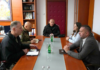
The remarks came as Vučić chaired a thematic session of the Serbian government, during which he spent nearly two hours sharply criticizing ministers and heads of public enterprises, who largely remained silent.
During the session, Vučić warned of growing instability in Europe and globally, saying the world was heading toward deeper fragmentation and conflicts not only between the West and the rest of the world, but increasingly within the West itself.
He stressed that Serbia must remain fully mobilized in such circumstances, calling for the complete engagement of all state institutions to preserve stability, peace and security. Some government officials, rather than responding to criticism, urged Vučić to take an even more active role, warning that without him, key public systems could collapse within months.
Preuzimanje i objavljivanje tekstova sa portala KoSSev nije dozvoljeno bez navođenja izvora. Hvala na poštovanju etike novinarske profesije.