On World Children’s Day, North Mitrovica woke to posters featuring Serbian children said to be victims of alleged ethnic incidents and actions by Kosovo’s security institutions. The day unfolded with events highlighting reportedly the struggles of Serbian youth in Kosovo, focusing on safety, education, and basic rights.
At a roundtable organized by Srpska Lista, attended by children, parents, educators, and local officials, speakers painted a troubling picture of life for Serbian children in Kosovo.
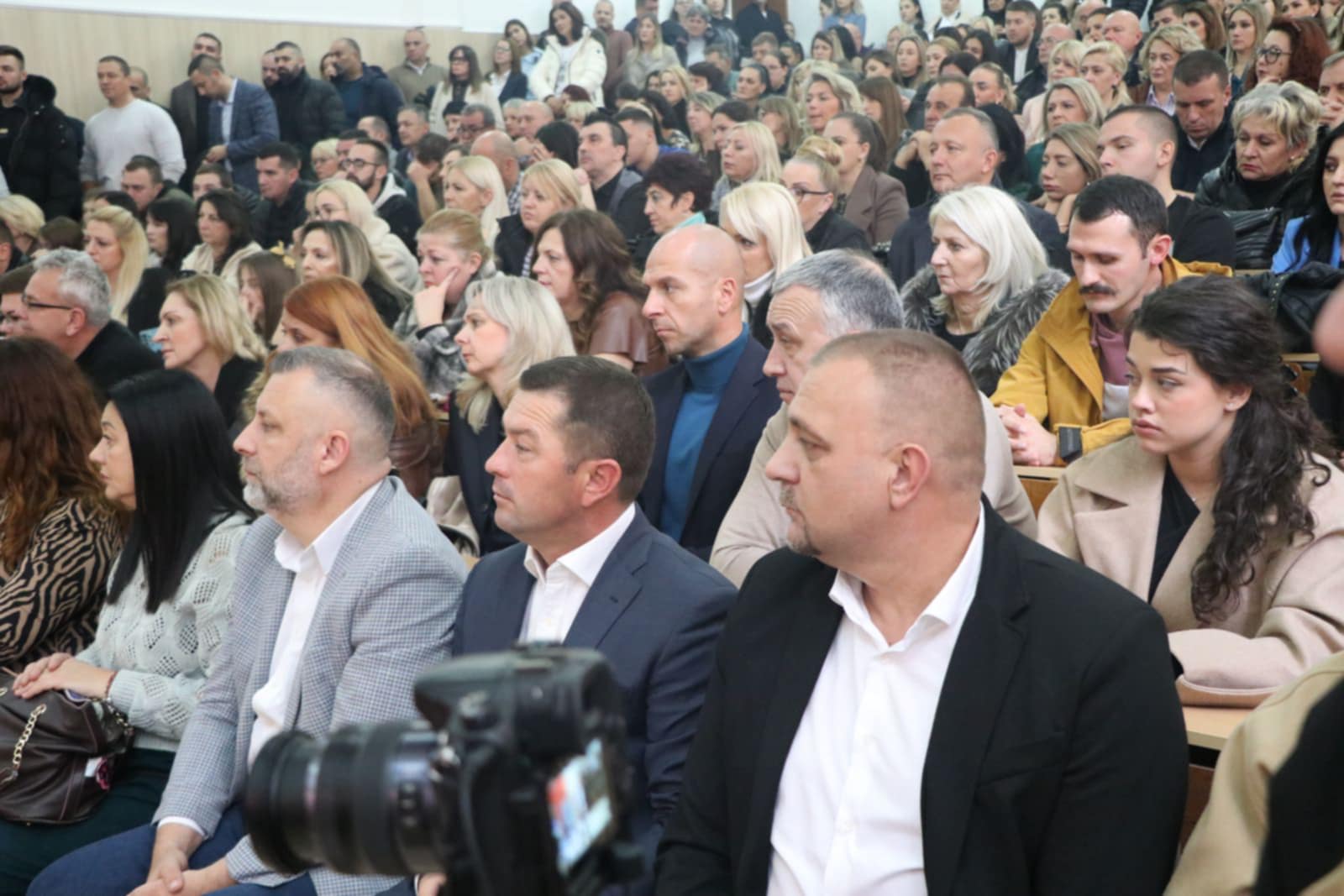
“All forms of violence, abuse, and neglect that harm the mental, physical, or moral integrity of a child violate the fundamental rights enshrined in the UN Convention on the Rights of the Child,” declared one participant during the event at the Faculty of Technical Sciences in North Mitrovica.
A film shown during the discussion depicted incidents involving Serbian children, including attacks attributed to ethnic tensions. While students from the University of Pristina (relocated in North Mitrovica after the war), held posters that were also displayed throughout the city earlier in the day.
The posters, also seen in Zvečan, showcased photographs of children and youth who, according to segments of the Serbian community, were allegedly victims of ethnically-based violence in recent years.
The images included boys injured in Štrpce last year during Christmas Eve celebrations, shot by a member of the Kosovo Security Force, as well as other children subjected to attacks in Gojbulja and Suvi Do in previous years.
Kosovo authorities, however, have denied claims that the attacks are ethnically motivated, though some cases remain under investigation by the Kosovo Police Inspectorate and judiciary.
„Living in Fear and Facing Discrimination“
Slađana Rašić, director of an agricultural school in Lepina, detailed the struggles of children in her region. “Life for these children is harder. They travel from various places, often through unsafe areas, just to attend school. Their social interactions are limited to gatherings at the local church,” Rašić explained, adding, “Serbian children in Kosovo are discriminated against.”
Despite efforts to improve conditions, obstacles persist. “School textbooks are a challenge; they reach Raška, and then parents or school officials must arrange transport themselves,” Rašić noted.

Zorica Jovanović, director of the preschool “Naša Radost” in Leposavić, underscored the emotional toll. “Fear has become a daily reality for our children. It’s not just a biological response but an intense emotion disrupting their lives. Our programs, from cultural events to educational initiatives, face constant obstructions.”

Targetting against schools and Rising Anxiety
Educators like Vukašin Mitrović, head of a school in Gojbulja, a small village near Vučitrn, shared troubling incidents, including, reportedly regular attacks on school property and recent challenges like the confiscation of official seals by Kosovo police at the Brnjak border crossing.
“Every year, we face vandalism, including broken windows and graffiti,” Mitrović recounted. “In one incident, N.P., a child from this village, was attacked by ethnic Albanian children. Since then, parents have begun escorting their children to school, and staff ensure they are accompanied home.”

Mara Jović, an elementary school pedagogue in North Mitrovica, highlighted a decline in student numbers. “We once had students from central Serbia. Now, fear has caused their numbers to plummet,” Jović said.
As a mother of one of the youths arrested and allegedly mistreated by Kosovo police in September, she added, “Hearing my child had been detained and beaten was devastating. That night’s video—what little I saw—was unbearable.”

Calls for Protection Amid Inaction
The event also featured testimonies from parents, including Marija Radosavljević, whose children were reportedly assaulted by Kosovo police in Žitkovac in June of last year.
She described how their once-normal activities, like attending parties or going to the city, have been replaced by constant worry. „We are comstantly on the phone,“ she said, expressing empathy for other parents facing similar challenges.
“International forces like EULEX and UNMIK do nothing to protect our children,” she stated.

Her daughter, Zorana, concluded the day with a heartfelt plea at a gathering in the city center. “We only want a carefree childhood, to grow up in peace and safety. Let the world hear us and allow us to grow up in peace and freedom,” she said.
Despite invitations, representatives of the Quint, EU and UN in Kosovo did not attend the event, further fueling frustrations over the perceived lack of international engagement.


Preuzimanje i objavljivanje tekstova sa portala KoSSev nije dozvoljeno bez navođenja izvora. Hvala na poštovanju etike novinarske profesije.