„You voluntarily report to the War Crimes Prosecutor’s Office and ask for the incident to be investigated. After a three-year investigation, during which three different prosecutors handled the case, you receive an official decision terminating the proceedings due to lack of evidence, clearly stating that you had no connection whatsoever with the incident.“
With these words, retired Yugoslav Army General Momir Stojanović announced on Saturday that he had once again been summoned by Serbia’s War Crimes Prosecutor’s Office, despite an earlier investigation against him having been discontinued years ago.
Publishing the new summons alongside documents from the previous proceedings, Stojanović argued that the case against him had already been examined by Serbian prosecutors following a request from Kosovo’s judiciary and that no evidence linking him to the alleged crimes had been found.
He also claimed that someone within Serbia’s own institutions had provided his personal data to Kosovo’s authorities.
„Since the summons was delivered to my previous address—which, like the addresses of many of my comrades, was handed over to Kosovo’s judiciary by someone from our own state apparatus—it appears that the entire process is now being repeated at the request of the judiciary of the unrecognized, or perhaps already recognized, State of Kosovo,“ Stojanović wrote.
He further stated that after the first investigation was terminated, he requested Serbia’s Ministry of Justice and the National Interpol Bureau to inform Interpol’s General Secretariat in Lyon so that the Red Notice against him could be withdrawn, but said he never received a response.
From Interpol Red Notice to the Meja Indictment
Stojanović has been linked to Kosovo war crimes proceedings for more than a decade.
An Interpol Red Notice was issued against him in 2015 at the request of EULEX and the Đakovica/Gjakova Basic Court over allegations of war crimes against Albanian civilians.
He is also among the 53 defendants indicted by Kosovo’s Special Prosecution in the Meja case, concerning the killing of hundreds of Kosovo Albanian civilians during a Yugoslav Army operation in April 1999.
Although proceedings in absentia formally began last year, Kosovo’s Court of Appeals recently quashed the confirmation of the indictment, ruling that prosecutors had failed to demonstrate they had made sufficient efforts to notify the defendants about the proceedings.
The issue of properly serving summonses has since become one of the central procedural questions in Kosovo’s ongoing war crimes cases.
War crimes investigations regain momentum
Stojanović’s statement comes amid a new wave of war crimes investigations in northern Kosovo.
Three Kosovo Serbs have been arrested in the municipality of Zubin Potok over the past week on suspicion of war crimes against civilians, while KoSSev learned that at least two additional Kosovo Serbs were detained for questioning on Saturday.
At the same time, forensic teams continue excavations in Mala Kaludra, near Zubin Potok, where investigators are searching for what Kosovo authorities believe could be a wartime mass grave.
The excavation site has become a focal point of political attention. Acting Prime Minister Albin Kurti, Acting Justice Minister Albulena Haxhiu, Government Commission on Missing Persons Chairman Andin Hoti, Interior Minister Xhelal Sveçla, Foreign Minister Donika Gërvalla-Schwarz, Acting Assembly Speaker Saranda Bogujevci, and other senior officials have visited the site over recent days. On Saturday, members of the Vetëvendosje parliamentary group also toured the location.
Kosovo officials have simultaneously renewed calls for Serbia to open its military, police and state archives, placing particular emphasis on documentation related to the 37th Motorized Brigade of the Yugoslav Army, which they argue could help clarify the fate of missing persons.
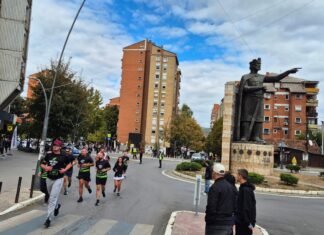
On the opposite side of the administrative boundary, Serbian Interior Minister Ivica Dačić on Friday unveiled a monument in Raška dedicated to members of that same brigade who were killed during the 1999 conflict.
Addresses, summonses and cooperation
Stojanović’s allegations mirror claims recently made by former Serbian Gendarmerie commander Goran Radosavljević Guri, who also suggested that someone inside Serbian institutions had provided Kosovo prosecutors with the addresses of former security personnel.
Serbia’s Ministry of Justice has denied any involvement, insisting that judicial documents sent from Kosovo were neither delivered through the Ministry nor with the participation of Serbian authorities.
The acting director of Serbia’s postal service later explained that correspondence between Kosovo and Serbia is routed through international postal hubs, including Vienna, Ljubljana and Budapest, because the two sides have no direct postal agreement.
As Kosovo expands investigations into wartime crimes and continues searching for missing persons, questions surrounding judicial cooperation, evidence sharing and the notification of suspects are once again emerging as one of the most sensitive issues in relations between Belgrade and Pristina.
Who is Momir Stojanović
Momir Stojanović is a retired Yugoslav Army general and former director of Serbia’s Military Security Agency (VBA). During the Kosovo conflict, he served as chief of security for the Pristina Corps, and in 2004 became the first director of the newly established VBA. After entering politics, he was elected to the Serbian parliament as a member of the Serbian Progressive Party (SNS). In 2013, he chaired a parliamentary inquiry committee tasked with investigating the spending of state budget funds in Kosovo between 2000 and 2012, which produced a detailed report on the alleged misuse of public funds. He later chaired the parliamentary Committee for the Oversight of Security Services. Stojanović left the SNS in 2016 and has since emerged as a prominent critic of President Aleksandar Vučić. Since February 2024, he has served as president of the Serbian National Council of Kosovo and Metohija, an organization established as an alternative to the Serb List.
Preuzimanje i objavljivanje tekstova sa portala KoSSev nije dozvoljeno bez navođenja izvora. Hvala na poštovanju etike novinarske profesije.