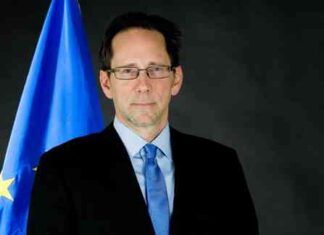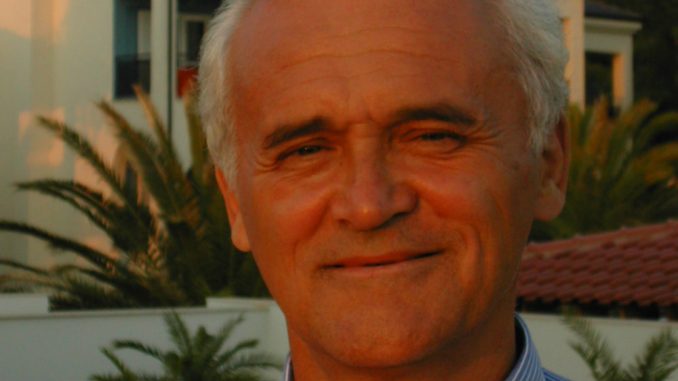
An architect from Novi Sad, Vojislav Devic created the conceptual design for the construction of the city of Mirgrad (Peacecity) – dedicated to the reconciliation of Serbs and Albanians in the 21st century. According to Devic, this topic is a civilization issue that should not depend on any status that Kosovo has or will have in the future. He proposed that the city be built between Koritnik and Pastrik, while all its inhabitants would have to sign the UN Universal Declaration of Human Rights, the European Convention on Human Rights and swear that they will not carry weapons. Danas daily published a Sunday interview with this architect, and here we publish a summary.
Devic believes that the coexistence of people with a different faith, nation, language and culture can be planned and organized in a new, specially planned city.
This architect named the city SRBALBANOPOLIS – ALBANSRBOPOLIS, or simply Mirgrad (Peacecity). For this project, Devic received the expert support of fellow urban planners, as well as the Bertrand Russell Peace Foundation and the International Committee for Peace and Disarmament from Moscow.
According to Devic, permanent reconciliation between Serbs and Albanians in Kosovo can be achieved by “raising awareness and conscience of the necessity of developing a common tolerant coexistence of the two Balkan peoples.”
“I have always believed that we should propose the solution and that it should not be imposed on us from the outside world,” he said, Danas daily reported. Speaking about whether reconciliation is possible in existing Kosovan cities, Devic said that it is “possible and desirable,” but that it is also a long-term process. That is the reason why, in his words, reconciliation should be achieved in a faster way and on the neutral space of Mirgrad. Devic, however, also noted that both current and former politicians have never wanted to listen to such a solution.
“In order to embark on the process of reconciliation, a positive example must be given that is acceptable in both civic and democratic, multicultural and multi-faith terms,” he explained, adding that this urban project meets all of these standards and should emerge from a neutral territory such as the Beli Drim Valley, between Koritnik and Pastrik, on the border between Serbia and Albania.
“It is a city without any obstacles to the peaceful coexistence of any two or more peoples.”
“The fact that we are divided by nations, cultures, languages and religions since the failed construction of the Tower of Babel, is the basis that can constantly cause conflicts, but the point is that it can be the inspiration for a new harmony. This diversity should be the basis for a non-violent life together,” he said, Danas wrote.
Devic also revealed what would be the most important aspect of this Serb-Albanian city – “a strong symbolic-symbiotic function of true reconciliation and tolerant coexistence.”
Speaking about the Mirgrad in greater detail, he said that the city would be alternately comprised of Serbian and Albanian parts.
Everything that brings us closer would be at the center – such as technology, sports, IT, and so on, and the things that set us apart would be on the outskirts – such as religious buildings, traditional cultural and art societies – he said, adding that cultural and educational institutions would be bilingual.
“The city would have five mayors: a Serb, an Albanian, one appointed by Brussels, one by Washington and one by Moscow. They would guarantee that community peacekeeping would be implemented there,” he underlined.
When asked about the political system of Mirgrad, Devic replied that “nothing would be left to chance,” as all residents would have to sign the UN Universal Declaration of Human Rights, the European Convention on Human Rights and swear that they would not carry weapons.
“In order to show that this is not a new ‘brotherhood-unity’ and ‘we are all equal’ system, each citizen would sign and nurture his or her own faith, language, and culture – that they will continue the tradition of their ancestors without compromising traditional values of other peoples.”
“Also, the residents of MIRGRAD would be exempt from paying taxes for the first five years and the like. This city would have a solid foundation of spatial and social tolerance in itself,” Devic concluded.
Preuzimanje i objavljivanje tekstova sa portala KoSSev nije dozvoljeno bez navođenja izvora. Hvala na poštovanju etike novinarske profesije.