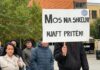
Twenty-four lecturers and teaching assistants from the Faculty of Law of the (prewar) University of Pristina (based in North Mitrovica) have issued a public appeal calling for the institution to remain within the legal and educational system of the Republic of Serbia, warning that it is the “last moment” for an institutional response.
The signatories urged the academic community, students, state authorities and international university bodies to support what they describe as the university’s survival within Serbia’s system.
The appeal was published ahead of a public forum scheduled for March 3 in North Mitrovica, organised by the informal group of professors “ProAktiv,” focusing on the university’s legal status.
Opposition to enforcement of the Law on Foreigners
In their statement, the lecturers “firmly oppose the implementation of the so-called Law on Foreigners by the de facto authorities in Kosovo,” arguing that its full enforcement – thirteen years after its adoption – has a discriminatory effect and directly targets the functioning of the university and the Serbian community as a whole.
They called on the Republic of Serbia, as the university’s founder, to clarify how it intends to protect its founding rights, as well as the rights of employees and students, in what they describe as a unilaterally initiated process of integration into Kosovo’s system.
The signatories also demanded that Serbian authorities publicly define the future status of the university – something they say has not yet been done, despite constitutional obligations.
They warned that “any unwanted and forced change of status or system” in which the university operates would have far-reaching consequences for the Serbian community and would almost certainly accelerate emigration from Kosovo.
Call for solidarity across academia
The lecturers emphasised that, as legal scholars, they have a particular obligation to uphold the legal order of the Republic of Serbia and cannot take any step that would violate it – including, as they see it, accepting integration into Kosovo’s system.
They called on all competent institutions in Serbia, with the support of academic and student bodies, to take necessary measures to ensure the university’s continued functioning within Serbia’s legal framework.
A special appeal was addressed to the Conference of Universities of Serbia (KONUS), universities and faculties across Serbia, and the broader academic and scientific community, to provide concrete support to students, teaching staff and non-teaching personnel in North Mitrovica.
Students and student organisations in Serbia, regardless of political affiliation, were also urged to stand in solidarity with their colleagues.
The signatories further appealed to members of the European university community and signatories of the Magna Charta Universitatum to protect academic freedoms, autonomy and institutional integrity, noting that the university is a full member.
The petition remains open for signatures and has been circulated to university staff and institutions across Serbia.
Public debate on March 3
The appeal precedes a public discussion titled “UPKM – Temporary Seat, Permanent Institution,” to be held on March 3 at 6 p.m. at the North City venue in North Mitrovica.
The event will address the university’s legal status, possible frameworks of acceptability and critical thresholds regarding its future position within Serbia’s legal system. Announced speakers include Professors Valentina Pitulić and Slobodan Orlović, assistant Aleksa Nikolić, as well as one unnamed professor and one student.
Integration back in focus
The question of integrating Serbian-run education and healthcare structures into Kosovo’s system has returned to the forefront, particularly after increased activities by Kosovo authorities over the past year.
Pristina, led by Prime Minister Albin Kurti, maintains that unification of parallel systems is inevitable, arguing that institutional dualism is unsustainable.
In practice, several facilities previously used by Serbian institutions have been taken over, while full implementation of the Law on Foreigners and the Law on Vehicles has been announced.
These measures could further complicate the work of employees in Serbian institutions if they are not registered within Kosovo’s system.
According to unofficial information, staff in remaining Serbia-funded institutions in Kosovo, including the university, have been asked to declare whether they possess Kosovo-issued documents.
The Faculty of Technical Sciences has reportedly received a notice to vacate its premises within 30 days or regulate its status with the University of Pristina operating in Kosovo’s system. The rector has stated he is “awaiting instructions.”
Political reactions remain divided.
The Srpska lista and other institutional representatives adopted a declaration warning of potential consequences for the Serbian community and seeking legal and administrative safeguards, though without explicitly rejecting Kosovo legislation – a stance that has drawn criticism from parts of the academic community.
International actors have not challenged the principle of integration but insist that it be carried out in coordination with Kosovo Serbs rather than unilaterally. The European Union has reiterated that Prime Minister Kurti committed to conducting the process in consultation with local Serbs and with EU support.
Preuzimanje i objavljivanje tekstova sa portala KoSSev nije dozvoljeno bez navođenja izvora. Hvala na poštovanju etike novinarske profesije.