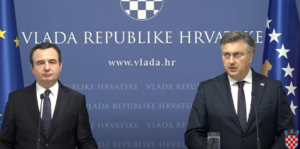
Kosovo Prime Minister Albin Kurti stated in Zagreb today that the nervousness in Belgrade is being „channeled into aggression toward Kosovo“ due to Serbia no longer having control over it. He described Serbia as a „paramilitary state“ while reaffirming Kosovo’s status as a „normal“ state.
Kurti’s remarks came during a joint press conference with Croatian Prime Minister Andrej Plenković, following their meeting in the Croatian capital. The two leaders signed six agreements, including two related to social security under the Ministry of Labor.
Croatian PM Shares Support of the BG-PR Dialogue
Plenković, in his remarks, reaffirmed Croatia’s support for the Brussels dialogue between Kosovo and Serbia.
He emphasized the importance of resolving key issues, including the status of northern Kosovo municipalities, through negotiations facilitated by European mediators.
Plenković also highlighted the need for regional cooperation, emphasizing a commitment to resolving disputes peacefully and avoiding conflict.
“We strongly support the continuation of dialogue,” said Plenković, stressing the need for pragmatic solutions to ensure stability in the region, particularly among countries emerging from the dissolution of Yugoslavia. He added that the Brussels agreement was seen as a step toward „de facto“ recognition of Kosovo, promoting dialogue without incidents.
Kurti: Serbia – Paramilitary State, Kosovo – A Normal State
Kurti addressed recent incidents in northern Kosovo over the past two years, which he detailed during the press conference.
The conversation then shifted to the recent attack on the Ibar-Lepenac Canal in Zubin Potok, Kosovo. An Albanian journalist raised the issue, prompting a response from both leaders.
Plenković expressed support for the ongoing investigation, calling it a „terrorist attack“ and adding that more information would emerge as the investigation progressed.
Kurti also condemned the attack, suggesting that it was not carried out by ordinary citizens and accusing Belgrade of orchestrating the violence.
„The nervousness in Belgrade has turned into aggression toward Kosovo because they no longer control it,“ Kurti said. „All evidence points to Belgrade’s involvement in supporting such attacks.“
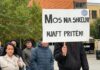
On the broader issue of Serbia’s internal situation, Kurti responded to a question about the recent student protests, pointing out that Serbia has only experienced two and a half years of democracy in the past century and a half.
He criticized Serbia for failing to respect human rights and the rule of law, suggesting that these systemic issues have led to the protests. Kurti described Serbia as a „paramilitary state“ and warned that this environment fosters acts of terror, like those orchestrated by figures such as Milan Radoičić, who has been implicated in attacks on Kosovo.
„Serbia has become a paramilitary state,“ Kurti declared, contrasting it with Kosovo, which he described as a „normal state“.
He asserted that for a democratic process to flourish, both Kosovo and Serbia must be „normal“ states.
Finally, he called for the European Union to exert more pressure on Belgrade to respect the agreements made in the Brussels dialogue.
Preuzimanje i objavljivanje tekstova sa portala KoSSev nije dozvoljeno bez navođenja izvora. Hvala na poštovanju etike novinarske profesije.