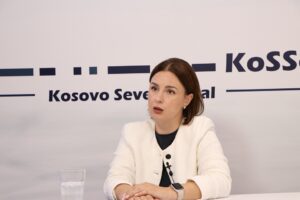
Jovana Radosavljević, executive director of the NGO New Social Initiative (NSI), was detained today and faced a misdemeanor charge for allegedly making an unauthorized recording at the Bistrica checkpoint. While police insist the incident violated prohibitions against filming the area, Radosavljević contends she was not recording the checkpoint itself but activated her phone’s camera for personal safety due to past uncomfortable encounters at the same location.
Police Intervention and Detention
Kosovo Police confirmed Radosavljević’s detention earlier today, stating, “Filming is prohibited, and she was aware she could not record. She refused to comply when instructed to stop.”
She was then instructed to go to the police station in Zvečan for questioning, where she was later released.
Speaking to KoSSev after her release, Radosavljević clarified that she is not facing criminal charges but a misdemeanor and has not yet received any penalty.
The Incident
Radosavljević described the events leading to her detention. She was traveling to Leposavić when her vehicle was stopped at the Bistrica checkpoint for a routine inspection around 1 p.m.
She claimed that an Albanian police officer grew agitated upon noticing her phone, mounted on a hands-free holder, recording video.
„The officer started shouting and demanded to know why my camera was on,“ she recounted. Despite his demands to stop recording, she refused.
The situation escalated when plainclothes officers arrived and demanded her phone.
„He didn’t show identification, but began yelling at me to hand over my phone because I had recorded without authorization,“ Radosavljević said. She continued to refuse, requesting a court order before complying.
An hour after the initial stop, officers instructed her to follow them to the Zvečan police station, where she provided a statement and was informed she was being charged with a misdemeanor rather than a criminal offense.
Concerns About Safety
This incident is not the first time Radosavljević has filmed during a police stop at the Bistrica checkpoint. She explained that past unsettling encounters with officers, particularly at night, motivated her to record.
“I record because I don’t feel safe and want evidence in case something happens,” she said. I’ve had unpleasant interactions with special police units here, especially during nighttime stops. Having the camera on makes me feel more secure.”
While acknowledging the posted signs prohibiting photography in the area, Radosavljević emphasized, “I am aware of the restrictions, but my experiences—and those of others—have made me cautious. Many people have reported similar issues with both special and regular police at this checkpoint.”
The Bistrica Checkpoint: A Tense History
Located on the busy Priština–Mitrovica–Jarinje–Raška road, this checkpoint has been a flashpoint of tensions. Established nearly two years ago, the site has seen significant infrastructure upgrades, including ongoing construction of a substation.
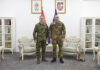
Kosovo’s Interior Minister Xhelal Sveçla and Police Director Gazmend Hoxha recently laid the foundation stone for the new facility, and boasted about it on social media while also sharing photos, emphasizing its role in improving security and working conditions.
However, Serbian officials criticize the developments, calling the checkpoint a “tool for oppression” and claiming it serves to intimidate the local Serb population.
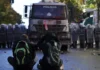
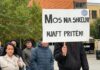
The checkpoint has also been the scene of two serious incidents involving gunfire and protests, including a petition drive to remove special police units, which ultimately lost momentum.
Preuzimanje i objavljivanje tekstova sa portala KoSSev nije dozvoljeno bez navođenja izvora. Hvala na poštovanju etike novinarske profesije.