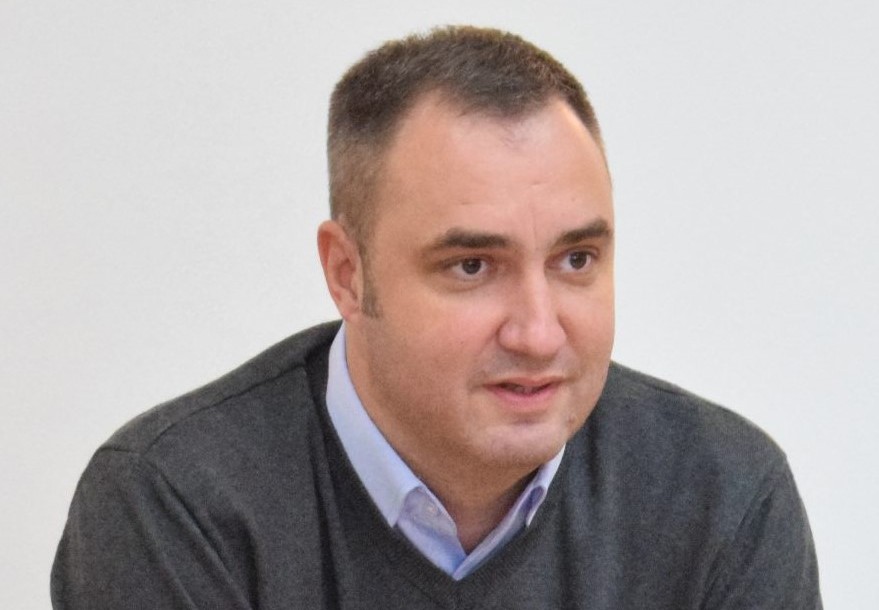
By Prof. Dr. Miloš Hrnjaz
„The final move could only be a dance“
Struggling, as in a torturous dream, the little girl made her first move—one of those practiced by the ballet bar, clumsy and far from resembling a dance. She followed it with a second, then a third. These were modest, feeble movements of a body sentenced to death, yet enough to momentarily halt the startled wolf. Once she began, Aska strung her moves together, haunted by the terrifying sense that she mustn’t stop, for even the briefest pause between movements could let death creep in through the cracks.
Twenty-five years have passed since 1999, a year marked by crimes against humanity targeting Albanians and the crime of aggression against Serbia. This span of time seems sufficient for society and the state to draw a line: to identify the most critical causes of the conflict, which stretches back far more than 25 years; to recognize its consequences; and to craft a strategy for national interests and development. It also appears enough time for Serbian society to address a deceptively simple yet critical question: Did Serbia suffer a definitive defeat regarding Kosovo? Without an answer, any effort to define future strategies risks wandering aimlessly.
If Serbia has been defeated in terms of Kosovo’s status, questions naturally arise about the implications of this defeat. Historically, states have disappeared, been occupied, lost parts of their territory, or faced humiliation in the aftermath of defeat—each outcome leaving enduring scars. In such cases, defeated states were left at the mercy of the victors, which is why wars sometimes lasted so long and had far-reaching effects. For some, defeat has spurred profound change or national renewal, motivating intellectual elites to critically reexamine dogmas and investigate the roots of defeat, as well as the possibilities for recovery. At times, accepting defeat has even led to historical revisionism.
The concept of defeat seems self-evident, yet it is not so straightforward. Defeats can take various forms—military, moral, humiliating, temporary, partial, and so on. This text raises the question of whether Serbia, from 1998 to the present, has suffered a (final?) defeat regarding the status of Kosovo and what role international law has played in this matter. My view is that the last move before Serbia’s definitive defeat on the Kosovo issue is the “dance” of international law. This dance, with varying intensity, has been ongoing for 25 years.
International law has fundamentally altered the concept of defeat in interstate relations. The survival of states and their territorial integrity, recognized as universal and paramount national interests, has been bolstered since World War II by the prohibition of the use of force in international relations, as enshrined in Article 2(4) of the United Nations Charter. This has radically changed the concept of defeat in international relations by denying victors certain options—for the first time in history, military victors could no longer annex the territory of defeated states or alter their borders.
Despite significant skepticism about the efficacy of international law within the global system, Mark Zacher provides data indicating that, before 1945 and the adoption of the UN Charter, approximately 80% of territorial wars resulted in changes to territories. Afterward, this figure dropped to a mere 30%. Furthermore, he concludes that from 1976 to 2001, there were no major cases of territorial changes following armed conflicts. This represents a radical transformation of the international order, despite its flaws since the UN Charter’s adoption.
Kosovo, Defeat, and International Law
Before the well-known UN Security Council Resolution 1244, three resolutions were passed regarding the situation in Kosovo: 1160, 1199, and 1203. The first condemned the excessive use of force against civilians and peaceful demonstrators in Kosovo by Serbian police forces, as well as acts of terrorism by the Kosovo Liberation Army (KLA)… along with external support for terrorist activities in Kosovo.
Resolution 1199 expressed „grave concern at… the excessive and indiscriminate use of force by Serbian security forces and the Yugoslav Army, which have resulted in numerous civilian casualties and… the displacement of over 230,000 persons from their homes… all acts of violence by any party, as well as terrorism…“ Since the third resolution (1203) from October 1998 also failed to produce the desired results, negotiations at Rambouillet were initiated.
These efforts also failed to resolve the Kosovo crisis. NATO member states ultimately decided to use force against the Federal Republic of Yugoslavia (FRY). It was evident that any attempt to secure UN Security Council approval for this decision was doomed to fail, leading to the use of force without the Council’s authorization.
Although the international legal arguments surrounding the legality of NATO’s use of force against the FRY were more sophisticated than they might appear to the „average“ reader in Serbia—and despite the various arguments presented in favor of legality, including implicit authorization from the aforementioned resolutions, the supposed customary nature of the right to humanitarian intervention, and the alleged retroactive legalization of the use of force through the rejection of a Security Council resolution condemning NATO’s actions—the reality is relatively straightforward: not only was the use of force illegal, but as convincingly demonstrated, for instance, by K.J. Heller, it constituted a case of aggression. This illegality has proven crucial in the ongoing efforts to avoid total defeat regarding Kosovo’s status, as we continue to witness attempts to legalize the situation created by the illegal use of force.
At the same time, it is an undeniable fact that numerous crimes against the Albanian population were committed during NATO’s military intervention, with abundant evidence and rulings supporting this in both international and domestic courts.
Although the beginning of the military operation against Serbia did not meet the expectations of NATO member states, the later phases of the bombing campaign became increasingly intense, causing significant damage to Serbia’s infrastructure and some military losses. Faced with a combination of factors—including threats of further escalation in bombing that could completely destroy infrastructure, fears of widespread targeting of civilians and civilian structures, and the lack of support from Russia—Slobodan Milošević decided to explore the possibility of a compromise to end the bombing. This marked the beginning of the defeat.
Although Milošević entered these negotiations hoping to avoid a complete loss in relation to his war objectives, Article I(4)(1) of the Kumanovo Agreement stipulated a permanent cessation of hostilities and declared that “under no circumstances shall any forces of the FRY or the Republic of Serbia enter, reenter, or remain within the territory of Kosovo.” This was later reaffirmed in UN Security Council Resolution 1244, with one exception mentioned in Annex II, Point 6, though this exception was never implemented in practice.
With this, the FRY/Serbia lost effective control over Kosovo. However, it is essential to distinguish between the loss of effective control and the loss of sovereignty over a given territory. For instance, Cyprus today does not effectively control Northern Cyprus, but its sovereignty over the region is rarely questioned.
A more complex question than this is whether Resolution 1244 represented a victory or a defeat for Serbia regarding the status of Kosovo. (I don’t have the space here to delve deeply into this issue, which I have discussed in other works.) My honest opinion is that it was neither. Resolution 1244 is a legal act (a binding decision by an international organization).
Its primary goal was to establish conditions in Kosovo following Serbia’s military defeat that would end hostilities and create a legal framework, as Serbia’s legal system in Kosovo had been suspended. This framework was meant to last until a permanent solution for Kosovo’s political status was achieved.
Among states and international legal scholars, there is no consensus on how Resolution 1244 addressed the question of Serbia’s sovereignty over Kosovo. During the UN Security Council session at which the resolution was adopted, representatives from Namibia, Russia, China, and Argentina explicitly stated that the resolution guaranteed the sovereignty and territorial integrity of the FRY/Serbia. Conversely, representatives of the United States and Malaysia emphasized the importance of mentioning the conclusions from Rambouillet within the resolution, while other countries chose not to comment on the future political resolution of Kosovo’s status.
The key difference among states was not whether Resolution 1244 itself signified Serbia’s definitive defeat regarding Kosovo’s status (it was clear it did not), but whether Kosovo’s future status needed to be resolved within the framework of Serbia’s sovereignty over Kosovo. Even if it did not, the question remains to this day whether Resolution 1244 required the resolution to be reached through agreement between the parties.
The answers to these questions were left somewhat open after Resolution 1244 was adopted. This does not mean that all interpretations are equally persuasive. (To this day, I maintain that the stronger argument is that the resolution, at the time of its adoption, guaranteed sovereignty, and that any change to this could only occur through an agreement between the disputing parties or potentially through a new Security Council resolution.) However, the relative ambiguity of the resolution’s text favored those advocating for Kosovo’s independence, as they effectively controlled the territory of Kosovo following the adoption of Resolution 1244.
Serbia, however, had no better card to play than Resolution 1244 in its effort to avoid definitive defeat regarding Kosovo’s status. Militarily defeated, it sought to demonstrate that under the norms of international law, a military loss could not equate to the loss of territory.
This stance was not solely Serbia’s; it was, and continues to be, shared by about half of the states in the international system. On the other hand, it is worth noting that the “other side,” represented by the Kosovo Albanians and the states involved in gradually building Kosovo’s statehood, also legitimized their objectives by invoking international legal norms. No one simply declared, “Serbia lost militarily, and the consequence of that defeat is the loss of territory”—at least not in such direct terms and not publicly. This is because NATO’s use of force was illegal, even though this argument persists in public discourse to this day.
Following the violent events of March 2004, in which Serbs, their property, and Serbian Orthodox Church properties were targeted, efforts to build Kosovo’s statehood intensified. An attempt was made to reach an agreement through negotiations that would align with international law. However, it was evident that the room for compromise was extremely narrow at that point—Kosovo Albanians were unwilling to accept anything less than independence, while Serbia could accept almost anything except independence.
That is why, in February 2008, Kosovo declared independence, referencing the Ahtisaari Plan and with coordination from several Western states. The dance of invoking international legal arguments was carefully prepared and highly sophisticated. The core argument was that Resolution 1244 does not guarantee the sovereignty and territorial integrity of the FRY/Serbia but merely provides a temporary legal framework until a resolution is reached. Since negotiations failed to yield a solution, the UN Secretary-General’s Special Envoy proposed supervised independence as the resolution. It was argued that declaring independence was not contrary to either Resolution 1244 or general international law, as international law protects territorial integrity against other states but does not safeguard territorial unity from secession attempts.
The aim was to gradually build a functioning state on Kosovo’s territory, as Serbia, due to the Kumanovo Agreement and Resolution 1244, could not militarily defend itself against secession attempts—a right generally reserved for states.
One of Serbia’s „moves within the dance” to protect its interests regarding Kosovo was the attempt to obtain an advisory opinion from the International Court of Justice (ICJ) on the Declaration of Independence. However, even this “move” did not entirely catch the “wolf” off guard.
Although the ICJ’s Advisory Opinion in 2010 explicitly stated it would not address the issue of Kosovo’s statehood, it concluded that the Declaration of Independence, as a legal act, did not violate Resolution 1244 or general international law. While this did not necessarily mean that a Kosovo state had been created, it facilitated its further development, especially given Serbia’s inability to effectively influence the reality on the ground in Kosovo. The wolf tightened the noose, and it appeared that Aska had increasingly less room to maneuver within the framework of international law.
One of the obstacles in the gradual process of building Kosovo’s statehood was the northern part of Kosovo, where the Serb community exercised self-governance. The establishment of a new government in Serbia after 2012 was marked by the acceptance of the Brussels Agreement, one of whose goals was to gradually dismantle this self-governance and replace it with the Association of Serb Municipalities.
This marked a new phase in Serbia’s attempts to avoid definitive defeat concerning Kosovo’s status by invoking international legal norms. The new government in Serbia set several objectives, which, to some extent, were mutually contradictory.
These goals included protecting Serbs in Kosovo (which Serbia could not actively ensure and largely depended on NATO), fostering economic growth (primarily reliant on Western states), and avoiding definitive defeat regarding Kosovo.
Without delving into the degree to which the first two goals were achieved (to which the aim of staying in power can be freely added), regarding the third goal, the wolf crept dangerously close to Aska’s throat. The Serbian government’s strategy boiled down to negotiations and the acceptance of non-binding agreements that, in themselves, did not constitute Serbia’s recognition of Kosovo. However, these agreements—little by little—supported the building of Kosovo’s statehood (e.g., the Brussels, Washington, and especially Ohrid Agreements, the latter bringing Serbia to the brink of implicitly recognizing Kosovo).
The red lines were continually shifted, ultimately narrowing to Serbia’s refusal to formally recognize Kosovo and its opposition to Kosovo’s UN membership—both of which would represent definitive defeats for Serbia.
Conclusion or Limits of the Allegory
“When Aska reached the first trees and abruptly changed the form and rhythm of her dance, while the wolf was still in the clearing, turned sideways to the spectators, the older shepherd raised his rifle, aimed, and fired… Behind the wolf, there was a trail of blood.”
In Serbia, people are waiting for the shepherd with the rifle to shoot the wolf. In this scenario, the „dance“ of international law serves as a distraction until “international circumstances change.” However, there are numerous issues with this scenario, which I have previously written about—chief among them being that the shepherd is nowhere in sight, despite “political analysts” predicting his imminent arrival with almost religious fervor.
More importantly, while the West is often perceived as the wolf in this story, the situation is far more complex. On Kosovo, there is a dual process of dehumanization and denial of agency—both of Kosovo Serbs by the majority of Albanian society and of Kosovo Albanians by the majority of Serbian society.
In Serbia, Albanians are often reduced to mere proxies of Western support, erasing from view the protracted conflict with them, the crimes committed on Kosovo, and the 25-year-long process of building a Kosovan state. Thus, Serbia, too, is no innocent Aska.
Another possibility is that the wolf changes its nature. The West (a simplification, as the West is far from monolithic) has made a decision to support the construction of a Kosovan state (a term that could be seen as euphemistic). While it is theoretically possible for the West to reverse this decision, this seems highly unlikely. The misplaced hope in Trump, despite his first term and the Washington Agreement, illustrates this well. Even if such a reversal occurred, it would not resolve the issue, as people in Serbia often overlook the will of the Albanians themselves.
A third possibility involves a radical shift in Serbian (foreign) policy. This would entail a range of measures aimed at reducing Serbia’s economic and other dependencies on Western states in the medium term and prioritizing the Kosovo issue as the country’s central concern—essentially subordinating almost everything to it. However, the outcome would be highly uncertain, and the risks immense, particularly regarding the safety of Serbs in Kosovo, which is already precarious.
A fourth option is a swift agreement between Albanians and Serbs regarding Kosovo’s status.
A fifth option would be a democratic decision by Serbian citizens to acknowledge defeat and explore its deeper causes—an approach that could, at least in theory, lead to a radical rethinking and redefinition of Serbia’s national interests.
The allegorical tale of Aska and the Wolf mentions a miracle. I don’t believe in miracles, nor do I believe that any of the above scenarios will materialize. It seems most realistic that Kosovo’s statehood will be solidified one way or another. International law has served as a relatively successful distraction for some time, but power is slowly and inevitably asserting itself.
Faced with a sense of injustice, Serbia and its people will likely await an opportunity for revisionism. We have seen this pattern play out repeatedly throughout history (not exclusively Serbian but revisionism in general). This, in turn, will perpetuate the cycle of violence that has marked Kosovo for over a century.
It is for this reason that I refrained from making any statements about Kosovo for more than a year. I sit, watch, and, after years of writing and public commentary, helplessly observe the consequences. Perhaps, quietly, I wait for a miracle in which I no longer believe.
(This is a condensed and adapted version of a text developed as part of the NATIONAL(S) project on the legitimization of Serbia’s national interests through the norms of international law, supported by the Science Fund of the Republic of Serbia.)
The opinions and views expressed are those of the author and do not necessarily reflect the positions of the editorial team or donors.
Preuzimanje i objavljivanje tekstova sa portala KoSSev nije dozvoljeno bez navođenja izvora. Hvala na poštovanju etike novinarske profesije.