This summer, a small plastic whistle became a potent symbol of protest for certain politicians from Northern Kosovo, expressing their discontent with the authorities in Pristina. The use of this unassuming object has resulted in arrests for disturbing public order, though ironically, this very tool, along with others—some deemed weapons by courts—was once employed by the current leaders of Kosovo’s government during their time in opposition.
The leader of the Serbian Democracy party, Aleksandar Arsenijević, and his associates have been detained twice by the Kosovo Police for allegedly disturbing public peace.
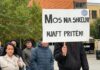
Their form of protest? Blowing whistles during visits by ministers from Pristina or in opposition to the policies of local officials in North Mitrovica.
The protests, which occur mainly on the streets of North Mitrovica, have become a regular occurrence in recent months as government officials frequently traverse the area.
Arsenijević and his deputy, Ivan Orlović, were both detained again this Tuesday, this time following an unannounced visit by Kosovo’s Prime Minister, Albin Kurti, to North Mitrovica.
Srpska Demokratija Party Leaders Detained For Several Hours Amid Kurti’s Visit to N.Mitrovica
Arsenijević was surrounded by what appeared to be plainclothes officials while Kurti was visiting a newly opened establishment just 100 meters away. As Arsenijević blew his whistle, a uniformed police officer approached, asking him to stop, warning that he was disturbing public peace.
After Arsenijević continued, the officer warned, „I’m telling you for the last time,“ followed by a more ominous, „I might arrest you.“
Moments later, Arsenijević was detained, while nearby citizens reacted with shouts of disapproval.
A similar situation unfolded just a few meters away when Orlović, along with a small group, was also blocked from passing through a pedestrian zone by plainclothes officials.
When Orlović began whistling, a distant figure, assumed to be an officer, warned him: „This is your last time.“ When Orlović responded, „Or what?“ the officer retorted, „I will only say this once.“
After a second whistle, the situation escalated into chaos, with shouts and scuffling as Orlović fled into a nearby building.
Both Arsenijević and Orlović were eventually released, each fined for disturbing public order.
This is not Arsenijević’s first arrest. A month ago, he was detained near the Knez Lazar monument after blowing a whistle during a ministerial visit from Pristina. He was released with a fine, similar to the latest incident.
The Whistle: A Tool of Protest in Kosovo’s Political Past
Ironically, Prime Minister Kurti himself once used whistles to protest against the Kosovo government and international actors—who are now his partners.
Kurti and his party members, then part of the opposition movement Vetëvendosje (Self-Determination), used whistles to disrupt Kosovo Assembly sessions, confronting parliamentarians face-to-face. Among those assisting him was today’s Justice Minister, Albulena Haxhiu.
Recent comparisons between Arsenijević’s arrest and the earlier actions of Vetëvendosje have sparked accusations of double standards from multiple quarters in Pristina.
What Does the Law Say?
Kosovo’s public order law, under Article 8, addresses noise-related offenses, stating that any person causing „intolerable and unnecessary noise“ that disturbs others will face a fine, with penalties ranging from €30 to €500 for individuals and up to €700 for legal entities. The law specifically applies to noise between 10 p.m. and 7 a.m. on weekdays, and between 11 p.m. and 7 a.m. on weekends.
However, the law does not mention arrest as a penalty for such an offense.
The Legacy of Vetëvendosje’s Protests
Compared to the methods Self-Determination employed in its protests, the current whistle-blowing demonstrations appear relatively mild. Self-Determination rose to political prominence through opposition to decisions they believed undermined Kosovo’s sovereignty.
They opposed international agreements like the Ahtisaari Plan and the Brussels Agreement and vehemently protested the border demarcation agreement with Montenegro. They also led campaigns against negotiations with Belgrade, using slogans like „No Negotiations“ and „The Association Will Not Pass.“
Self-Determination’s protests were far from peaceful: they overturned trucks carrying goods to protest the import of Serbian products, clashed with international police, and even threw tear gas in the Kosovo Assembly.
Leading figures like current Interior Minister Xhelal Sveçla and Justice Minister Albulena Haxhiu were prominent during these protests.
The party, i.e. their followers also damaged government property, threw Molotov cocktails at buildings and police stations, and even hurled bricks and stones at international forces.
Legal Repercussions for Self-Determination Leaders
Many of Self-Determination’s current leaders, now part of Kosovo’s government, faced legal consequences for their actions in previous years.
In 2018, Prime Minister Kurti was sentenced to 18 months, with a two-year suspended sentence, for his role in tear-gas throwing incident in the Assembly. Justice Minister Haxhiu received a similar sentence.
Other MPs, including Donika Kadaj Bujupi and Faton Topalli, were convicted for disrupting parliament sessions in 2015 during debates over the border demarcation agreement with Montenegro.
In 2021, another Self-Determination MP, Driton Çuçi, was convicted for throwing tear gas and was also charged with the criminal offense of using a weapon.
This year, an official of this party, current Speaker of the Kosovo Assembly, Glauk Konjufca, was acquitted of charges related to throwing tear gas in the Assembly back in 2016.
On the other hand, charges related to „obstructing an official in the performance of duty“ have expired due to the statute of limitations.
„The Time When Kurti Confronted Police Shields and Threw Tear Gas“
Preuzimanje i objavljivanje tekstova sa portala KoSSev nije dozvoljeno bez navođenja izvora. Hvala na poštovanju etike novinarske profesije.