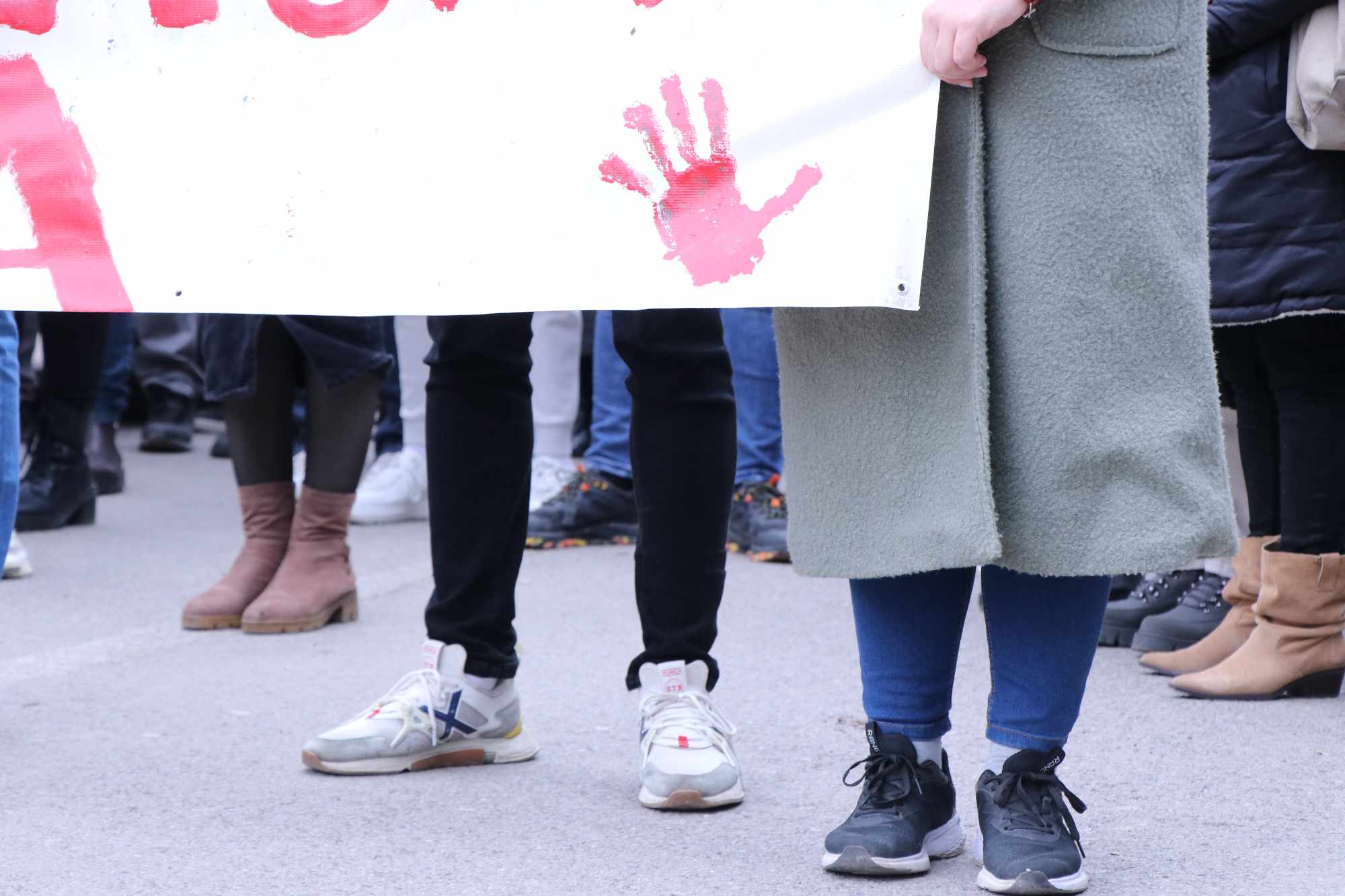
A group of students from the University of Pristina, temporarily based in North Mitrovica, has called on Serbian authorities to publicly disclose any agreements concerning the integration of education and healthcare institutions in Kosovo – or to state clearly how they intend to address what the students describe as “a newly arisen problem.”
The group, which supports student protests and blockades across Serbia, said it has been warning for months about alleged plans to integrate Serbian-run educational and healthcare systems into Kosovo’s legal framework. According to their statement, members of the group have been “targeted, labelled traitors, and accused of being foreign mercenaries” for raising the issue.
They argue that even before any formal integration, students and professors without Kosovo-issued documents are already facing severe restrictions on studying and working. The students point to the Kosovo government’s recent announcement on new entry and residency rules for those without Kosovo documents, which they say will directly impact the Serb community in Kosovo as well as students from central Serbia and university staff teaching there.
On Monday evening, Kosovo Police published a digital brochure in three languages explaining entry, stay, movement and employment rules for foreigners. However, the authorities have yet to specify when the new policy will take effect.
The Mitrovica students argue that the conditions set by Kosovo for temporary residency permits for study or work are practically impossible to meet under the current status of the University, since the institution cannot issue the documentation required by Pristina, given that Serbian institutions do not recognize Kosovo’s authorities.
In the wake of conflicting statements – Zlatan Elek of Srpska lista insisting there is no such integration plan, and outgoing German Ambassador Jörn Rohde stating the opposite – the students are demanding clarity from Belgrade.
“We demand from the authorities in Belgrade to transparently present the contents of any signed agreements concerning education and healthcare or, if these do not exist, to clearly state how they intend to resolve the newly arisen problem,” they said.
They also called for a “third way” to secure the future of Serbian institutions in Kosovo, warning that neither integration nor relocation would solve the issue.
“Fully aware of the situation, we believe that neither integration nor relocation is a solution, and we demand that a third way be found for the survival of the University, the entire education and healthcare system, and thereby students, pupils, teachers, and the Serb people in Kosovo and Metohija,” the group concluded.
The status of Serbian-run educational and health institutions in Kosovo has been back in the spotlight over the past month, following statements by U.S. and German officials and by Kosovo’s Prime Minister Albin Kurti calling the dual system “unsustainable” and urging its “unification” with the help of Kosovo Serbs.
Serbian officials, including Srpska lista and the Serbian government’s Kosovo Office, have repeatedly denied any plans to integrate these systems. Tensions have been further stoked by recent police actions, including a search of a health center in North Mitrovica and subsequent mass protests by local medical staff.
Meanwhile, Berlin has also cautioned Pristina. Just a week ago, a senior German foreign ministry official urged Kosovo authorities to refrain from “targeting” Serbian-run health institutions, with Ambassador Rohde conveying the message that “coordination and cooperation are needed, not further escalatory steps.”
At the same time, suspicions have surfaced about alleged coordination between Belgrade and Pristina regarding the takeover of Serbian institutions in Kosovo.
Preuzimanje i objavljivanje tekstova sa portala KoSSev nije dozvoljeno bez navođenja izvora. Hvala na poštovanju etike novinarske profesije.