The International Day of the Disappeared is commemorated every year on August 30th. The wars in the Balkans have left behind thousands of casualties, whereas more than 10,000 people are still listed as missing. While the international community is calling for better cross-border cooperation between institutions to address this issue, the associations of disappeared persons and part of the CSOs believe that institutions do not want to address this issue – even though they have the information. One of the remarks is that the issue of missing people in Kosovo is extremely politicized, while pro-government media reinforce the belief that only one side is the victim and the other is the ‘criminal’.
Coalition for RECOM: The fate of the missing in the nineties in the Balkans: Obstruction instead of a civilization perspective and a humanitarian dimension
The Coalition for RECOM called on the governments of post-Yugoslav countries to launch a joint action to resolve the fate of the missing – namely, 10,167 persons still listed as missing during the wars in Croatia, Bosnia and Herzegovina and Kosovo.
The Coalition – a network of CSOs from the countries/regions of the former Yugoslavia, stated that the remains of only 85 persons were identified in the region in 2019 – 60 persons which went missing during the war in Bosnia and 25 which disappeared in the territory of Croatia.
At least 1,300 people were last seen in some of the detention facilities in Bosnia and Herzegovina
They also expressed concern over the lack of exhumation of known mass grave sites.Such a low number points to „an alliance in obstruction of addressing the difficult legacy of the common past“ – the Coalition for RECOM emphasized, adding that the prerequisite for resolving the fate of the missing is „for the governmental committees to cease acting as spokespersons for the interests of parties in power and to treat all victims equally, both in the interests of families and the public.“
„There are serious indications that certain state institutions, such as the Ministry of Defense of the Republic of Serbia, and military commanders have information about a number of mass grave sites, but that this information is regarded as an ‘official secret’ and kept in private archives,“ they said.
The issue of missing persons in Kosovo is extremely politicized
The Coalition for RECOM also underlined that „the issue of the disappeared during the war in Kosovo is extremely politicized“, and that „politicians and leaders of victims’ associations increase the number of missing from their ethnic community, while the pro-government media reinforce the belief that only one side is the victim and the other is the ‘criminal’.”
“The civilizational perspective and humanitarian dimension of the problem of missing persons have gotten completely lost,” they argued.
Coordination of Serb associations dissatisfied with the deadlock in the process of searching for missing persons
Families of the missing persons and members of association express their dissatisfaction over the deadlock in the process of searching for and identifying missing persons, as well in the process of finding the truth and satisfying justice – the Coordination of Serb Associations of Families of Missing Persons from the Territory of Former Yugoslavia wrote in a statement.
The Coordination of Serb Associations organized a manifestation at the City Hall in Belgrade on the occasion of the International Day of the Disappeared.
The end of the manifestation will be marked with a peaceful walk of family members of the missing persons and other victims to the Monument to the Missing and Casualties of the wars in the 1990s in Tasmajdan Park.
Kumnova: „The address is known, Serbia has documented the names of each missing person“
The Kosovo Association of the Disappeared “Mothers’ Cries” held a roundtable on Thursday, where they called for Kosovo and international institutions to „condition Serbia.“
„It was not easy going door to door for twenty years to make the world aware of the horrifying atrocities that have taken place here,“ the association’s president, Nysrete Kumnova explained, Indeksonline reported.
„The address is known, Serbia has documented the names of each missing person,“ Kumnova said.
According to Kosovo media reports, Missing Persons Coordinator for the Western Balkans, Fabien Bourdier also attended this roundtable.
Bourdier said that the entire region has performed poorly in recent years when it comes to discovering the fates of missing persons.
„Joint efforts must continue because there are more than 10,000 missing persons in the Western Balkans. Unfortunately, in the last five to seven years, only a few families in Kosovo and throughout the region have learned the fate of their loved ones,“ he stressed.
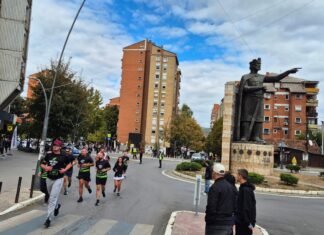
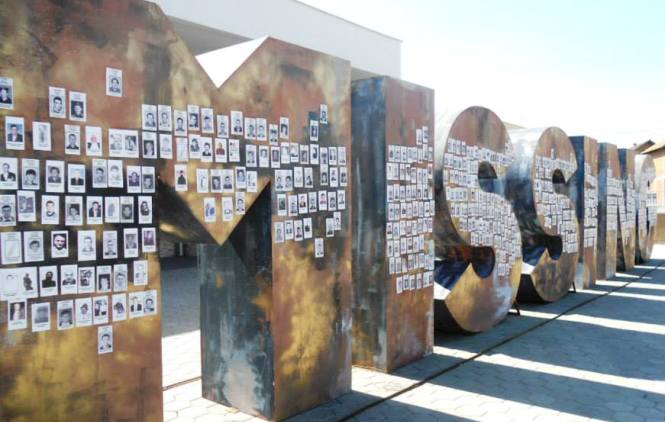
In Pristina, the International Day of the Disappeared will be celebrated with a march near New Born – Kosovo media report.
10,167 persons still missing in the region
According to the data of the International Committee of the Red Cross, 10,167 persons, which disappeared during the conflict in the 1990s, are still listed as missing in the region – 1,998 missing persons in Croatia, 1,653 in Kosovo and 6,516 in Bosnia and Herzegovina.
Out of the total number of missing persons – over 3,800 are of Serb ethnicity, reads the data from the Commission on Missing Persons of the Government of the Republic of Serbia and the competent authorities in Republika Srpska.
According to the HLC and HLC Kosovo, the fate of 1,669 missing persons in connection with the Kosovo war is still unknown (1,100 Albanians, 419 Serbs and 150 of other ethnicities) – including 264 women, 287 person younger than 25, 466 persons from 41 to 60 years of age, and 469 persons who were more than 60 years old at the time when they went missing.
After the 1999 war in Kosovo, 6,000 people were listed as missing. Most of the missing persons were found in a mass grave near Batajnica, Petrovo Selo, Bajina Basta and Rudnica.
Preuzimanje i objavljivanje tekstova sa portala KoSSev nije dozvoljeno bez navođenja izvora. Hvala na poštovanju etike novinarske profesije.