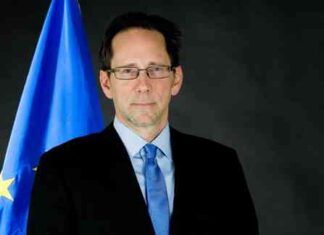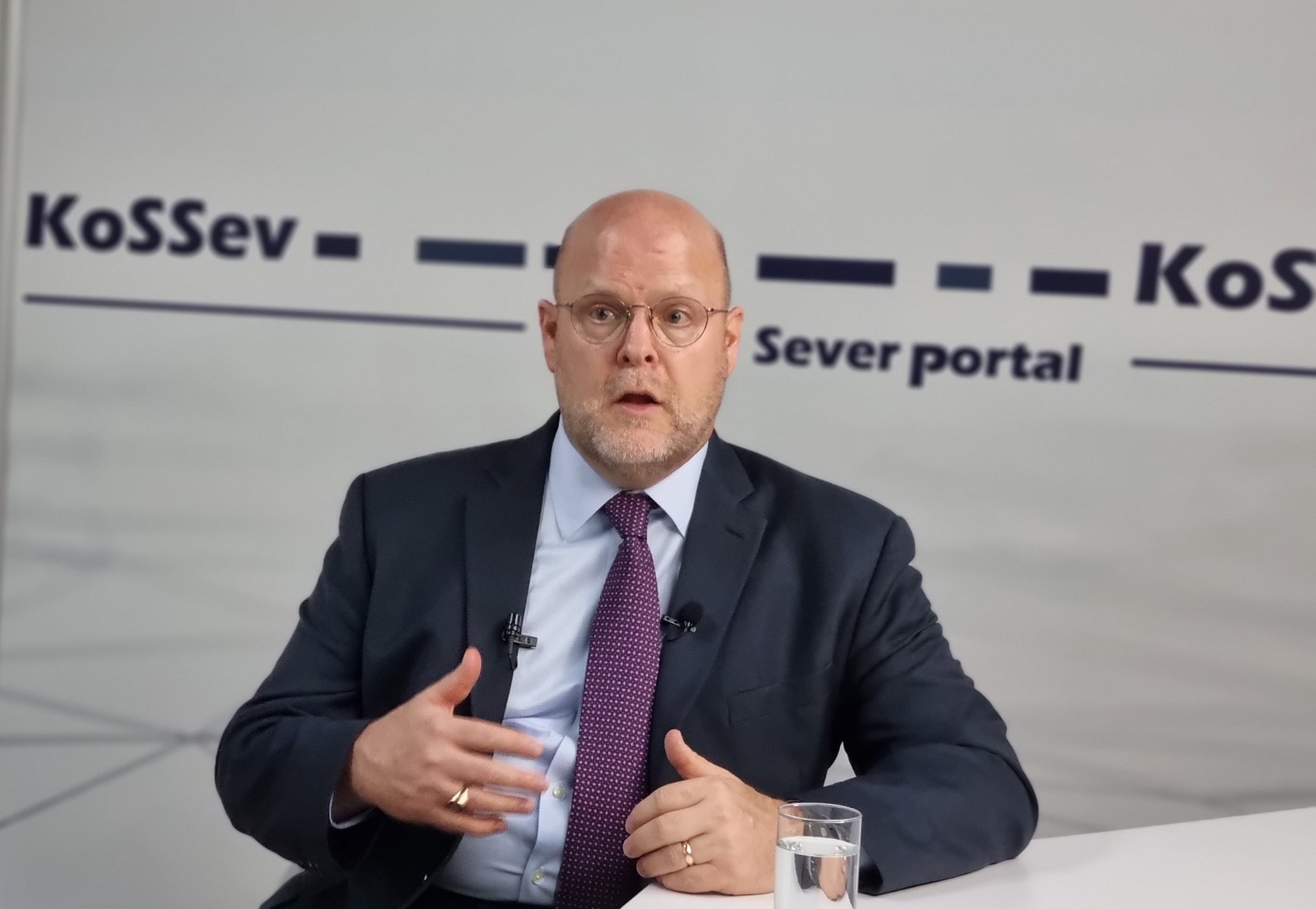
The US is concerned about the possibility of further escalation of tensions and violence, the US ambassador in Pristina, Jeffrey Hovenier, said on Wednesday. The ambassador called on the Kosovo government to address the concerns of Serbs from the north of Kosovo who left institutions, urging Belgrade and Pristina to take steps to reduce tensions and ensure peace and security.
Hovenier answered questions from reporters from several media outlets from Kosovo, including KoSSev, in the premises of the US Embassy in Pristina this Wednesday.
Withdrawal from institutions is not a solution
The US ambassador said that the withdrawal from the Kosovan institutions by the Kosovo Serbs is not a solution to the current disputes.
“We are concerned that this also has the potential to further escalate tensions on the ground,” he warned.
Pristina to address the concerns of those who left institutions
Responding to a question from a KoSSev portal journalist on how a solution to the new situation in the north could be found, the ambassador said:
“We are encouraging the government of Kosovo to do what it can to reach out to the communities, to reach out to those who have decided to leave, and to try to address the concerns they have identified so that they feel they can return to what had been agreed – which is the integration of the ethnic Serb community in institutions of government. That’s what we would like to see.”
He specified that a part of the community is expressing concerns and frustration as they do not feel as if their rights are being fully realized.
“It’s really important for the political leaders to hear them and to address that. So, that is our advice to them,” he said.
On the other hand, the US ambassador highlighted that the people of Kosovo are committed to the law, the constitution, and a multi-ethnic state.
“Kosovo is strongest and best when all of its communities are represented in the institutions of government. The US and a lot of our partners have worked very hard to gather the people of Kosovo and hope to achieve that,” the ambassador stressed.
“We’re all concerned about the state in the north right now. This society will be stronger when all of its elements are participating in the structures of government. Kosovo’s strength is its multi-ethnicity, among other things. We hope to see the ethnic Serb community participating fully in government.”
Start negotiations to establish the ASM with urgency, we don’t want a new Republika Srpska
Hovenier called on Belgrade and Pristina to take steps to reduce tensions and ensure peace.
“We believe that both Pristina and Belgrade have an important role to play in reducing tensions and fostering peace and stability.”
The ambassador noted that the US and other “friends of Kosovo” are actively engaged at a variety of levels in trying to help reduce tensions.
He called on both sides to implement what was agreed within the Brussels process, placing an emphasis on talks concerning the ASM and the establishment of this body.
“We believe that it has taken on an even greater urgency – starting negotiations, with urgency, to establish the Association of Serb-majority Municipalities. That’s the request we’ve made.”
The Association of Serb-majority municipalities must be consistent with the current Constitution of Kosovo or the 2016 Constitutional Court decision, Hovenier said, once again underlining that the US does not want a new Republika Srpska.
“As I’ve said many times – we do not support and would not support a Republika Srpska-like arrangement. But there’s an urgency to this. And this is something that has been identified by the community as important to them so that they feel that they are participating in a manner that they find comforting and acceptable, for them to have their voices heard and to have their rights fully protected. This is something we have been asking a variety of Kosovo governments for a while to implement.”
Hovenier said there are a lot of ways the government of Kosovo can fulfill its obligation to form the ASM that “avoids this sort of situation of Republika Srpska.”
“We look forward to the government putting some proposals on the table, with some urgency, to help achieve just that,” he said.
Extend the deadline for reregistration, we are concerned about fines
Hovenier also reminded of another request that the US and other countries sent to Pristina.
“We are concerned about the timeline and the process to implement the government’s decision on license plates. We believe that it should be fully extended. We are not looking for phased implementation or partial extensions. We are particularly concerned about fines or other punitive actions being taken effective 21 November and we’ve made those concerns clearly known to the government.”
On the other hand, he underlined it is not unreasonable that Pristina wants and expects that its residents and citizens have license plates issued by the authorities of the government of Kosovo.
“The process itself is consistent with the Brussels Agreements but we have from the beginning expressed real concerns about the manner in which it was going to be implemented. We continue to have those concerns.”
The concerns also become even more urgent in the current circumstances, he added.
“We are asking the government not to proceed with this plan as laid out at the beginning of the month.”
It is reasonable to expect Kosovo to fulfill its obligations
When asked if the US would agree to ask Belgrade to postpone the request for the formation of the ASM, since it is asking Kosovo to extend the deadline for reregistration, Hovenier says that he „does not accept such symmetry“.
“I think it’s kind of a false equivalency. We are asking the government of Kosovo to postpone action on implementing the decision on license plates because we think more time is needed to elicit buy-in. We are not challenging the legitimacy of the need to phase out the license plates issued by Serbia. The Association has been on the table since 2013, I think it was 2013 when it was part of the Brussels package. It went to the Constitutional Court decision in 2016. We are now in 2022. We don’t think it’s unreasonable to expect the government of Kosovo to fulfill the commitment made to put something forward.”
We have a crisis, this is not the most opportune time for ministers to be traveling to the US
Addressing the media reports that the Kosovan Minister of Justice, Albulena Haxhiu, visa request for a visit to the US was denied, the ambassador says that he is not aware of any circumstances where a minister of government would not qualify to receive a visa for an official visit. He also said this is not “the most opportune time” for that.
“We are very focused on this crisis. We believe this government is very focused on this crisis. This is not necessarily the most opportune time for ministers to be traveling to the US for official meetings given the crises that need to be dealt with here. We are communicating that to various officials in government,” Hovenier said.
When asked about the Franco-German proposal, Hovernier refused to talk about its content.
“Because the whole point of sensitive diplomatic communication is that they remain sensitive as governments deal with complicated things.”
Preuzimanje i objavljivanje tekstova sa portala KoSSev nije dozvoljeno bez navođenja izvora. Hvala na poštovanju etike novinarske profesije.