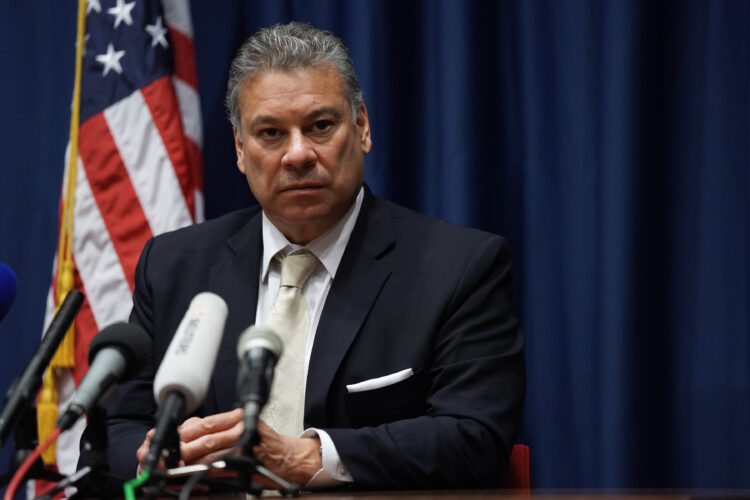
The US Special Envoy for the Western Balkans, Gabriel Escobar, emphasized in his report to the House Foreign Affairs Committee on US engagement in the Balkans, which he will submit and address questions from senators from the Subcommittee on Europe today, that US policy is based on the continued integration of the region into Euro-Atlantic structures.
As formidable obstacles, but not insurmountable, he listed stalled progress on democratization, corruption, dependence on Russian energy, ethno-nationalist politics, and harmful foreign influence and disinformation.
And while no country in what the EU and the US list as the Western Balkans is a member of the EU, (although they are surrounded by EU members – Croatia, Slovenia, Greece, Bulgaria and Romania), with the exception of Bosnia and Herzegovina, Serbia and Kosovo, all the others are members of NATO.
Escobar began his written testimony, which he will discuss today, with a review of the situation in Kosovo, that is, „the fraught relationship between Kosovo and Serbia“, recalling what he presented as progress:
The EU, with strong U.S. support, achieved a breakthrough Agreement on the Path to Normalization of Relations and an implementation annex that provide a framework through which both countries fulfill their independent obligations. A key element is fulfilling Kosovo’s obligation from 2013 to establish an Association of Serb-majority Municipalities. The ASM would empower municipalities with shared interests, language, and culture to coordinate on common challenges in delivering some public services, including education, health care, and local economic development. Moreover, Kosovo and Serbia agreed to recognize each other’s documents and national symbols. What’s more, under this agreement, Serbia will no longer lobby against Kosovo’s membership in international organizations.
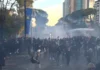
Since the parties reached these agreements, Escobar noted that there have been „serious provocations, escalating tensions, and unacceptable violence by Serb protestors against KFOR, police, and journalists in northern Kosovo.“
In response, NATO deployed reserve force elements to reinforce the mission, while the US, with the EU, called for immediate deescalation, to include holding new municipal and mayoral elections in four municipalities in northern Kosovo, and a refocus on implementing the agreement reached in February, that is, March.
„Together with our European partners, we remain engaged with Kosovo and Serbia, urging both parties to fulfill all their obligations, which are essential to continued progress on both their European paths,“ Escobar concluded.
Continued integration of the region into Euro-Atlantic structures
The US policy in the Western Balkans is grounded on „a simple principle,“ he said.
„Continued integration of the region into Euro-Atlantic structures. That integration strengthens Europe as a geostrategic partner; fortifies democratic governance and the rule of law; and makes the Western Balkan countries more secure and prosperous – and thus the region better security and trade partners for the United States.“
Addressing obstacles, he said that while „formidable“ they are not „Insurmountable“:
„The Western Balkans must take the steps necessary to qualify for membership. Our engagement is helping them fight corrosive corruption and disinformation that feeds susceptibility to malign influence – from authoritarian states like Russia and the PRC, but also bad actors within. Our engagement is focused on resolving lingering tensions that threaten this path and greater regional stability.“
Gabriel Escobar is set to appear before the members of this subcommittee today, at 14:00, US time. You can watch the live broadcast of his testimony via the link below.
Preuzimanje i objavljivanje tekstova sa portala KoSSev nije dozvoljeno bez navođenja izvora. Hvala na poštovanju etike novinarske profesije.