Some Belgrade-based tabloids continue to treat sparse KFOR press releases as opportunities to stoke drama, turning otherwise mundane updates into headlines that hint at crisis and conflict.
One recent example is a report by Alo, which covered a routine NATO military exercise in Kosovo with the eye-catching title: “KFOR ACTIVATED IN KOSOVO: Special Units Launch Operation (PHOTO)”. The story, published in late April, exemplifies the kind of headline engineering meant to provoke alarm or curiosity—particularly among readers from the crisis-prone region of northern Kosovo.
While the title is not factually incorrect, its tone and word choice suggest far more dramatic developments than what actually occurred. That disconnect between headline and content is a classic clickbait strategy—and a misleading one at that.
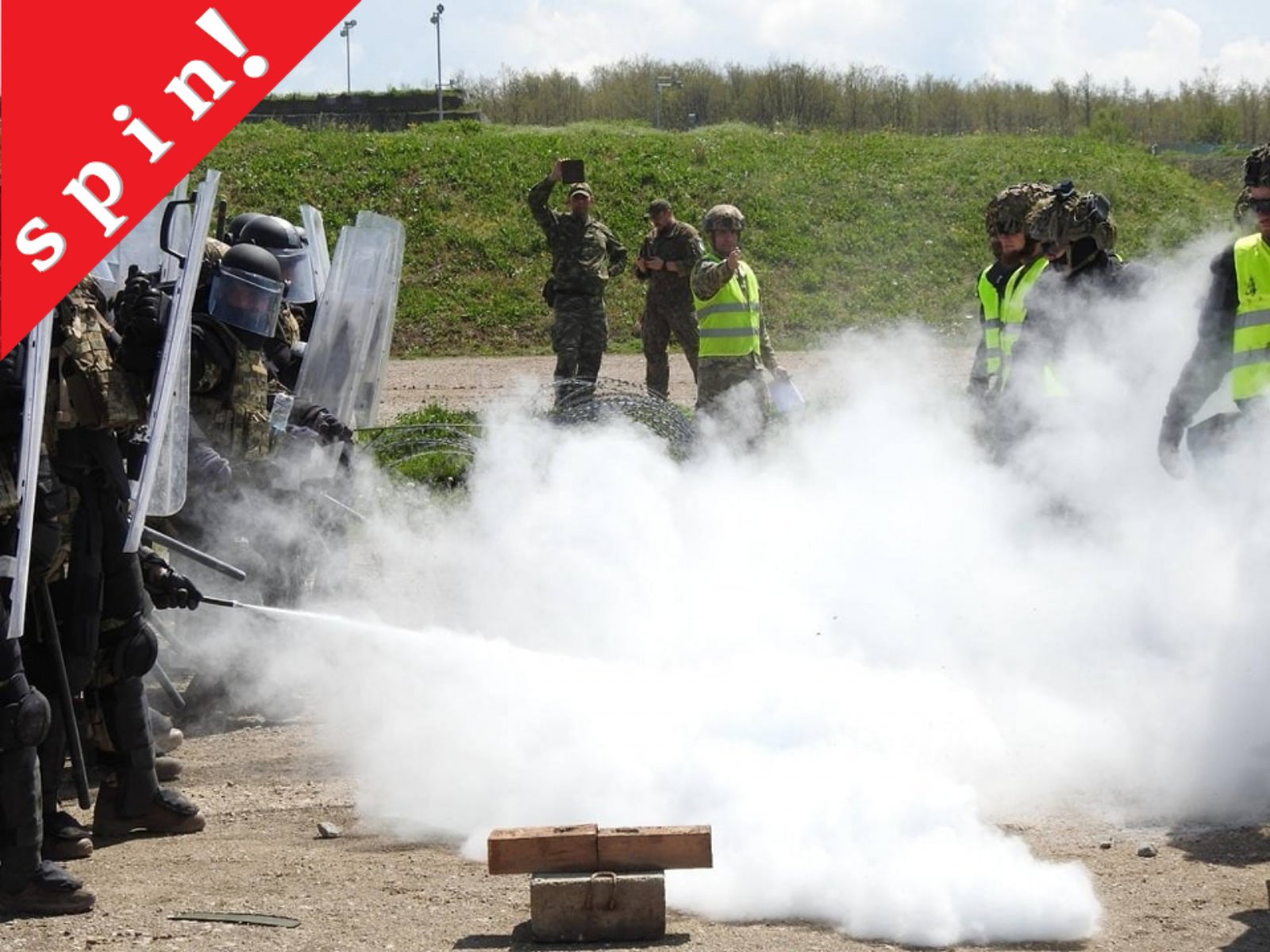
Readers who clicked expecting to learn about a high-stakes military intervention were quickly met with a letdown: the article opens with a clarification that KFOR troops were conducting a crowd control and riot management training at Camp Novo Selo.
According to Alo, the exercise was led by KFOR’s Tactical Reserve Battalion and the Multinational Specialised Unit, as stated in KFOR’s brief press release. The only notable detail separating this drill from previous ones was the use of a water cannon, mentioned midway through the text.
The report closes with a standard statement from KFOR reiterating its commitment to UN Security Council Resolution 1244, its cooperation with Kosovo Police and EULEX, and its impartial mission to ensure a safe and secure environment for all communities in Kosovo.
This isn’t the first time Alo has packaged routine KFOR activities as headline-worthy drama. In November 2024, the tabloid ran a similar piece titled: “KFOR IN PRIŠTINA: NATO Forces Activated (PHOTO)”, again using the term “activated” to suggest urgency or unrest where none existed.
Another headline from the same month, “ORBAN’S ARMY IN KOSOVO: KFOR Issues Statement, Here’s What Happened (PHOTO)”, followed the same formula. Readers who took the bait learned that the so-called “Orban’s army” was merely the Hungarian KFOR contingent participating in a regular drill at Camp Novo Selo.
These examples highlight a broader pattern among pro-government Serbian outlets, which frequently employ exaggerated, dramatic, or misleading headlines—especially when reporting on Kosovo.
While such headlines may boost traffic, they also risk spreading misinformation and fostering unnecessary fear or tension among audiences.
Preuzimanje i objavljivanje tekstova sa portala KoSSev nije dozvoljeno bez navođenja izvora. Hvala na poštovanju etike novinarske profesije.