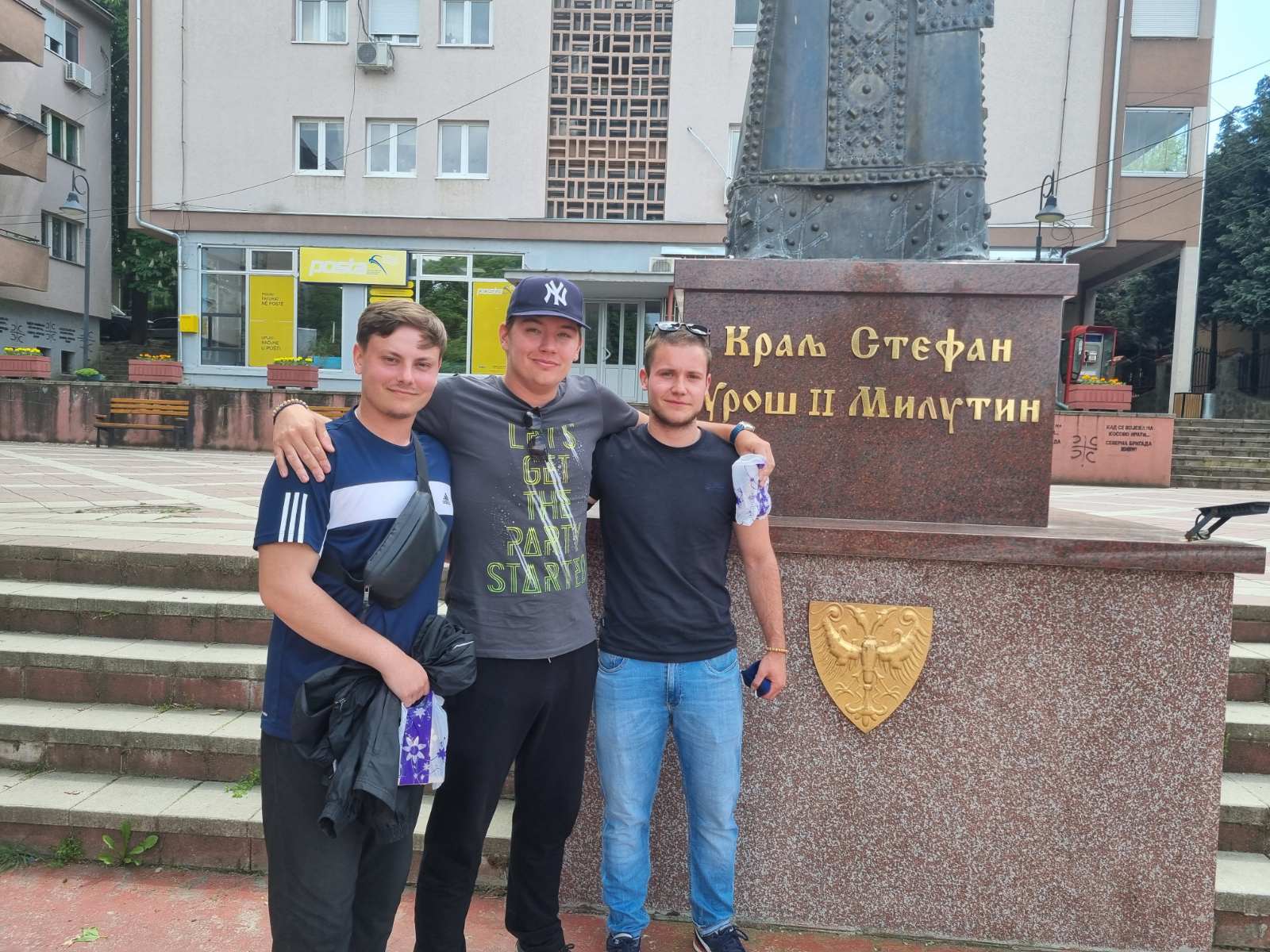
After a ten-day, 300-kilometer trek from Belgrade, three Serbian university students arrived Tuesday in Zvecan, northern Kosovo, completing a symbolic humanitarian march to show solidarity with children living south of the Ibar River.
The marchers—Filip Bogićević (Vrnjačka Banja), Novak Đurić (Vranje), and Nikola Jovanović (Borča)—are political science students who departed from the Rakovica Monastery on April 27.
Organized in cooperation with the humanitarian association Kosovsko Pomoravlje, their journey aimed to raise awareness and support for educational and sports programs for Serbian children in Kosovo.
“We want the children here to know someone is thinking about them—that they are not alone,” said Đurić upon arrival. “Even if we haven’t experienced their struggles firsthand, we can’t be blind to them.”
The students timed their arrival to coincide with Đurđevdan (St. George’s Day), and were greeted warmly in Zvecan by fellow students from the University of Priština’s temporary seat in North Mitrovica. The moment, they said, was emotional and deeply personal.
“Now that we’re here, the emotions are just starting to hit,” Đurić said. “It’s been both a physical and spiritual renewal. I can’t find the words—and that probably says it all.”
The group admitted the journey was physically demanding and emotionally taxing.
“There were moments when one of us would say, ‘I can’t go on,’” Đurić added. “But every step became a victory. And that victory brought us here.”
The trio plans to continue their visit to North Mitrovica, where they will distribute gifts to local children, and then travel to Gracanica Monastery and Gnjilane/Gjilan.
“We’re planning to have dinner with the kids there,” Bogićević said.
When asked what message they hoped to send to children in Kosovo, all three agreed: “It’s about belonging. It’s a message that they’re not forgotten. We didn’t turn our backs—we walked toward wethem.”
Nikola Jovanović, who turned 22 during the journey, called the experience unforgettable. “These ten days, no matter how heavy, will stay with us for the rest of our lives,” he said. “I’m proud of my colleagues. We supported one another, and we knew why we were doing it.”
Along the route, many locals offered support, food, and shelter—gestures that left a lasting impression.
“For a short stretch between Leposavić and Sočanica, we had to use a car due to safety concerns,” they explained. “But we wanted to honor everyone who supported us online. Their encouragement kept us going.”
Looking ahead, they expressed hope that one day they could walk all the way to Prizren—without restrictions.
“Freedom of movement shouldn’t be a luxury,” they said.
Still, they acknowledged the risks and concerns shared by their families.
“One parent didn’t believe we’d finish, another was worried, and mine told me not to wear anything with national symbols,” Bogićević said. “I understand. It’s easy to be a Serb in Belgrade. It’s hard here. But it’s also beautiful. The Serbs in Kosovo are not forgotten.”
Preuzimanje i objavljivanje tekstova sa portala KoSSev nije dozvoljeno bez navođenja izvora. Hvala na poštovanju etike novinarske profesije.