The “Mirëdita, Dobar dan!” festival will take place from November 20 to 22 at the Alternative Cultural Center Defy Them in Pristina, bringing together artists, activists, and civil society groups from Kosovo and Serbia.
This year’s festival is organized by the Youth Initiative for Human Rights (YIHR), Civic Initiatives, Barabar Center, Rockefeller Brothers Fund, National Endowment for Democracy(NED), Pro Peace (formerly forumZFD), Integra from Kosovo, and the British Council.
While media invitations were sent exclusively in Albanian and English, the full festival program was provided in Albanian, English, and Serbian.
Program
The opening night will be held on November 20 at Defy Them, starting at 19:30. Following the opening ceremony at 20:00, the young Belgrade indie band Pliš will perform.
On the second day, November 21, a debate and roundtable will be held at the Grand Hotel at 13:00, titled “Peace in an Era of Global Turmoil: The Future of Relations Between Serbia and Kosovo.”
At 15:00, the Barabar Center will host an exhibition opening and an artist talk, followed by the theatre performance “All the Good Barbies” at 19:00.
The final day, November 22, will open with a debate at 13:00 titled “Kosovo Knot in Times of Mass Protests in Serbia,” accompanied by the promotion of YIHR’s book Kosovo Chronology 2.0.
At 17:00, a poetry evening with Užice-born poet Radmila Petrović will take place at Pristina’s Bubble Bar. The festival will officially close with a ceremony at 19:30 in the Grand Hotel’s congress hall, followed by a screening of the Serbian feature film “78 Days” at 20:00.
A closing party at Bubble Bar at 21:30 will mark the end of this year’s edition.
Controversies Surrounding the Festival
The “Mirëdita, Dobar dan!” festival is traditionally held in Belgrade and was launched 11 years ago, in 2014. Over the past decade, it has frequently been met with protests by right-wing groups in Serbia seeking to block the event and urging state authorities to prohibit it.
Last year’s edition became particularly contentious when the festival’s opening coincided with Vidovdan, prompting the Belgrade mayor and Serbia’s interior minister to call for its postponement. The dates were subsequently moved to June 27–29 “for security reasons.”
However, after around 50 young men protested in front of Dorćol Platz—where the festival was set to open—blocking the entrance, Serbia’s Deputy Prime Minister and Interior Minister Ivica Dačić announced the festival’s cancellation, citing “risks to public safety and property, and the possibility of significant disturbances to public order.”
YIHR Responds With Legal Action
The cancellation triggered sharply divided reactions, ranging from condemnation to support. YIHR, as one of the festival’s organizers, argued that the Ministry of Interior had “violated the Constitution and several laws.”
“We have reached a point where we are being lectured on honor by those who hung their own honor on a hook to secure high offices, while proudly claiming to speak on behalf of an entire nation that clearly rejected them,” YIHR program director Sofija Todorović wrote in an op-ed for Danas at the time.
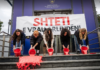
The organization soon launched a fundraising campaign to cover legal costs for defending the festival, its guests, and its organizing team.
“The festival was unjustly prohibited by Serbia’s Ministry of Interior, amid escalating threats and hate speech encouraged by certain media outlets and officials,” YIHR said.
Before the festival could even begin, the organization filed ten lawsuits against media outlets over alleged hate speech targeting festival participants.
Preuzimanje i objavljivanje tekstova sa portala KoSSev nije dozvoljeno bez navođenja izvora. Hvala na poštovanju etike novinarske profesije.