By Saša Janković
Skopje, 6 May 2025
Dear Iljir,
Serbia may finally be stepping out of a long, dark tunnel. For the first time in years, a genuine sense of possibility is in the air. Last night, the informal student movement – a force that has grown in strength, support, objectives, maturity and political clarity – called for early parliamentary elections and announced its intention to run with its own list of candidates.
Their emergence, only a few months ago, has reshaped the political landscape. They are not just another protest or fleeting movement – they are bringing a generational reset. These students, by their persistence, solidarity, and principled resistance to corruption, repression and manipulation, have done more than to challenge the system. They have reset the moral compass of a society long caught between fear and cynicism.
Now they are stepping into the electoral arena. And with that, they pose a question to the rest of us: will we support this rare chance for change, or allow it to be drowned out by old political patterns and personal egos?
It is time for all actors who claim to support democratic transformation to demonstrate it. That means not just offering kind words, but providing real support to these young leaders and their future candidates – legal, logistical, organizational… any kind needed. It also means stepping aside when necessary: refraining from fielding competing lists, avoiding calls for boycotts due to the anticipated theft (that this time can be overpowered with an extraordinary volume of authentic votes), and resisting the temptation to undermine this new energy for personal or party gain, or simply a hurt ego.
Some opposition organizations have already committed themselves to a constructive role. Others hesitate. And some, unfortunately, still act as if on script from the regime which is growing ever more distant from the reality and public interest.
In a society where traditional political forces have, for a long time, failed to offer vision or hope, the students have emerged not only as a new political actor, but first as a moral authority. They have done what few others in the past have managed to do: reignite the public’s belief in decency and civic responsibility, ultimately in the respect for good and resent for bad. That is why many, myself included, believe they are capable of making the next leap -selecting trustworthy people who will carry their and our values into the ruined institutions and breed new life and true meaning into them.
This next step – choosing candidates – is the most precarious. It is the salto mortale, the “death-defying leap” that can make or break a movement. In established political parties, such processes are continuous and evolve over years. Students and their supporters have no such luxury. But they have earned our trust not with words, but with deeds. So far, they have consistently risen to the moment.
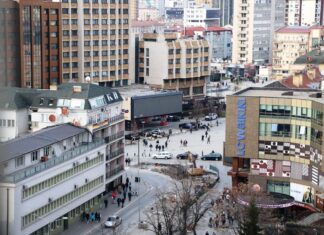
Meanwhile, the region is changing. An Austrian colleague recently returned from Pristina and was struck by the city’s transformation – to her it appeared cleaner, more orderly, more hopeful than before. She noted a level of motivation and public spirit that outshines some other regional centres. That’s not the story told in traditional Serbian media. What would you say the truth is?
In diplomatic circles, word is spreading that Montenegro and possibly Albania could join the European Union within the next few years, this time for real. I welcome this news. Even more so I welcome the apparently growing willingness of the EU and institutions like the Council of Europe to stop sacrificing core democratic values in the name of “stability” – a concept too often used to justify inaction and forced concessions to the bad, sometimes even flirting with it.
Recent visits by EU Commissioners Marta Kos and Michael O’Flaherty, tonight’s discussion in the European Parliament on Tonino Picula’s report, and the increasingly candid language from European actors – more open, truthful, sincere, and less pre-calculated and patronizing – are all encouraging signs. They offer hope to those of us who have long believed that the Western Balkans is not a periphery, but an inseparable part of the European family – culturally, historically, politically, and morally.
We were never meant to be hostages to those who threaten chaos if their demands aren’t met.
Finally, I hope this new European approach also means letting go of the informal but deeply counterproductive insistence that Serbia must recognize Kosovo’s independence as a condition for EU membership. I believe (and hope) that such recognition will not happen, not even after a change in government. Yet EU membership would be a historic breakthrough and a cause for celebration for all communities in our region.
We all are at a crossroads. Let’s not allow the moment to slip away.
Cordially,
SašaJ
Preuzimanje i objavljivanje tekstova sa portala KoSSev nije dozvoljeno bez navođenja izvora. Hvala na poštovanju etike novinarske profesije.