In a recent interview on TV N1’s Dan uživo, Serbian political veteran and university professor Rada Trajković voiced strong criticisms regarding the current situation in Kosovo and the roles of both Kosovo Prime Minister Albin Kurti and Serbian President Aleksandar Vučić. Trajković described Kurti as increasingly isolated internationally but simultaneously more aggressive and dangerous. She contends that Kurti’s actions are driven by a historical agenda aimed at creating a „Greater Albania“ and criticized Serbian President Aleksandar Vučić for potentially becoming a „shameful part of Serbian history“ due to his handling of Kosovo.
Trajković highlighted that the conflict over Kosovo has transitioned beyond armed confrontation, with recent events in Banjska marking the end of such scenarios. She asserts that Kurti is attempting to cement his legacy as a historical figure among Albanians through the advancement of the „Greater Albania“ project. Trajković’s observations come at a critical juncture, just before the anniversary of Banjska, which she deems a „serious project“ not involving actual conflict but rather a calculated attempt to extract Milan Radoičić from the region.
According to Trajković, Kurti’s administration has transformed northern Kosovo into a militarized zone with minimal civilian oversight. This region is effectively controlled by police and military forces, with local mayors lacking substantial electoral legitimacy. This shift has created a state of emergency that severely impacts the psychological well-being of the local Serbian population and accelerates the withdrawal of Serbian institutions from Kosovo, she assessed.
„We have a completely extraordinary situation, an empty shell without civilian authority, and these activities—one after another—essentially contribute to the population in the north being under severe psychological pressure. But it’s not just psychological; this is a time of expulsion of all Serbian institutions from the area of Kosovo and Metohija,“ she said.
Trajković further criticized the Serbian government’s response, noting that the Serbian community in northern Kosovo has been significantly weakened. The departure of key figures, such as Radoičić, and the loss of resistance capacity among the local population have exacerbated the situation. She also referenced ongoing issues, including unresolved murders of Serbs in the region and alleged criminal activities associated with Radoičić.
In her critique of Serbian policy, Trajković placed particular emphasis on Vučić’s approach. She argued that Vučić’s tenure could be historically marked by the „loss in peace“ of what was „preserved during the conflicts,“ specifically citing the legalization of Kosovo documents on Serbian territory as a significant failure.
Trajković also expressed concern over the international perception of Kurti, who she claims is increasingly recognized as a threat by the international community, including the United States. Kurti’s efforts to secure a historical role for himself through the „Greater Albania“ project are viewed as dangerous, according to Trajković.
Contrasting Kurti with other political figures, Trajković suggested that Kosovo President Vjosa Osmani has the potential for greater international acceptance. She noted ongoing preparations for future elections in Kosovo, where other stakeholders might play a significant role.
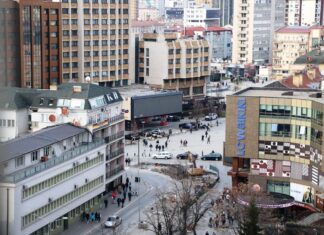
Rada Trajković has called for the main bridge in Kosovo to remain closed to vehicular traffic, arguing that it is unnecessary since four other bridges are operational. She points out that the main bridge runs through the city center and is used to avoid heavy traffic.
Trajković views the U.S. Ambassador to Kosovo, Jeffrey Hovenier, as the „only hope“ for maintaining the bridge’s closure. She cites Hovenier’s strong response earlier in the week, in which he highlighted the potential risks to American soldiers stationed with KFOR forces. Trajković emphasizes that the presence of KFOR troops on the bridge will ensure its defense and preservation.
Looking forward, Trajković called for a shift in approach by the United States, urging an end to the „current state of emergency“ in northern Kosovo and advocating for a democratic process to address the needs of the local population. She recalled historical precedents of military and police rule in Kosovo and stressed the importance of transitioning to a more democratic and inclusive governance structure.
In conclusion, Trajković’s statements reflect a deep concern about the current state of affairs in Kosovo and Serbia’s handling of the situation, with direct negative implications for the well-being of Kosovo Serbs. She emphasizes the need for a more stable and democratic resolution to ensure the well-being of all residents in the region amidst ongoing pressures and political dynamics.
Preuzimanje i objavljivanje tekstova sa portala KoSSev nije dozvoljeno bez navođenja izvora. Hvala na poštovanju etike novinarske profesije.