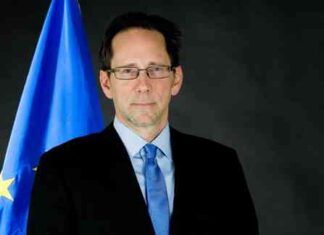
As Kosovo prepares for upcoming elections, the Serbian community in the North remains largely indifferent, with no visible enthusiasm or belief that meaningful change will emerge, according to civil and political activist from North Mitrovica, Dejan Nedeljković. He described the current election campaign as „uninspiring“ and lacking concrete proposals that address the everyday concerns of local citizens.
„There’s nothing tangible, nothing promising that could motivate people to participate,“ he told KoSSev and Radio Goraždevac during the first episode of the joint program „Da te pitam, komšija?“.
According to Nedeljković, political discourse has primarily been reduced to mutual accusations among Serbian political parties, with candidates engaging in blame games rather than focusing on essential issues.
„Most Serbian political options are busy accusing each other of past failures. The key question seems to be: Who is ‘Kurti’s Serb,’ ‘Rašić’s Serb,’ or ‘Vučić’s Serb?’,“ he explained.
Lack of Convincing Choices
Nedeljković, who plans to vote, remains unconvinced by any of the options on the ballot.
„None of the parties have presented a program that speaks to me as an ordinary citizen and convinces me to give them my vote,“ he said.
His primary interest lies in how future Serbian representatives in the Kosovo Parliament will act—whether they will genuinely fight for Serbian interests or remain passive, as he claims the Srpska Lista has done in the past.
He raised several key questions for the candidates:
„Will the new Serbian representatives in the Kosovo Assembly demand investigations into those who abused their positions, stole, intimidated, set cars and houses on fire? Will they push for the prosecution of those who embezzled project funds? Will they be ready to fight against corruption? Will they initiate investigations against, for example, Minister Rašić, who in the past two years has aligned himself with different sides depending on the political situation?”
Moreover, he raised the issue of the return of Serbian officers to the Kosovo Police force, pointing out that more than 650 Serbian police officers have left their posts, now replaced by special units.
Low Turnout Expected
Despite the record number of registered political entities, Nedeljković anticipates low voter turnout, estimating that between 15,000 and 17,000 Serbs will vote across Kosovo.
The root of this apathy, he argues, lies in the absence of credible solutions from political actors.
„The hardest moment for the Serbian community in North Kosovo came after the barricades were erected in Rudare,“ he said.
„People believed something significant would happen—whether a conflict, the arrival of Serbian forces, or that the North would become part of Serbia. But after Vučić called them to Raška and urged them to disperse, trust in Srpska Lista was shattered and the people became apathetic.“
This sense of disillusionment deepened with subsequent events—the dissolution of Serbian institutions in the North, the removal of the dinar currency, the closure of postal and banking services, and increasing dependence on Serbian financial support.
„The people have lost faith. Nobody believes anymore when they are told that ‘everything will be fine’,“ said Nedeljković.
Political Pressure and Voter Manipulation
Nedeljković also shed light on the political pressure placed on voters. Although less intense than in the past, he claims it still exists in various forms.
„Kosovo’s system exerts pressure through Nenad Rašić and his people, using subsidies and benefits as leverage, especially in municipalities like Leposavic and Zubin Potok,“ he stated.
Meanwhile, the Srpska Lista allegedly continues to pressure public sector employees, particularly those who transitioned to special contracts after leaving their posts in Kosovo institutions.
„There is even a clause in these contracts that demands ‘loyalty to the Serbian people,’ which essentially means—vote as expected, or risk losing your job,“ Nedeljković asserted.
What Lies Ahead?
Looking to the future, Nedeljković predicts significant political changes. He is confident that Albin Kurti will not serve as Kosovo’s next prime minister, citing research showing that Kurti’s party will struggle to secure enough support to form a government alone.
„If Ramush Haradinaj becomes prime minister, the issue of territorial exchange between North Kosovo and the Preševo Valley could resurface,“ he warned.
He further speculated that the current government might only last two more years—just enough time to resolve Kosovo’s status in a way that Serbia’s President Aleksandar Vučić would ultimately have to accept.
„Vučić was put in power to solve the Kosovo problem. The time for that decision is approaching,“ he concluded.
Preuzimanje i objavljivanje tekstova sa portala KoSSev nije dozvoljeno bez navođenja izvora. Hvala na poštovanju etike novinarske profesije.