„It is a series of untrue, malicious, and biased statements. These statements not only fail to contribute to the reconciliation of ethnic communities in Kosovo and Metohija and the protection of cultural heritage but further escalate ethnic tensions and endanger the security of SOC religious sites,“ the Diocese of Raska and Prizren reacted to Nora Weller’s, who presents herself as a lawyer and researcher at Cambridge University.
In an interview for „RTK Prime“ earlier this week, Weller alleged that Kosovo institutions should take over the management of the assets of Serbian monasteries and churches, RTK reports.
Although she hailed the implementation of the decision of the Constitutional Court on the land of Visoki Dečani, she also said that Kosovo institutions and the church should discuss the management of that land in the future.
She criticized the fact that it is not known what is being done on the property of Visoki Dečan and that after the implementation of the decision of the Constitutional Court, the door can no longer be kept closed, she added.
According to the RTK report, during the interview, Weller criticized the Serbian Orthodox Church in Kosovo and Serbia itself.
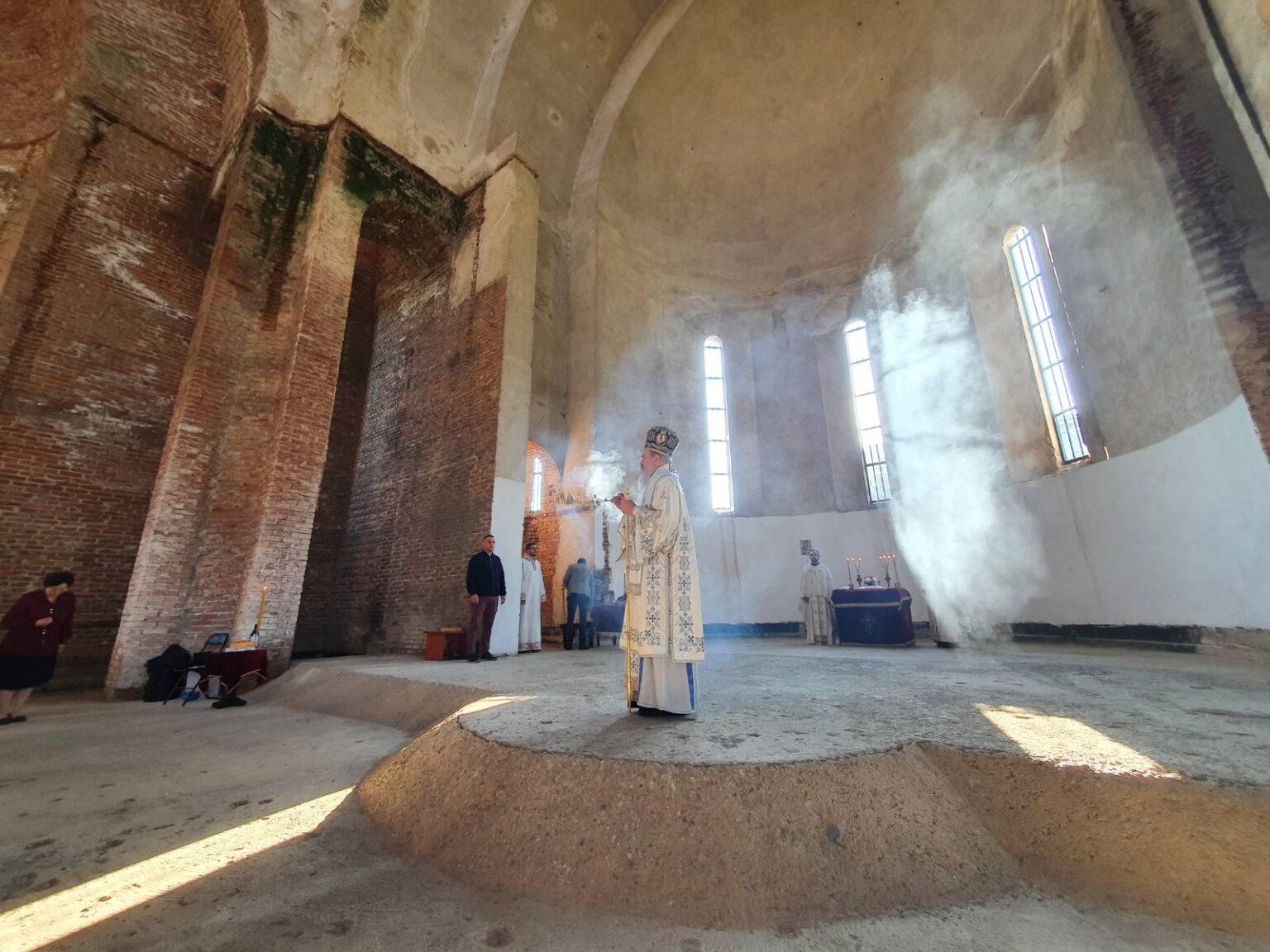
Commenting on the unfinished church of Christ the Savior in Pristina, which is currently the subject of litigation, she said that the building „cannot even be called a church“. She claims that the church was built in „a violent and illegal manner“ – thus sharing the dominant stance in Pristina regarding this facility. Moreover, she underlined that the building has no value as such, but that it is „a symbol of the Milošević regime.“
Weller went on to accuse the SOC of not wanting to protect its facilities, but that its goal is „creating a Serbian identity in all countries where SOC sites exist.“
As the main problem, she singled out the fact that, in UNESCO, Serbia manages to mark the objects of the Serbian Orthodox Church as its territory and also states that „Serbia systematically destroyed every history in Kosovo except the Serbian one“.
Diocese: Weller’s statement undermines right to use private property
The Eparchy of Raska-Prizren said in a statement that Weller, who presents herself as a doctoral candidate at Cambridge, has demonstrated that she does not understand the concept of private property, and has made a series of untrue, malicious and biased statements that “do not contribute to reconciliation and the protection of cultural heritage,” but have a completely opposite effect.
“In her latest interview with Kosovo Radio Television, Ms. Eleonora Visoka Weller, Doctoral candidate in Heritage management at Cambridge University, once again made a series of untrue, malicious, and biased statements. These statements not only fail to contribute to the reconciliation of ethnic communities in Kosovo and Metohija and the protection of cultural heritage but further escalate ethnic tensions and endanger the security of SOC religious sites.”
According to the Diocese, her statement reflects the retrograde intention of Kosovo authorities in 2015 to declare all SOC property as “state property of Kosovo”.
Weller thus demonstrated a lack of understanding of the concept of private property, they underlined.
“Her statement, which undermines the right to use private property for the self-sustainability of SOC monasteries (agriculture and livestock), reflects the retrograde intention of Kosovo authorities in 2015 to declare all SOC property as ‘state property of Kosovo’. Under international pressure, the Kosovo authorities then abandoned this draft law reminiscent of communist times in Albania, where the state confiscated all property of churches and religious communities.”
They addressed all of the allegations presented by Weller.
Commenting on Weller’s statements on the Cathedral of Christ the Savior in Pristina, they said that her statements speak of her academic credibility.
“This church has been the subject of disputes for years, desecrated, used as a public toilet by passers-by, and currently, the Serbian Orthodox Church is being denied access to this church by Kosovo institutions without any legal basis, even though the church’s land and the structure itself are still registered in the Cadastre as SOC property. With this stance, Weller directly denies SOC property rights and incites violence against religious sites with malicious claims.”
At the same time, thousands of buildings constructed by Kosovo Albanians during Milosevic’s era have their rights unquestioned, they stressed.
“Moreover, it wasn’t the Federal Republic of Yugoslav authorities but the Diocese of Raška-Prizren, along with the faithful—whose numbers in the city of Pristina reached 40,000 before ethnic cleansing, leaving only a few older individuals now—who built this church.
Addressing Weller’s allegations on the Visoki Decani land, they said:
“For the sake of objectivity, it should be mentioned that Ms. Weller publicly claimed just a few days ago that the property issue of the Visoki Decani Monastery, which was finally adjudicated by the Constitutional Court of Kosovo in 2016 and remained unexecuted for 8 years, is ‘part of the legacy of Serbian occupation of Kosovo’, thereby directly questioning the legality of the court decision and thus denying 700 years of history of this SOC monastery.”
The Diocese reminded that this is not the first time that Weller has denied that the monastery is jeopardized – even though this fact was confirmed by world organizations.
“In recent years, Ms. Weller has publicly denied the endangered status of the Visoki Decani Monastery, a UNESCO World Heritage Site listed as the UNESCO site in danger which due to four armed attacks by local Albanian extremists after the Kosovo war, is under constant protection of KFOR peacekeeping forces and is the only religious site under 24/7 NATO military protection for 25 years. In this context, Weller rudely accused the leading European organisation for cultural heritage protection, EUROPA NOSTRA, in 2021 on social media, of ‘raising tensions and driving ethnic divisions’ by including the Visoki Decani Monastery on the list of the most endangered monuments in Europe“.
They recalled that Weller attempted uninvited to impose herself as a participant at the International Cultural Conference in Peć and then accused the conference organizer, ILUCIDARE PLAYGROUND and CULTURAL HERITAGE WITHOUT BORDERS, of “censorship”:
“Because she was not allowed to speak uninvited about the Serbian Orthodox Church, clearly due to her well known one-sided and nationalistic views on cultural heritage.”
From all that has been said, regardless of her education in archaeology, Weller neither professionally nor morally represents an objective and well-intentioned expert on cultural heritage related to the Serbian Orthodox Church – they underlined.
“Her far from well-meaning positions deeply jeopardise interethnic and religious relations in Kosovo and Metohija and incite ethnic and religious hatred, which, in the post-war period since 1999, led to the destruction of 150 Serbian Orthodox churches and monasteries in Kosovo and Metohija by Kosovo Albanian extremists.”
“Such unilateral and aggressive viewpoints, disseminated by the public information service RTK and some other Kosovo media outlets, reaffirm the need for comprehensive and effective protection of the Serbian Orthodox Church’s holy sites with strong international guarantees, and where necessary, the protection of KFOR peacekeeping forces.”
Her positions, they add, popularized by many Kosovo Albanian politicians and certain media outlets, have become a widely accepted narrative in a general campaign against anything associated with the Serbian people and culture in this region.
Weller’s remarks, inherently not warranting attention for their self-evident biased nature, nevertheless require a response, the Diocese concluded.
Preuzimanje i objavljivanje tekstova sa portala KoSSev nije dozvoljeno bez navođenja izvora. Hvala na poštovanju etike novinarske profesije.