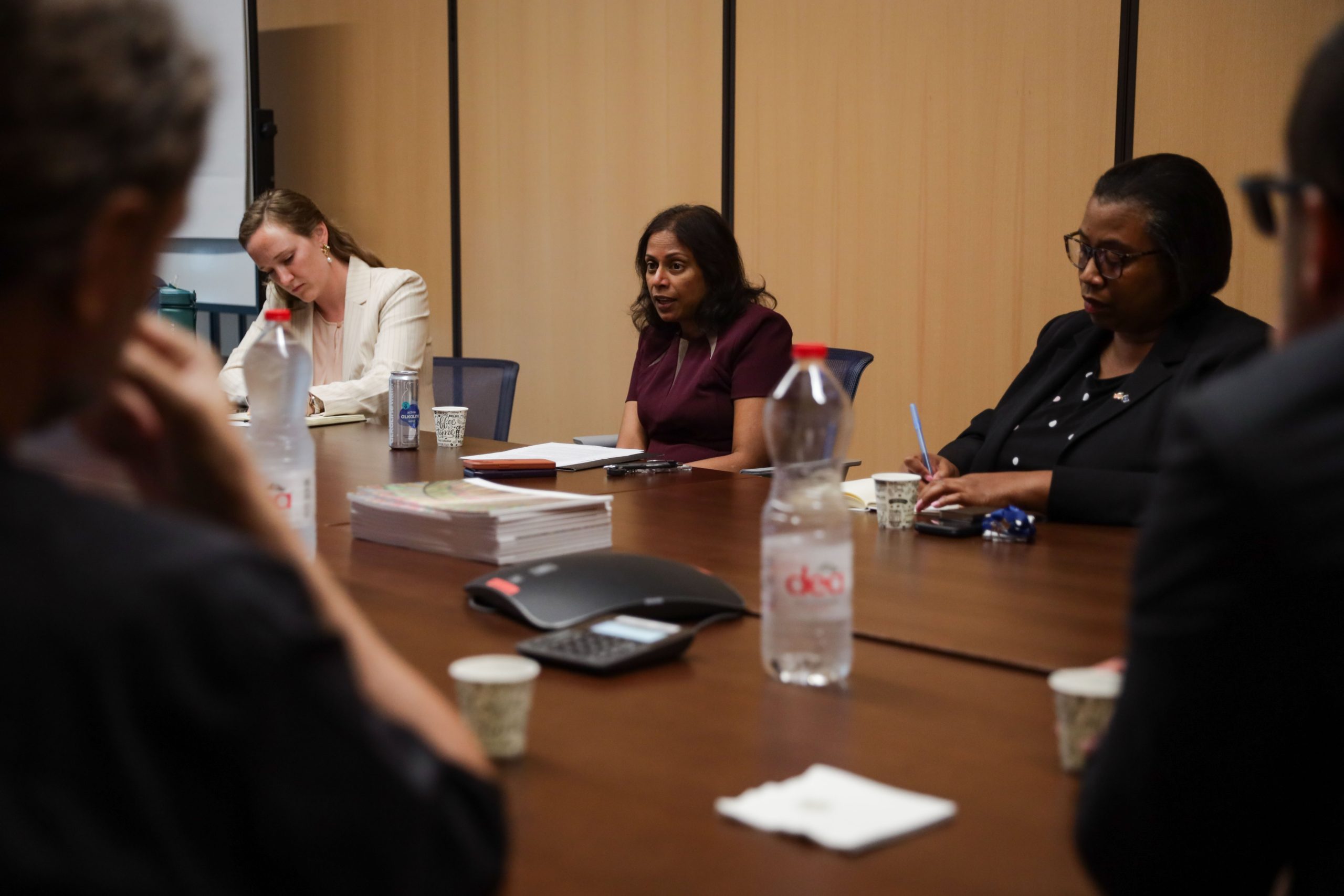
“When you are absent from the table, others make decisions for you,” warned U.S. Embassy’s Chargé d’Affaires in Pristina, Anu Pratipati, who, nearly a year after Ambassador Jeffrey Hovenier’s departure, remains the highest-ranking U.S. diplomat in Kosovo.
In an interview with a group of Serbian-language media – KoSSev, Kontakt Plus Radio, Radio Mitrovica Sever, Kim Radio, and Radio Goraždevac – she confirmed that the appointment of a new ambassador could take time.
“The absence of an ambassador does not mean a lack of U.S. engagement,” Pratipati emphasized, pointing to the recent visit of senior State Department official Brendan Hanrahan from the Bureau of European and Eurasian Affairs.
Reiterating Washington’s long-standing stance, she underlined that the United States has “proudly supported Kosovo’s path to becoming a sovereign, democratic, multiethnic, and prosperous country,” principles enshrined in Kosovo’s Constitution. At the same time, she acknowledged growing U.S. concerns over the actions of the provisional government, particularly regarding the treatment of Kosovo Serbs.
“Caretaker Prime Minister Kurti’s government is responsible for the safety and prosperity of all Kosovans, and Kosovo’s constitution and laws enshrine the representation of Kosovan Serbs in Kosovo’s institutions. We expect the Government of Kosovo to ensure that Kosovan Serbs have equal opportunities and are able to participate fully in the political and civic life of Kosovo,” Pratipati stressed.
She also made clear that responsibility lies on both sides: “Kosovan Serbs are citizens of Kosovo and we believe they have a responsibility to help build a more stable and prosperous Kosovo.”
“When you are absent from the table, others make decisions for you. Participation ensures your role in shaping the future,” she emphasized.
Education and healthcare institutions
Pratipati confirmed once again that the two remaining Serbian-run institutions in Kosovo – in education and healthcare – will eventually need to be integrated into the Kosovo system. But she insisted the process must be carefully managed.
“However, how this is done is critically important. We understand the sensitivities related to the provision of education and healthcare for the Kosovan Serb community, and we have consistently raised concerns regarding the closure of parallel Serbian institutions without coordination with the affected communities.”
Any change affecting Serbs in Kosovo, she added, must be carried out in consultation with them, through established channels such as the EU-facilitated dialogue, with clear timelines and planning. “This cannot be an unilateral process,” she warned.
Below we publish the interview with Pratipati in its entirety:
To what extent do you recognize the discriminatory and ethnocentric approach of the Kosovo government and local self-government and institutions towards the Serb community in Kosovo, and what can your Embassy do in this regard?
To start, let me say this. We are concerned about the rights of Kosovan Serbs. We continue to defend the Kosovan Serb community, and ensure their place in Kosovo.
As Secretary Rubio said earlier this year, the United States has proudly supported Kosovo’s journey to becoming a sovereign, democratic, multiethnic, and prosperous country. Kosovo enshrined these tenets in its Constitution, and its political leaders have committed themselves to upholding them, and we have seen progress.
Kosovan Serbs work in the Kosovo Police and in the Kosovo Security Forces and in other institutions. At one time, a number of Kosovan Serbs were serving as prosecutors and judges; we look forward to the day they re-enter these institutions and encourage all parties to work to make this happen.
While there has been progress, we have also seen some negative trends. We are concerned about actions by the caretaker government that have heightened tensions, particularly when it comes to treatment of the Kosovan Serb community. Caretaker Prime Minister Kurti’s government is responsible for the safety and prosperity of all Kosovans, and Kosovo’s constitution and laws enshrine the representation of Kosovan Serbs in Kosovo’s institutions. We expect the Government of Kosovo to ensure that Kosovan Serbs have equal opportunities and are able to participate fully in the political and civic life of Kosovo. We will continue to advocate for this. Kosovan Serbs are citizens of Kosovo and we believe they have a responsibility to help build a more stable and prosperous Kosovo. The U.S. government will continue to engage with the Kosovan Serb community on these issues.
When do you expect a new Ambassador to be appointed, and how do you comment on the fact that both the U.S. Embassy in Pristina and in Belgrade have been operating without ambassadors for so many months?
Ambassadorial appointments involve both presidential nomination and Senate confirmation, which can take time. The absence of an Ambassador does not mean a lack of U.S. engagement. The U.S. government is fully engaged and deeply involved in all aspects of our partnership with Kosovo, as evidenced by frequent high-level engagements both in Washington D.C. and here in Kosovo, including the recent visit by Senior Bureau Official Brendan Hanrahan.
Do you recognize the challenges that Kosovo Serbs will face if the Kosovo Government implements/imposes a plan to integrate education and healthcare from the Serbian into the Kosovo’s system?
We have been clear on this issue. Parallel Serbian-run institutions eventually need to be folded into the Kosovo system. However, how this is done is critically important. We understand the sensitivities related to the provision of education and healthcare for the Kosovan Serb community, and we have consistently raised concerns regarding the closure of parallel Serbian institutions without coordination with the affected communities.
Any changes affecting the Kosovan Serb community should be done in consultation with the Kosovan Serb community. There is no alternative. This means full coordination in advance with Kosovan Serb elected leaders, civil society, and members of the community, and the use of established channels such as the EU-Facilitated Dialogue, with a clear timeline and plan laid out.
This cannot be a unilateral process. It is up to the Kosovan Serb community and the Government of Kosovo to work together, with particular emphasis on ensuring that institutions maintain or improve quality and consistency of services.
What measures can be taken to prevent a mass exodus of Serbs in that case?
Kosovo can be a prosperous, peaceful country in which all communities flourish. As I’ve said, the Government of Kosovo is responsible for the safety and prosperity of all Kosovans. There are six stars on the flag, representing the six major ethnic communities in the country. Kosovan Serbs, as Kosovan citizens, have rights just like any other group. Their elected leaders should represent and advocate for them in all levels of government. In turn, it is the Government of Kosovo’s responsibility to address the concerns of the Kosovan Serb community. The U.S. Embassy will continue to engage with elected representatives and community leaders who work to ensure Kosovan Serb perspectives are included in every major policy discussion.
Will Serb political parties across all parts of Kosovo participate under the same conditions in the upcoming local elections? Is there a difference between the north and the south?
All citizens of Kosovo should have the right to elect their chosen representatives. Kosovo’s institutions must ensure all political parties can participate equally in Kosovo’s upcoming elections in October. This includes the Kosovan Serb parties.
The conditions for participation must be consistent everywhere: elections that are transparent and secure, without obstacles for candidates or voters.
It is also important that the Kosovan Serb community and its representatives actively participate in Kosovo’s elections and its institutions. Only through political and civic engagement can you ensure that elected officials represent your community.
When you are absent from the table, others make decisions for you. Participation ensures your role in shaping the future.
Preuzimanje i objavljivanje tekstova sa portala KoSSev nije dozvoljeno bez navođenja izvora. Hvala na poštovanju etike novinarske profesije.