On the second anniversary of the Banjska clashes, Kosovo’s acting Prime Minister Albin Kurti called on the international community not to regard Serbia as a “normal state” until Milan Radoičić and other suspects accused of organizing the September 2023 attack are extradited to Kosovo.
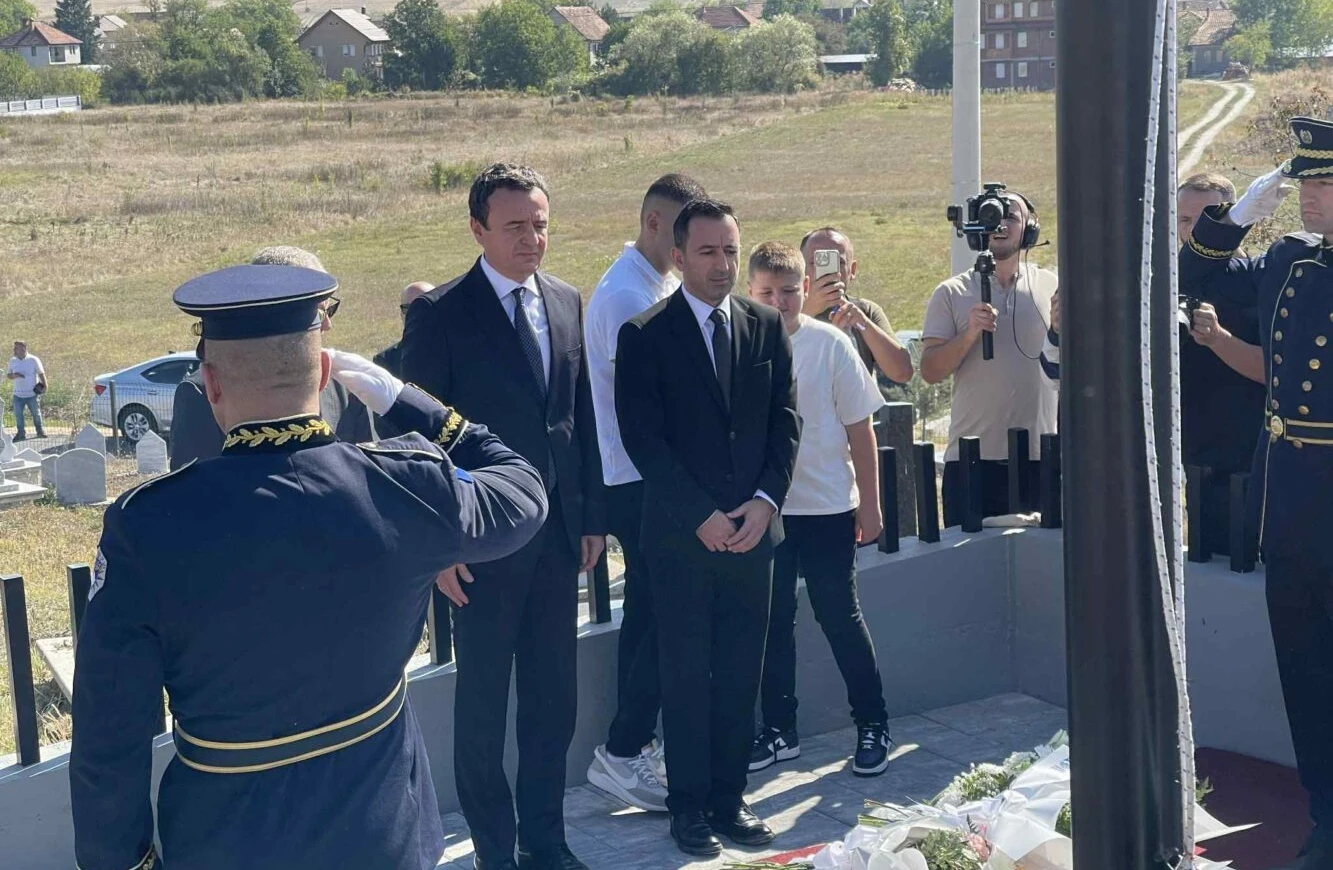
Kurti made the appeal in Vucitrn today, after laying flowers on the grave of Afrim Bunjaku, the Kosovo Police officer killed during the Banjska attack.
“We appeal to international actors not to consider Serbia a normal state until it hands over the organized Serbian criminals led by Milan Radoičić and financed by President Aleksandar Vučić. The indictment covers 45 individuals who must immediately be handed over to the state of Kosovo,” Kurti said.
Unlike last year, when top Kosovo officials marked the anniversary with a strong police presence in Banjska and inaugurated a street named after Bunjaku, this year officials have so far stayed away from the village despite their frequent visits to northern Kosovo.
Instead, Kurti, Interior Minister Xhelal Sveçla and Kosovo Police Director Gazmend Hoxha travelled to Vucitrn for a memorial at Bunjaku’s grave. Kurti hailed the officer’s “heroism” and “dedication to defending Kosovo,” according to media outlet Ekonomia Online.
Bunjaku, Kurti noted, “was the first to approach the blockade in Banjska as an experienced police officer with 22 years of service, 16 of them as captain. Now he bears the title of Hero of Kosovo, which no one can take from him.”
A central commemoration for Bunjaku is scheduled for 3 p.m. in Pristina.
Although the official program does not include a visit to the north, unofficial reports suggest such a visit may still take place.
Two Years After Banjska Clashes: Village Mostly Deserted, Heavy Police Presence in the North
Meanwhile, in Banjska, families of the Serbs killed in the clashes held their own memorial this morning and laid flowers, as a large number of journalists from Serbian and Albanian media outlets gathered. The Banjska Monastery remained closed to visitors today.
Kosovo Police have increased their presence in the north to ensure security, Deputy Commander for the North Region Veton Elshani told media.
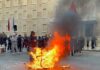
In Belgrade, pro-government media reported that a torch-lit ceremony was held last night at the Kalemegdan Fortress in honor of the three Serbs killed in Banjska.
Serbian tricolors and a banner reading “Freedom comes at a steep price, Mother” were displayed on the fortress walls. Similar tributes were reportedly held earlier in Novi Sad and Šabac.
#banjska pic.twitter.com/HnJ7zVkvH6
— Moral (@Moral_nemoral) September 23, 2025
Background: From the 2023 Attack to Today
The Banjska clash broke out when an armed group of Serbs attacked Kosovo Police – an act that Pristina described as an attempt to destabilize northern Kosovo.
During the group’s retreat, or flight, a large quantity of weapons, uniforms, as well as their personal belongings and documents were left behind, including videos allegedly showing exercises at military training grounds in Serbia. This was later confirmed at a press conference by the Chief of the General Staff himself.
Regarding the weapons, Kosovo Police, while displaying the arsenal, stated that the arms were allegedly worth €5 million. Investigative media in Serbia later reported that part of the arsenal had been taken from Serbian military depots.
Five days later, Milan Radoičić took responsibility, claiming he had organized the attack without the knowledge of Serbian authorities or Srpska Lista, after which he resigned as its vice-president. He was arrested in Serbia on October 3, 2023, but was quickly released – drawing sharp criticism from Kosovo authorities and the international community.
Kosovo claims the attack was part of a broader plan backed by Belgrade. In September 2024, Kosovo’s Special Prosecution indicted Radoičić and 44 others for terrorism, terrorist financing and money laundering, alleging that he used his wealth and political connections to plan the “seizure” of northern Kosovo. Interpol reportedly issued a red notice for him and 18 other suspects as early as the start of 2024, although the organization itself has not confirmed this.
Radoičić currently lives freely in Serbia under a travel ban. The Belgrade Higher Public Prosecutor’s Office is investigating him for a “serious offense against public security” and illegal weapons, but no indictment has been filed so far – further fueling accusations of political protection from the highest levels of the state. In 2023, Serbian President Aleksandar Vučić said that Radoičić was “available” to the judiciary but that extradition to Kosovo was not on the table. Serbia considers Kosovo its own territory.
Meanwhile, Kosovo has seized much of Radoičić’s property, including a villa on Lake Gazivode and a restaurant, and in April 2025 issued a warrant for his arrest over alleged war crimes in Djakovica in 1999, including the killing of 106 Albanians.
The EU and the U.S., which had previously sanctioned Radoičić for crime and corruption, continue to call for cooperation, but with little progress so far.
Radoičić’s group remains publicly active. Just yesterday he was reportedly seen in Kosjerić, where he allegedly intimidated residents.
Preuzimanje i objavljivanje tekstova sa portala KoSSev nije dozvoljeno bez navođenja izvora. Hvala na poštovanju etike novinarske profesije.