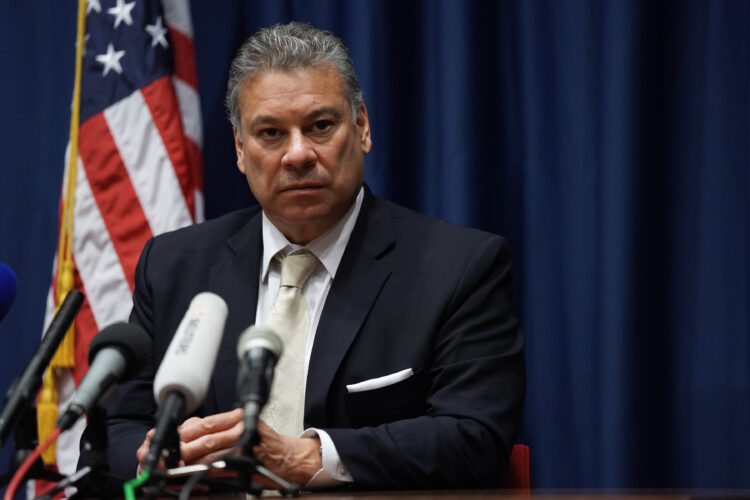
We need the Government of Kosovo to work with the international community to help find a solution to this disastrous decision, the US envoy for the Western Balkans, Gabriel Escobar, said, commenting on the crisis caused by the “uncoordinated” implementation of the CBK currency regulation.
He emphasized that although no one in the West questions its legitimacy, on the other hand, its implementation creates chaos for Kosovo’s economy and causes difficulties for those citizens of Kosovo who receive wages and social payments from Serbia.
Escobar also listed five reasons why the CBK regulation caused concern among the international community, reminding Pristina that in Skopje, just two weeks before the sudden application of the regulation, it committed itself to a transparent electronic payment mechanism with all the countries of the Western Balkans by the end of the year.
Dialogue is the primary mechanism
“We’re at a very critical moment. And I have to say that we are struggling to get both Brussels and Ohrid back on track,” Escobar said, adding that there is no other alternative than the EU-facilitated dialogue.
The dialogue has been the mechanism that has resolved many of the challenges in the bilateral relationship between Serbia and Kosovo, and it continues to be the primary mechanism for resolving these differences.
The US envoy for the Western Balkans said today at a press briefing from Brussels, from where he is set to travel to Kosovo, that dialogue is still the “primary mechanism for resolving these differences, that is, many of the challenges in the bilateral relationship between Serbia and Kosovo.”
He called on both sides to respect their obligations, especially those stemming from the Ohrid agreement, to implement all agreements, and show goodwill in “preventing any provocations that would derail any of the agreements and create more tension between the two countries.”
So that is going to be one of the primary reasons for my visit to Kosovo – he added.
For Serbia, we would like to see that the moves they have made in support of the dialogue become legally binding – “so that they are legally enacted and not reversible,” Escobar said. While Kosovo is expected to start the formation of the Association of Serb-majority Municipalities, he added, confirming that he still sees no progress in this endeavor.
He came to Brussels on Sunday, where he already had intensive talks with European partners, including NATO and European mediator Miroslav Lajčak. Both Lajčak and Escobar will then visit Pristina.
Escobar revealed that they will focus on “the effects and a possible resolution for the uncoordinated decision” to ban dinars and transfers from Serbia to citizens of Kosovo who depend on those social services, and social payments.
We are concerned about the treatment of minorities
“We are hearing many reports of difficulties and hardship that the citizens of Kosovo who depend on social payments from Serbia are experiencing. And we do call on the Government of Kosovo to take the concerns of the international community about the treatment of minorities inside of Kosovo – to take those concerns seriously.”
He added that there are several reasons why they are concerned over the CBK regulation. One such reason is the speed with which it was implemented.
Highlighting that he does not address its legitimacy, he underlined that its implementation is problematic.
“I’ll remind you that it took France almost a year to implement the euro, and in northern Kosovo, they wanted to implement it in less than three weeks.”
The second reason he listed is that the Kosovo government provided no alternative for the people to receive their payments.
“And these people depend on the payments and they should receive them; they’re entitled to them.”
As a third problem, he underlined the lack of outreach to the affected communities.
“And so a lot of the people who were affected by this decision were left guessing as to what the next step was. Finally, – two weeks before the announcement of this decision, Kosovo, along with the other countries of the Western Balkans, had agreed in Skopje, during a summit of the Western Balkans countries and the European Union, that there would be a payment mechanism by the end of this year. So in other words, if Kosovo would have waited, the payment mechanism for transparent electronic payments would have been solved.”
Lastly, he underscored the fifth and final reason:
“We have been struggling to allow – to get Kosovo to allow the international community to help find – provide some technical assistance to find a resolution for this issue. So we need the Government of Kosovo to work with the international community to help find a solution to this, what I would say was a disastrous decision and even incompetent decision of implementation of a decision that has created chaos in the economy of Kosovo.”
The ASM would solve the dinar issue
Escobar stressed that the ASM would solve the dinar issue.
“We believe that the whole question of the dinar issue right now would be resolved through the association.”
Moreover, he reminded that it is a “legally binding obligation.”
“So we have heard many different reasons why it hasn’t been submitted or why it hasn’t moved forward, but we reject all of them.”
Moreover, Escobar added that the formation of the ASM should move forward “as soon as possible.”
“The association, as recommended by the European Union, by the EU special representative, includes provisions for the transparent transfer of money from Serbia to those who are entitled to it in Kosovo through a transparent mechanism under the Kosovo law and within the constitutional framework of Kosovo. So the association itself would solve the dinar issue, and so we want Kosovo to move forward as soon as possible.”
He also underlined that the ASM would not be a Republika Srpska or a state within a state.
He confirmed that not only the US, but also the EU itself, as well as NATO, have faced issues in communication with the Kosovo government, especially Prime Minister Albin Kurti.
While noting that the partnership between the US and Kosovo is based on the partnership of peoples, he added that there is a problem in communication with Albin Kurti.
“Partnership doesn’t run through one man or one party. But I would say that currently we do have a problem of communication with the prime minister, and it’s not just the United States problem. I think it’s a problem that Kosovo has in its communication with the European Union, with NATO, with the UK, with the United States, and with many other partners, including Albania and North Macedonia.
In his words, they want to go back to having a very close relationship with Kosovo as they did before.
Recalling that four NATO members and five EU countries do not recognize Kosovo, Escobar says that all of them would like to see a „movement“ within the EU-facilitated dialogue.
“So by ignoring the dialogue, Kosovo is ignoring their European partners, so it is impossible for us to convince them to move forward on further integration for Kosovo. So yes, I’m very concerned that Kosovo is not hearing the American offer of partnership to move Kosovo’s integration further and faster.”
The malignant influence of Russia exists, but it is not the cause of all the problems in the Balkans
While domestic journalists were mainly interested in the relationship of the US towards Pristina concerning the current situation with the dinar, a couple of European journalists had questions about Serbian-Russian ties, in other words, Russia’s reportedly malign influence on the region „via Serbia“.
“I have to clarify that what’s happening in the Balkans, while it opens the door for Russian malign influence, it is not always caused by Russia,” Escobar said.
The problems that are occurring in the Balkans right now are deep-seated, longstanding problems that exist between the countries of the region, he specified.
The US hopes that in resolving many of these issues between Western Balkan countries, the opportunities for Russia to use any instability in the Balkans as a way of weakening transatlantic security would also be closed off.
Preuzimanje i objavljivanje tekstova sa portala KoSSev nije dozvoljeno bez navođenja izvora. Hvala na poštovanju etike novinarske profesije.