By Miodrag Marinković
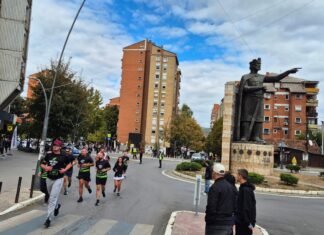
The decision to withdraw KFOR from the main bridge over the Ibar/Ibër River in Mitrovica is a political, rather than a security decision. It was made by the European Union, while KFOR is implementing it and communicating it to the public.
I see the basis for this decision in the EU’s political relationship with the caretaker government in Pristina, led by Albin Kurti. For years, the EU has been trying to find a way to secure at least a minimum level of cooperation from Kurti in implementing the Brussels Agreement. Until the end of last year, it attempted to achieve this through pressure and sanctions.
However, such a policy clearly did not enjoy sufficient consensus within the EU, and since the end of last year we have seen a new tactic – a policy of concessions to Albin Kurti in exchange for at least some degree of control and cooperation on key issues concerning the position of Serbs in Kosovo.
This applies to the implementation of the Law on Foreigners, but also to education and healthcare, issues that are yet to come onto the agenda. In my view, this is a political bargain between the EU and the government in Pristina, as part of the Union’s efforts to bring the already deeply shaken Brussels Process to some kind of conclusion.
What the case of the bridge once again demonstrates is that Belgrade’s role and importance in this process have been reduced to a minimum. Official Belgrade has effectively been pushed out of the negotiations and is completely powerless, while the EU has, to a large extent, assumed the role of representing the interests of Serbs in Kosovo.
The problem is that the EU is currently acting virtually alone in this process, without the support and active involvement of the United States, for which Kosovo is nowhere near the priority it was only a year and a half ago. The EU’s inability to impose results quickly changed its approach toward Pristina as well – from criticism and pressure to increasingly open attempts to accommodate Kurti. The decision on the bridge is precisely a product of that shift.
Security Assessment Conducted Back in 2025
The security assessment now being discussed is confusing the Serbian community, primarily because there were no publicly visible consultations. What the public largely does not know, however, is that the EU conducted such an assessment, well away from public scrutiny, as early as March 2025.
At the time, representatives of the Peace Mediation and Dialogue Sector, a specialised unit within the European External Action Service (EEAS), visited the north precisely to examine the issue of the bridge and the possible consequences of opening it.
They met with representatives of civil society and, I believe, other representatives of the community. What I know for certain is that, during those consultations, I very clearly warned of the possible consequences of such a decision – apparently to no effect.
Since the assessment was carried out by an integral part of the EEAS, effectively the EU’s diplomatic service, I believe the conclusions of those consultations found their way into relevant EU documents and assessments, including the report to which the Union is now referring.
In other words, the EU has been preparing this decision for almost 18 months, and it is anything but a surprise.
Security Consequences Less Significant Than Political Ones
The implications of this KFOR move are certainly significant, but much more so politically than in security terms.
That, of course, does not mean that opening the bridge has no security consequences. From the perspective of the Serbian community, it further increases the sense of insecurity in the north and removes one of the existing security guarantees.
However, in practical security terms, a single point – one bridge – will not fundamentally change the permeability of the north, nor will it open new logistical channels for police or institutional pressure. Such pressure is already taking place regardless of whether KFOR is present on the bridge.
The security consequences of opening the bridge should therefore not be viewed in isolation, but rather within the broader context of what has been happening in the north in recent years.
In that context, one of the decisions that drastically undermined the security of the Serbian community was made neither by Kurti nor by KFOR, but by our own political representatives. It remains the illogical and unforgivable decision of Serbian political leaders to withdraw from the institutions, particularly the police and the judiciary.
It was precisely that decision that enabled Kurti to establish numerous institutional mechanisms through which he now carries out the legal coercion we are witnessing in the north. Today, this is one of the fundamental sources of insecurity for Serbs in the north, and in that respect KFOR’s presence or absence from the bridge will change nothing.
“An Open Abandonment of the Brussels Process”
The political consequences of this decision, however, are much deeper and more far-reaching.
First and foremost, I believe this decision represents an open abandonment of the Brussels Process by the international community.
If we recall, over the course of last year both KFOR and the EU rejected Pristina’s demand to open this bridge during the election campaign, setting two clear conditions: an agreement between the negotiating parties and consultations with the community.
Through that position, KFOR – in obvious and undisguised coordination with the EU – made it clear, not merely as a matter of principle but with boots on the ground, that dialogue and negotiations were the only way to resolve this issue.
Neither of those two conditions has been met, yet KFOR and the EU have now demonstrated a political inconsistency from which they will struggle to recover. With this move, they have effectively validated the “NO NEGOTIATIONS” policy pursued by Vetëvendosje, making any further insistence by the international community on dialogue difficult to interpret as anything other than political hypocrisy.
What Is the Next Guarantee That Could Be Changed?
This also opens up a second, potentially much more serious political problem.
If a precedent has now been established whereby the international community acts in accordance with Pristina’s wishes and assessments, while itself departing from agreements reached within the Brussels Process, the question arises as to how firm some of the other security guarantees for Serbs really are.
I am referring first and foremost to the arrangement under which the Kosovo Security Force cannot enter the north without KFOR’s prior approval.
As I understand it, it is now entirely legitimate to ask KFOR and the EU whether they are also preparing the ground for a change to that arrangement.
At this moment, the answer would undoubtedly be that KFOR and the EU categorically reject such a possibility. However, if we take the example of the bridge, where they have already broken their own word once, it is difficult to argue that they still have credibility when guaranteeing that another security arrangement will remain untouchable.
The author is with the NGO Center for Affirmative Social Actions (CASA), based in North Mitrovica/Mitrovica e Veriut.
All views expressed in this text are the personal views of the author and do not necessarily reflect the views of the editorial team. KoSSev is not the author of this text.
Preuzimanje i objavljivanje tekstova sa portala KoSSev nije dozvoljeno bez navođenja izvora. Hvala na poštovanju etike novinarske profesije.