The Council of Europe Congress of Local and Regional Authorities has described Kosovo’s October 12th local elections as “pluralistic, inclusive, and competitive,” despite noting signs of politicization within certain institutions.
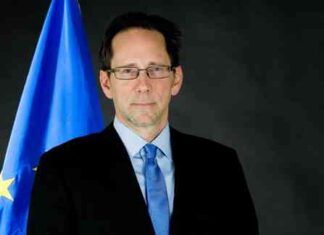
A nine-member delegation, led by Dominique Lévêque of France, a member of the Group of Socialists, Greens and Progressive Democrats, observed the elections at the invitation of the Central Election Commission (CEC). It was the first time the Congress observed elections in Kosovo.
Four observer teams visited 55 randomly selected polling stations throughout the day — during opening, voting, closing, and counting — across several municipalities. Before the field mission, on October 10th and 11th, the delegation met with institutions responsible for election organization, complaint and appeal mechanisms, as well as with representatives of the diplomatic corps, media, NGOs, political parties, and candidates.
According to the mission’s findings, election day was calm and well-managed, with only minor irregularities reported: some voters were unaware of polling station changes; ballot boxes were inconsistently sealed, especially in rural areas; and members of non-majority communities were underrepresented among polling station commissioners. Observers also noted that most polling centers were inaccessible to people with mobility impairments.
At the same time, the delegation commended the professionalism of polling station commissioners, noting that they acted in line with legal provisions. Polling staff were described as well-trained, and election materials were available in multiple languages.
“The revised electoral legal framework, applied for the first time to local elections, provided for a democratic electoral process,” said delegation head Dominique Lévêque.
“The tone of the campaign was largely moderate and respectful, with fewer instances of hate speech and derogatory language between candidates online and in the traditional media, despite an increasingly polarised political landscape at central level. The overall campaign environment was free and fair, but with some misuse of administrative resources and official positions. Voters, including those from non-majority communities, were provided with a diverse range of candidates, with 93 political entities certified to stand in the local elections and the delegation specifically welcomes the participation of Kosovo Serbs in yesterday’s elections.”
However, Lévêque expressed concern over the work of the CEC:
“We regret the unfortunate initial decisions by the Central Election Commission to reject the certification of Srpska Lista and to initially withhold accreditation from Serbian-language media outlets. Eventually, these decisions were reversed. However, we noted the increasing politicisation of the CEC, an institution otherwise recognised for its technical competency. This is of particular concern. Nonetheless, we stressed the vital role and effectiveness of independent electoral redress mechanisms, such as the Electoral Complaints and Appeals Panel and the Supreme Court.”
The delegation also noted that political deadlock in the Kosovo Assembly negatively impacted the campaign, overshadowing local issues, although local matters were discussed in some media debates.
The Congress expressed concern over the limited participation of women, noting the small number of female mayoral candidates, their marginalization in media coverage, and their underrepresentation in election bodies.
“More needs to be done to promote meaningful participation of women in local democracy, such as better voter education to reduce the high number of assisted voting, which was observed in rural areas,” the report stated.
Observers also called for a review of diaspora participation in local elections, in line with Congress Recommendation 369(2015).
In conclusion, the Congress praised Kosovo’s “commitment to local democracy,” including through the explicit reference to the European Charter of local-self-government in the Constitution. It assessed that while local democracy in Kosovo is “dynamic and pluralistic,” it could be further strengthened by greater local autonomy within the “still highly centralized system.”
“Yesterday’s elections might be a step in this direction,” the delegation concluded.
The report on Kosovo’s 2025 local elections will be discussed at the Congress session in March 2026.
Background
In the October 12th local elections in Kosovo, the race concluded in 21 municipalities, while run-offs will be held in the remaining 17.
Turnout stood at 40.1%, lower than in 2021 (43%), though it exceeded 50% on average in Serb-majority municipalities.
The Serbian List won convincingly in nine Serb-majority municipalities and will face a runoff in Klokot against the Serbian National Unity party.
Vetëvendosje won in three municipalities and proceeds to run-offs in 12. The Democratic Party of Kosovo (PDK) won three and enters run-offs in six. The Democratic League of Kosovo (LDK) secured two victories and will compete in nine more. The Alliance for the Future of Kosovo (AAK) won in Decane and heads to run-offs in five others. NISMA won in Malisevo, KDTP in Mamusa, and the Ramiz Lladrovci List in Glogovac.
Preuzimanje i objavljivanje tekstova sa portala KoSSev nije dozvoljeno bez navođenja izvora. Hvala na poštovanju etike novinarske profesije.