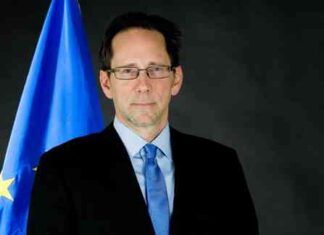
By: Ilir Deda
Dear Saša,
The political earthquake of the December 28 elections will shape Kosovo’s political landscape for a long time to come. Self-Determination received the trust of more than 51% of voters, throwing the opposition parties into chaos. Kosovo has now joined the rest of the Western Balkans—with an extremely strong ruling party and a weak, fragmented opposition. Political pluralism and the balance of power have disappeared. Most likely, the internal reform of opposition parties has been halted as well.
The PDK—with 20%—has stagnated and missed the opportunity for deep reform. LDK is in the most difficult and unpredictable position: it has fallen to 13%, and its recovery will be the hardest—if it is even possible at all.
“At least you have an opposition in Kosovo” is a sentence I heard many times in Tirana, Belgrade, and Skopje. Now that this is no longer the case, the lessons from Albania, Serbia, or North Macedonia offer little reason for optimism.
With the enormous political power he now holds, Kurti alone bears full responsibility for the quality of life in Kosovo. His future government will carry complete responsibility for economic development, reforms in education and healthcare, trust—or the lack of it—between institutions and Kosovo Serbs, cooperation and reconciliation, Kosovo’s relations and aspirations toward EU and NATO membership, as well as relations with the United States.
Power without a strong opposition is a bleak picture. In recent years, an anomaly has emerged in Kosovo: the opposition does minimal institutional work, while political battles are fought in evening TV shows by journalists and political commentators. Evening debates are not, cannot be, and should not be a substitute for an inactive opposition. Ahead of the December elections, part of the narrative was also the attempt to “defeat analysts” who are not political actors but were perceived as the main opposition to Self-Determination.
This anomaly must come to an end. The current opposition can survive only if it makes a clean break with its past and prepares itself for politics over the next decade—with far greater dynamism and concrete political action. If it fails, it will cease to exist as a relevant political factor. That vacuum will either be filled by a new opposition, or it will remain empty.
I do not know what perspective awaits the ongoing processes in our region or the relations between Kosovo and Serbia. It would be extremely important to finally move beyond the existing matrix of an unfinished conflict toward regulated relations of cooperation. Above all, I hope that current global turbulences bypass our region so that we can finally move decisively toward lasting peace. Anything short of that would be devastating for all of us—even though the aspiration for a normal Balkan sometimes feels like a utopia, especially given the massive outflow of people from most countries in our region.
More than forty thousand people emigrate from Kosovo every year—mostly young and educated. We watch silently as the country’s future leaves in search of a better life, because we have nothing to offer that would keep them here. If this trend continues, the outlook for the 2029 elections is grim: two hundred thousand fewer educated citizens, and young people born in 2011 voting for the first time in a country of the elderly—living off diaspora support and without a clear future.
This picture can still change—but only if a flame of activism ignites among our youth, and if they are convinced and determined to shake Kosovo’s entire political and social scene, shaping the society and politics of tomorrow. We are already very late in this process.
With respect,
Ilir
Preuzimanje i objavljivanje tekstova sa portala KoSSev nije dozvoljeno bez navođenja izvora. Hvala na poštovanju etike novinarske profesije.