The German Embassy in Kosovo has expressed “deep concern” over what it described as attempts to politicize the deployment of the Kosovo Security Force (KSF) to the North today, as part of a search and rescue operation facilitated and approved by KFOR.
The operation took place at Gazivoda Lake, where the body of a 33-year-old man who had jumped from a bridge on Sunday and gone missing was recovered this morning.
In its official statement, the German Embassy stressed that the deployment had been conducted strictly for humanitarian purposes and with the full consent of the KFOR Commander, in line with KFOR’s mandate.
“The tragic loss of a young man’s life should be a moment of collective sorrow, not an occasion for political point-scoring,” the embassy said.
The statement further criticized political narratives describing the deployment as the KSF’s “first operation in northern Kosovo”, saying such portrayals misrepresent the spirit and intent of the mission. It also voiced concern over allegations that visible KFOR elements were removed from images shared online to promote a misleading narrative.
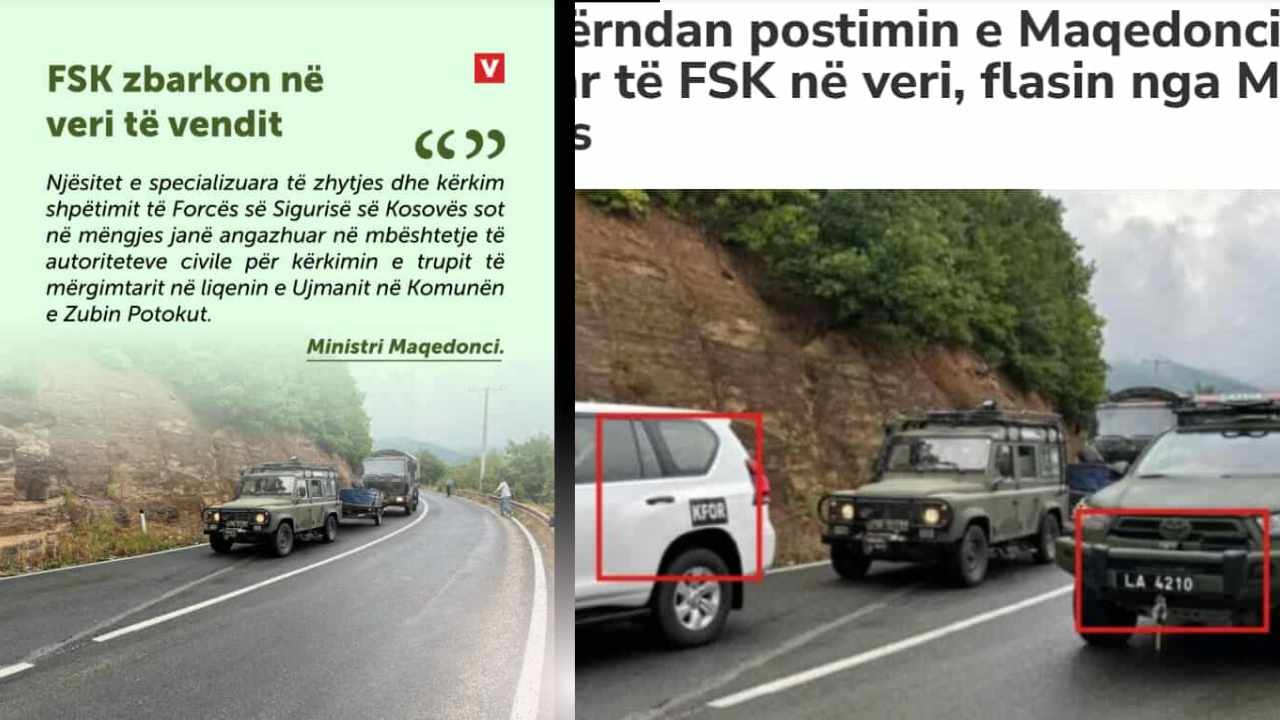
“Such actions risk undermining public trust and distract from the mission’s humanitarian focus,” the embassy warned, reaffirming Germany’s full support for KFOR and its mandate, and thanking both KFOR and KSF personnel for their professionalism and cooperation.
French Ambassador: KFOR deserves everyone’s respect
Shortly after the German statement, French Ambassador Olivier Guerot also weighed in.
France fully supports KFOR and its commander, Guerot said, underlining the mission’s “irreplaceable role in ensuring regional security”.
“France will continue to provide KFOR with all necessary support, especially in an environment where disinformation and manipulation of facts are becoming systematic,” he said, also thanking the media that accurately reported on KFOR’s role in today’s recovery efforts.
Background: KSF deployed to the North with KFOR’s approval, body recovered
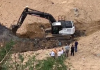
The 33-year-old man, originally from Ceranja and visiting from the diaspora, went missing on Sunday after jumping from a bridge into Gazivoda Lake near the popular Kolašin Cliffs swimming area. His body was recovered this morning, police confirmed for the northern region.
The search began on Sunday and involved the Kosovo Police, divers from the Trepča Diving Club, and the Search and Rescue Association. On the third day, the KSF was called in for support. The deployment was approved by KFOR and marked the first time in several years that the KSF had been involved in an operation in the North.
According to the KSF, the request was made by the Emergency Management Agency of the Kosovo Government. The KSF Commander, Bashkim Jashari, then issued an order for the deployment of search and rescue teams to carry out a humanitarian water-based mission.
“Thanks to the high intensity of the search and the professionalism of our teams on the ground, and in coordination with the Kosovo Police, the Emergency Agency and KFOR, the lifeless body was found in the Gazivoda Lake area after several hours,” the KSF stated.
The body was handed over to the police and forensics.
During the operation, a heavy security presence was visible around the scene, with police vehicles, special units, ambulances, a KSF truck and multiple KFOR vehicles present. While KSF personnel were relaxed and posed for media cameras, KFOR soldiers from the Latvian contingent wore masks to cover their faces.
In a separate statement, KFOR confirmed that the deployment of KSF SAR teams falls within its original mandate – namely, to provide support to local communities in emergency situations, including search and rescue operations. They reiterated that the mission had been carried out “in full compliance with the authorities of the KFOR Commander” to “maximize the ongoing efforts to locate a 33 year-old man reported to have entered the lake a few days ago“. The authorisation has been conditioned to specific requirements set by KFOR which will also provide security throughout the whole operation.
A political controversy erupts
Despite the clarification, the operation soon became politically charged.
The Vetëvendosje Movement (Self-Determination) hailed the event as “the KSF’s first mission as an army in the north of the country,” while Kosovo’s acting Interior Minister Xhelal Sveçla reportedly visited the site.
Online, claims surfaced that photos released by Vetëvendosje and featuring Minister Ejup Maqedonci had allegedly deliberately cropped out KFOR vehicles, presenting the mission as exclusively a KSF operation. In the meantime, this was denied by a spokesperson for LVV.
Adding to the controversy, journalist Shkumbin Ahmeti and former Serbian general Zdravko Ponoš both alleged that the young man’s body had already been located a day earlier, and that the recovery was delayed to justify the deployment of the KSF to the North. These claims were rejected by the Search and Rescue Association.
Speaking to KoSSev earlier today, Deputy Regional Commander for the North, Veton Elshani, declined to comment on the claims but said the police had no information on the body’s location before this morning, which is why the KSF was requested.
Not the first time
Although political actors portrayed today’s deployment as a precedent, it is not the first time the KSF has operated in the North.
In 2014, KSF took part in the search for four Serbian youths who drowned in Gazivoda Lake. The following year, they joined a days-long operation to find a missing ethnic Albanian who drowned in the Ibar River, crossing into the North during the mission.
Former KSF commander Rahman Rama told Koha today that the KSF was also involved in a 2016 search for a missing Serb and in a 2019 humanitarian demining operation in the North with U.S. KFOR troops.
More controversially, in 2023, KSF personnel were present at the funeral of a former KLA member in the North without KFOR’s knowledge. After that incident, the Kosovo Government issued written guarantees to NATO that KSF would not be deployed in the North without prior KFOR approval.
Requests for KSF deployments in the North have previously been denied by KFOR – including for the funeral of Isa Boletini in 2015 and during the more recent sabotage of the Ibar-Lepenac canal system, which is supplied by Gazivoda Lake.
Legal framework: KSF can only act with KFOR approval
Under a 2013 agreement between the Government of Kosovo and NATO (KFOR), KSF cannot operate in the North without explicit approval from the KFOR Commander.
This rule has been reaffirmed in multiple official statements from both KFOR and Kosovo institutions.
The same agreement – sometimes referred to as the “Thaçi Agreement” – also provides for the possibility that local authorities in the North be consulted or notified.
Human loss overshadowed
As images from the operation circulated and political declarations flooded social media, the original tragedy – the loss of a young life – was increasingly pushed to the background.
What should have been a somber moment of shared grief turned into a stage for political narratives. And while camera crews captured every frame, few stopped to ask how it felt for the family – waiting for their son, brother or friend to be pulled from the water.
Preuzimanje i objavljivanje tekstova sa portala KoSSev nije dozvoljeno bez navođenja izvora. Hvala na poštovanju etike novinarske profesije.