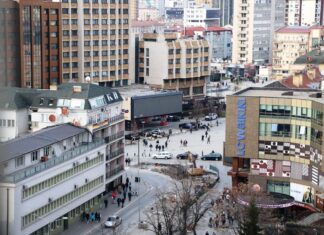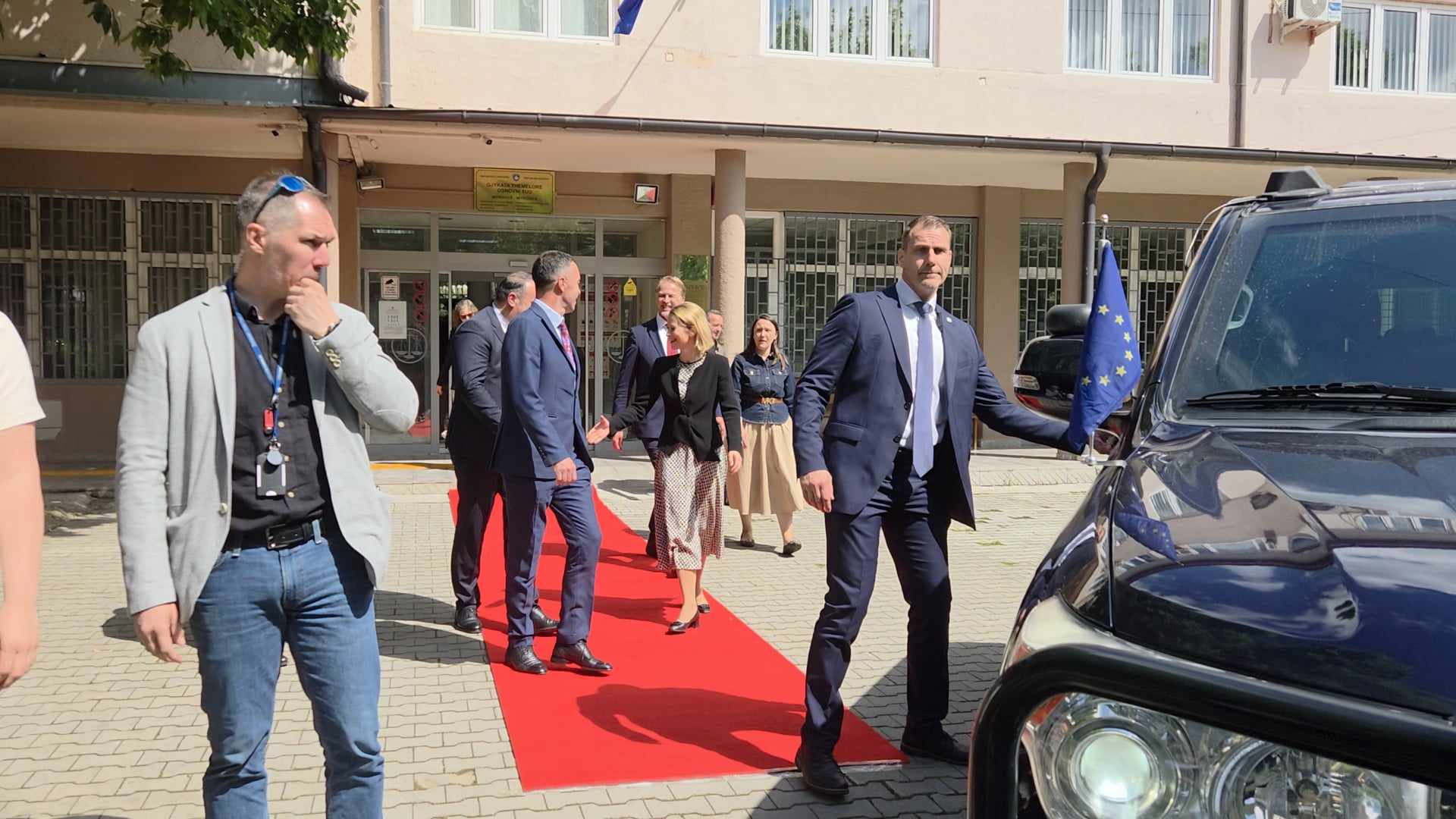
European Union High Representative for Foreign Affairs and Security Policy, Kaja Kallas, visited North Mitrovica this morning, underscoring the need to hear directly from people on the ground amid conflicting narratives about the situation in northern Kosovo.
“It is important to be here – in the north of Kosovo – because we see a lot of different narratives – and to really witness what is happening on the ground and what are the people telling,” she said during a brief statement.
Kallas began her visit at the Basic Court in North Mitrovica.
“I was in the court, which is operating and waiting for the Serbian judges to return,” she underlined.
She then proceeded to the EU House, where she met with the head of the local education administration and school principals. Emphasizing the value of direct engagement, she said it was crucial to understand the situation firsthand – “and talk to the people, and see with my own eyes what is happening.”
“I talked to KFOR, EULEX, about what they see on the ground. I think this is extremely important information for me to understand because we see: one side is telling one thing, the other side is telling something else,” Kallas noted. “But I think that the international forces that are here are giving a very adequate picture. But it is also important to talk to the people on the ground, then we can see what more can we do so that the future would be prosperous and safe and secure for everybody in Kosovo.”
Dragović: We Hope Our Schools Remain Part of the Serbian Education System
Following the meeting, Blažo Dragović, head of the Kosovo-Metohija Education Administration, said discussions focused on the challenges faced by Serbian-majority schools, which continue to operate under the Serbian education system.
He suggested that the EU representative had not been fully informed about conditions on the ground.
“We raised a range of issues, from ethnically motivated attacks to the ban on transporting textbooks and school materials. She thanked us for sharing this information directly from the field,” Dragović told reporters. “She asked a lot of follow-up questions.”
He expressed hope that “the Serbian community and its children would be protected” and that the school system would remain separate from Kosovo institutions.
Messages from Pristina
Kallas’s visit to the north was not announced in advance to the media. It followed high-level meetings in Pristina with Kosovo officials. Earlier in the week, she visited Belgrade, and today she continues her Western Balkans tour with a stop in Skopje.
Her presence in Kosovo comes just a week after the European Union urged acting Prime Minister Albin Kurti and Kosovo authorities to halt the closure of Serbian institutions, exercise restraint, and avoid actions that could escalate tensions.
On Thursday, speaking from Pristina, Kallas announced that the EU has begun gradually lifting measures previously imposed on Kosovo – measures that had been conditioned on steps to de-escalate tensions in the north.
Despite these moves, closures of Serbian-run institutions in the north persist. The most recent was the city library, which was shut down just two days ago.
Preuzimanje i objavljivanje tekstova sa portala KoSSev nije dozvoljeno bez navođenja izvora. Hvala na poštovanju etike novinarske profesije.