Journalists who report in Serbian from Kosovo are the least protected in the entire region, facing similar challenges as their colleagues elsewhere but receiving inadequate institutional support, according to Veran Matić, executive director of the Association of Independent Electronic Media (ANEM).
During his visit to North Mitrovica last week, Matić emphasized the precarious position of Serbian-language journalists in Kosovo, who are under pressure from both Belgrade and Pristina while lacking trust in institutions on either side.
Discussing Safety Measures for Journalists
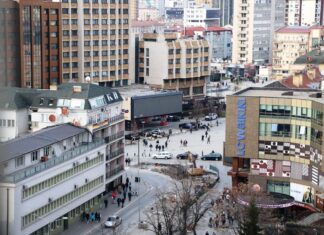
ANEM organized a discussion on journalist safety in Kosovo last week, held at the Center for Civic Energy in North Mitrovica.
The event gathered representatives from the Independent Journalists’ Association of Serbia (NUNS), the Journalists’ Association of Serbia (UNS), the Independent Journalists’ Association of Vojvodina (NDNV), and the Media Association.
The discussion focused on solidarity among journalists, preventing attacks, responding to threats, and ensuring legal consequences for perpetrators. It also addressed the working conditions of Serbian-language newsrooms in Kosovo and the broader challenges faced by local media.
The Importance of Journalist Safety Training
Matić highlighted the significance of security training for journalists, stating that ANEM has been organizing such initiatives for several years to foster local-level discussions on journalist safety.
„In local communities, the threats and challenges journalists face are often more evident than they appear from the center, and they are not always reflected in broader reports,“ Matić said.
ANEM aims to bridge the gap between journalists, prosecutors, and police to enhance efficiency in protecting media workers. Matić stressed that many journalists have not undergone safety training in the past decade, making them more vulnerable when reporting from the field.
„Many journalists and their newsrooms inadvertently put themselves at risk because they lack proper training and are sent into the field unprepared. This is one of the key reasons we organize such meetings,“ he explained.
Serbian Journalists in Kosovo: The Least Protected
Matić described reporting from Serbian-language media in Kosovo as uniquely challenging.
„We have found that Serbian journalists in Kosovo are the least protected in the region. They face the same problems as others, but their concerns are not adequately addressed. They struggle to find institutional support, especially when they are pressured by both Belgrade and Pristina and lack trust in either side’s institutions,“ he noted.
To address these issues, ANEM organized the event in northern Kosovo, bringing together media representatives from Belgrade and local journalists to establish mechanisms that could help them support each other.
„Our goal is to create bridges between journalists and media associations, including those in Pristina, to develop long-term solutions. We also want to introduce targeted training sessions for journalists to enhance their preparedness,“ Matić added.
Journalism as We Know It is Disappearing
Reflecting on the global state of journalism, Matić warned that the profession is losing its significance.
„Journalism worldwide is becoming more entertainment-focused and profit-driven. While there are still bright examples of quality journalism, they are dwindling. I am deeply concerned that the profession as we know it is disappearing,“ he stated.
He compared the current landscape to the 1990s when journalists faced clear threats but could distinguish between right and wrong. Today, he argues, the situation is more complex, with shifting standards and increasing autocratic tendencies in many democracies.
„Countries like the United States, once seen as a model for democracy and human rights, now exhibit similar authoritarian tendencies as many other nations. Media freedom is under threat even in Western countries,“ he observed.
Strengthening Solidarity and Institutional Pressure
Matić stressed the importance of mutual support among journalists and called for daily communication to assist those at risk.
„It is difficult to find allies, so we must maximize solidarity among ourselves. Survival in journalism is not just about making it to the next day; it also depends on how much we can help each other,“ he said.
He concluded by emphasizing the need to pressure institutions to take responsibility for journalist safety.
„We must use all our knowledge, experience, and connections to establish better protection mechanisms and hold institutions accountable. Our ultimate goal is to prevent attacks on journalists and create systems that deter such incidents in the future,“ Matić concluded.
Preuzimanje i objavljivanje tekstova sa portala KoSSev nije dozvoljeno bez navođenja izvora. Hvala na poštovanju etike novinarske profesije.