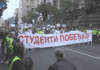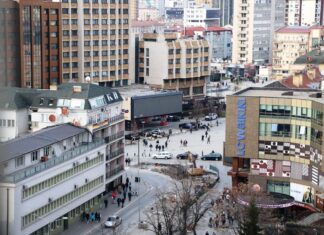
Yesterday marked 25 years since the violent events that shook North Mitrovica in February 2000. On the evening of February 3, an explosion occurred at the then-popular café „Bel Ami,“ when multiple bombs were thrown, with one detonating and seriously injuring more than ten people. The incident triggered an immediate retaliation by groups of Serbs, resulting in the killing of ten Albanian civilians and the expulsion of Albanian residents, particularly from the central part of the city.
Kosovo Officials Call for Justice
Last night, top Pristina officials spoke out, but only regarding one side of the events. They reiterated that there are no longer groups such as „Bridge Watchers,“ „Civil Protection,“ or the „Northern Brigade“ in Kosovo, and that Albanians are returning to their homes in the North.
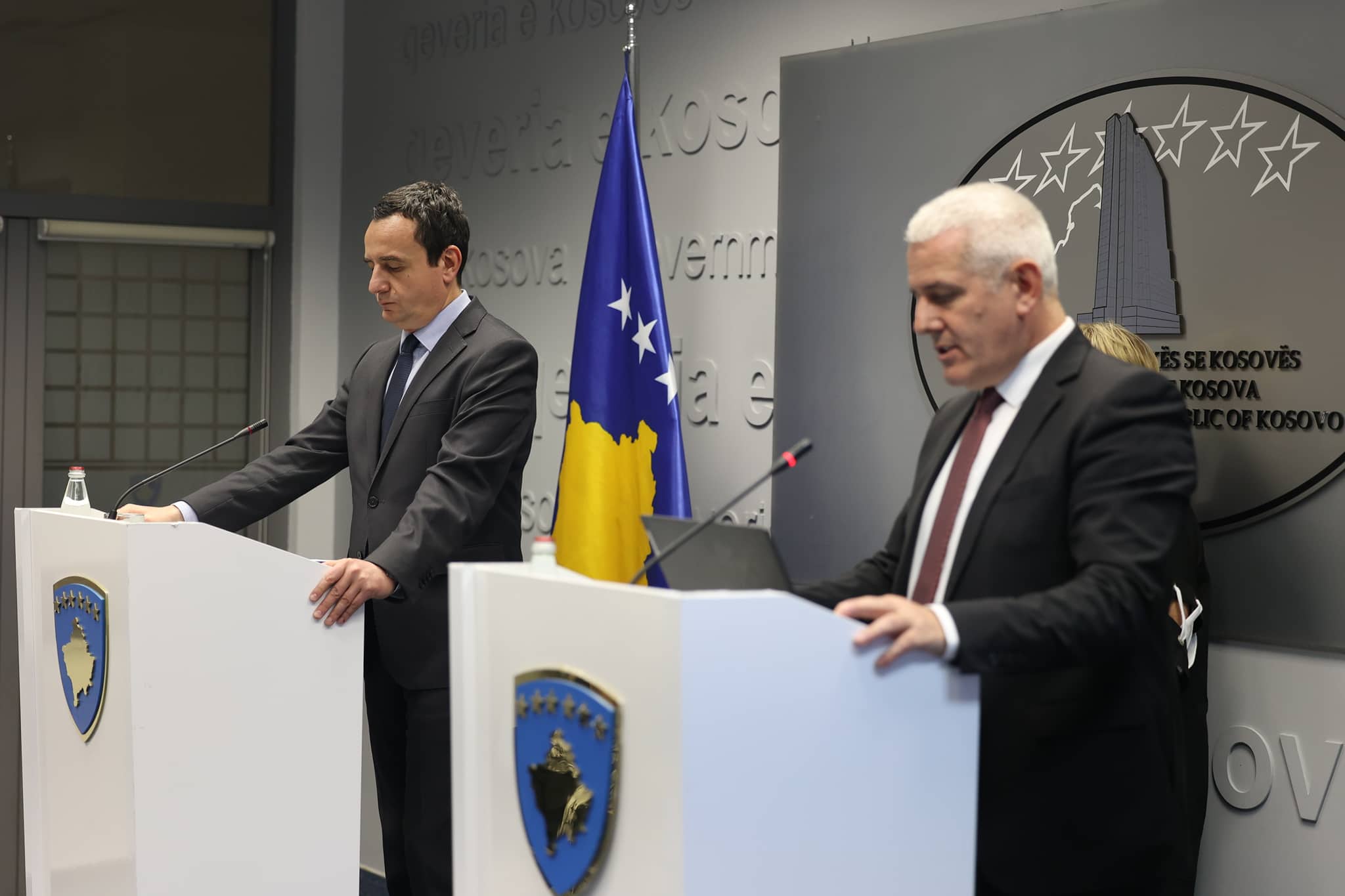
Kosovo’s Prime Minister, Albin Kurti, also sent a letter to the EU’s High Representative, calling for an investigation to prosecute those responsible.
Kurti described the night between February 3 and 4, 2000, as a „night of terror.“
„In that coordinated attack by armed groups from Serbia, ten Albanian citizens, including children, women, and elderly people, were killed, and 25 others were injured. A total of 1,664 Albanian families, around 12,000 residents of Mitrovica, were forcibly displaced from their homes,“ Kurti stated.
He emphasized that after 25 years, some of the displaced are returning to their homes, and his government remains committed to ensuring their safe return.
„However, many have yet to return, while those responsible for these grave crimes have not yet faced justice,“ Kurti added.
To address this, he confirmed that he had sent a letter to the EU’s High Representative for Foreign Affairs and Security Policy, Kaja Kallas.
„We demand a full and comprehensive investigation to identify and prosecute those responsible for these crimes. Justice for the victims and their families is a moral obligation and a necessary step toward sustainable peace in the Republic of Kosovo and our region,“ Kurti wrote on Facebook, publishing the letter he sent to Kallas.
Ethnic Displacement and Home Seizures
Kurti’s letter begins by stating that NATO’s intervention in 1999 „brought an end to Serbia’s brutal campaign of ethnic cleansing and genocide in Kosovo,“ describing it as a „systematic atrocity“ with numerous victims.
He then turned to the events in North Mitrovica in 2000.
„On the night of February 3-4, 2000, known as the ‘night of terror,’ armed Serbian groups executed a coordinated campaign at the ethnically cleansing of Albanians from the northern part of Mitrovica, where the French contingent of KFOR was tasked with ensuring security and safeguarding all communities,“ Kurti wrote.
Citing the number of those killed, injured, and displaced, the Kosovo Prime Minister told the EU High Representative that this was a „grave injustice, which has yet to be addressed.“
„The forced displacement, and in many cases the subsequent occupation of homes by Serb families, was part of a deliberate strategy to alter the demographic composition of the northern part of Mitrovica. Despite the passage of a quarter-century, many of the displaced have yet to return to their homes, and the perpetrators of these heinous acts have yet to face justice,“ he stated.
Kurti reiterated in his letter that a comprehensive investigation is necessary to identify and hold accountable those who committed killings, assaults, and forced expulsions.
„I trust that you will give this urgent matter the attention it deserves. Confronting this injustice is not only a moral obligation but also a crucial step toward genuine reconciliation and lasting peace,“ Kurti wrote.
Sveçla: Demographics of North Mitrovica Altered
Kosovo’s Minister of Internal Affairs, Xhelal Sveçla, also commented on the events of 25 years ago:
„The Serbian criminal formation ‘Bridge Watchers’ launched a special operation of ethnic cleansing of Albanians from the north of our country between February 3 and 4, 2000,“ he stated.
He claimed that „notorious Serbian gangs massacred ten Albanians“ and expelled more than 11,000 from their homes.
„This altered the demographics of North Mitrovica. That was Serbia’s goal, carried out unimpeded. This crime against Albanians, committed solely because of their national identity, has remained without justice, as in 2013, the then-majority passed a law granting amnesty to criminals in the North,“ Sveçla said.
Looking at the present, he added:
„Today, in the Republic of Kosovo, there are no more ‘Bridge Watchers,’ ‘Civil Protection,’ or ‘Northern Brigade.’ Albanian citizens are returning to their homes. Hundreds of expelled Albanians have returned to their properties, and we will work tirelessly until all of them return. We will pursue justice not only against those who committed this massacre and terror against our citizens but also against anyone who has in any way undermined the security and peace of our Republic,“ Sveçla asserted.
Osmani: „Ethnic Cleansing“
Kosovo’s President, Vjosa Osmani, also spoke yesterday, accusing „criminal gangs encouraged by Serbia“ of the events 25 years ago.
She also claimed that more than 11,000 Albanians were expelled, calling it „ethnic cleansing.“
„These days serve as a powerful reminder of the resistance and struggle to remain on their ancestral lands, but also of the need to defend the hard-won freedom with blood and sacrifice. Justice for the victims and punishment for the perpetrators of these crimes are still necessary for lasting peace,“ Osmani stated.
The Broader Context of February 2000
For residents of North Mitrovica, early February 2000 is also remembered for two other major incidents—the „Bel Ami case“ and the attack on a UNHCR bus—both of which preceded the killings of Albanians.
On the night of February 3, 2000, several bombs were thrown at the crowded „Bel Ami“ café in North Mitrovica, with one explosion injuring more than ten young men and women, some suffering severe injuries, including amputations.
Shortly after, groups of Serbs launched violent attacks against Albanian residents in the northern part of the city.
Just two days earlier, a UNHCR bus carrying elderly Serbs and children from an enclave in South Mitrovica was shelled, killing two passengers.
Selective Narratives of Violence
As was the case in the immediate aftermath of the February 2000 events, and in the decades that followed, public discourse remains divided—each side remembering only its own victims while reporting selectively on the violence.
Serbian-language media recall the injuries of young Serbs and the killing of elderly bus passengers in the UNHCR attack, while Albanian sources refer to the „Kristallnacht“ against Albanians in the North.
Notably, despite the current election campaign and the EU letter, Pristina officials have not used the term „Kristallnacht“ in their latest statements.
Preuzimanje i objavljivanje tekstova sa portala KoSSev nije dozvoljeno bez navođenja izvora. Hvala na poštovanju etike novinarske profesije.