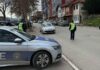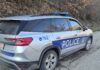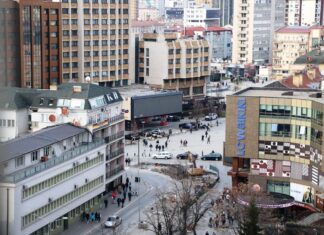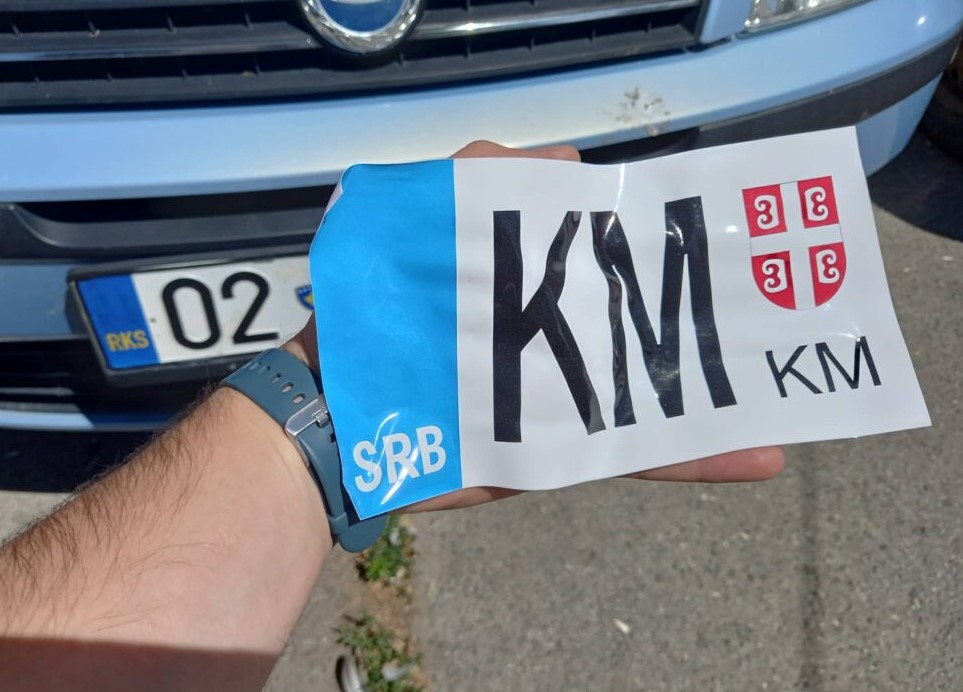
Due to the ongoing crisis in the north of Kosovo, the topic that was previously at the center of public attention, the issue of license plates, has been put on the back burner. The issue has yet to be resolved, but it continues to affect residents on the ground. Džafče Bekim from North Mitrovica was left without license plates after he decided to extend his KM registration. In the one-upmanship between Belgrade and Pristina, and in the absence of a confirmed joint agreement, the Kosovo police also confiscated Džafče’s vehicle, claiming that it was illegal and that he himself entered Kosovo illegally. Although the vehicle was returned to him, it was subsequently sent to Serbia proper, and banned from entering the territory of Kosovo.
The crisis in the North of Kosovo is showing no signs of abating, and its consequences are becoming increasingly more severe. At the end of September, a Kosovo policeman was killed in an ambush in Banjska, and then, in an armed conflict between the police and a group of uniformed Serbs, at least three attackers were shot dead. During the May conflict, when a group of Serbian demonstrators clashed with KFOR, over a hundred soldiers and demonstrators were injured. In the midst of such almost-daily instability, who remembers what started it all?
The issue of license plates issued by the Republic of Serbia with markings of towns in Kosovo (KM, ĐA, PR, PE, PZ, GL and UR), which Pristina considers illegal, came to the fore in September 2021, after the end of the second five-year extension of the part of the Brussels Agreement on freedom of movement, regarding KS plates. This resulted in a 13-day crisis at the Jarinje and Brnjak crossings.
The Kosovo government then implemented reciprocity measures, introducing temporary plates for cars with Serbian registrations.
However, they were unable to implement this decision, because local Serbs set up barricades at the crossings, at the same time as members of the Special Kosovo Police were stationed near them.
The crisis ended with a temporary agreement on the use of the sticker regime for license plates, which is still applied to both Serbian license plates in Kosovo and Kosovo license plates in Serbia.
Nevertheless, tensions continued at the end of July 2022, on the eve of the implementation of the new decision of the Kosovo government on (re)registration, that is, the replacement of Serbian license plates with markings of towns in Kosovo with RKS plates.
In order to reduce tensions, the international community managed to intervene on two occasions in postponing these decisions.
Three days before the new deadline (October 31), the Kosovo government came out with a new decision on (re)registration – choosing to implement it in stages. The plan was that their decision to remove Serbian license plates would be applied until April 21, 2023 – starting with warnings, fines, temporary plates, and all the way to complete removal. At that time, the benefits of taking RKS were available until March 31.
As the second phase of the implementation of the decision, related to issuing fines to drivers who did not have RKS license plates approached, Serb officers left the Kosovo Police in the north at the beginning of November, refusing to punish their fellow citizens.
Due to a new rise in tensions, the international community invited Kosovo and Serbian leaders to Brussels. A new agreement was reached on November 23, after the start of implementation of the second phase of the decision.
Pristina committed itself not to apply the decision on (re)registration in stages, and Belgrade not to issue new license plates with Serbian markings of towns in Kosovo.
On December 6, Belgrade issued a decree of the Government of Serbia on special conditions for the validity of license plates with Serbian markings of towns in Kosovo, confirming that the Serbian MIA will officially cease issuing new license plates with markings of towns in Kosovo.
The decree, however, also stated that new registration stickers will not be issued, but that the validity of older ones will be extended. According to that decree, citizens could thus carry out technical inspections and obtain insurance and continue operating their vehicles.
The degree failed to specify in which territory vehicles that fell into that catagory could be used, leading to confusion among residents. Adding to that confusion was the lack of information on whether they would be able to pass through administrative crossings and operate their vehicles on the territory of Kosovo and in other countries in the region.
Although the Government of Serbia announced that vehicles with such plates would be able to move „as before“, on the ground, however, it turned out that their concern was justified.
The owners of vehicles whose Serbian registration expired after the agreement of November 23, at the crossings leading to Serbia proper, received a warning from Kosovo officials: they would not be able to return because the Kosovo police do not accept the technical inspection and the insurance policy as valid documentation for crossing the integrated crossing.
„The Serbian government can play around with its decisions, but vehicles with ‘illegal’ license plates are not allowed to enter Kosovo“ – reads one of the messages from Pristina officials, with the statement that a car driven in Kosovo without a valid registration would be confiscated, and the driver fined 150 Euros.
That is exactly what happened to one North Mitrovica resident.
He extended registration, but had his car confiscated and paid a fine
Bekim Džafče told KoSSev that he was pulled over on Friday by the Kosovo Police at the Bistrica point in the municipality of Zvecan.
Although they quickly let him go, Džafče claims that, 10 kilometers down the Leposavic-Mitrovica highway, a regular patrol also pulled him over. They conducted a search, and notified him that his registration was „not valid“.
He claims that he extended his car’s registration with KM plates on January 16 of this year, that is, almost two months after the agreement in Brussels on plates.
„If I hadn’t registered in January, it would have been unregistered,“ says Džafče, stating that it was not possible to re-register the vehicle during that period.
He claims that the officers then drove him to the police station in Zvecan, and that the inspectors told him that he „wasn’t allowed to register the car to KM“, that his license plates were invalid and that they would be confiscated. In addition to license plates, his car was also confiscated.
„At the terminal they told me – ‘for us, these are illegal license plates, I don’t know who registered your car, but you weren’t allowed to do so, you should have registered to RKS,'“ he underlined.
He claims that he was fined 150 euros for possessing „illegal“ license plates. In the misdemeanor handed to him, it is stated that „he was driving an unregistered vehicle, and that the license plates were confiscated.“
In addition to the „illegal license plates“, the Kosovo police charged Džafče with illegal entry into the territory of Kosovo.
He says that the officials told him that, according to the data from the records, he allegedly entered the territory of Kosovo through alternative (illegal) roads, which Džafče denies doing.
„Allegedly, I left Kosovo, but I don’t have an entry recorded, they assume that I entered illegally three and a half months ago. This is not true. I started to explain that I entered legally, and they said I was going to South Mitrovica and that I was suspected of ‘illegal crossing of the border,'“ he explains what happened last Friday.
In addition to denying the accusations made by the police, he states that the officers made several mistakes while processing his case.
Although one of the documents handed to him states that he lives in Kosovska Mitrovica, in the document on the transfer of cases between the Kosovo Police and Customs, which was also handed to him, Novi Pazar was listed as his address.
„I have no links to Novi Pazar. On both of my IDs, Kosovska Mitrovica is listed as my address,“ he added, stating that this is not the only mistake the police officers made.
In an attempt to find out what will happen to his car, Džafče visited the police stations again on Monday, both north and south of the Ibar:
„In Mitrovica, Zvečan and in the South… They asked me – ‘why did they take your car?’, I replied that I don’t know, and they don’t know why they took it either,“ he claims.
He says he was told to pay a fine of 150 euros.
„The fine states: ‘plates were taken away from the driver who drove without authorization’. Why would I need authorization if the car is mine,“ he wondered.
Džafče claims that until Tuesday his car was at the customs terminal in Mitrovica, which he visited several times, and that the officials told him that the case was forwarded to Pristina – „and once it is resolved, we will call you.“
He says that they even told him he could be given a fine of 500 euros for possessing an „illegal vehicle“.
Bekim Džafče confirmed for KoSSev in last night’s conversation that the decision from Pristina had arrived, and that his car was returned, but also that he was fined 500 euros.
„They made an estimate that my car is worth 1,100 euros, they told me that I have the right to sell it at the scrapyard, but also that I have to pay 500 euros, or 250 euros if I pay immediately, 50 euros for customs and 20 euros because my car was at the terminal for four days,“ he said.
He claims that his license plates were permanently confiscated, and that he was also told that the car must not be driven in Kosovo.
„We called the towing service, and sent the car to Serbia proper, it’s in Ribarice,“ he explains.
He added he doesn’t know what to do now.
„I live here, I don’t have another car, I don’t know what to do.“
On the other hand, he hopes that his example will be a warning to other drivers.
„Spread the news so that others who have KM plates know what can happen to them,“ Džafče told us.
Is it possible to cross the border crossing or not?
On the other hand, addressing the accusations of illegal entry into the territory of Kosovo, KoSSev’s interlocutor explained that a regular procedure has been initiated, which is conducted separately before the court.
Džafče claims that since the extension of his registration in January of this year, he has gone to Serbia proper and returned at least eight times, both via Jarinje and Brnjak, without any problems, and that he has never taken alternative routes, which Pristina considers illegal.
He says that he last entered the territory of Kosovo through Brnjak, more than three months ago.
Police say he crossed the border illegally
The police, however, present differing allegations.
„He crossed the border illegally. He left, but there is no information in the records as to how he entered the territory of Kosovo, so it is assumed that he entered illegally,“ Deputy Commander of the Kosovo Police, Veton Elshani, told KoSSev.
Elshani also confirmed that Džafče registered the car in January, after the conclusion of the November license plate agreement, and that this vehicle was confiscated on Friday.
He emphasizes that several cases were recorded in the previous period – citizens who extended their registration to KM plates after November had their cars confiscated.
„If someone comes by car from Serbia, they are told at the crossing that they cannot enter with KM plates and then that person is placed on the stop list. In that case, it means that he can no longer enter Kosovo with that car.”
He was pulled over not because he did not have a registration, but because he registered the vehicle after November 23, was placed on the stop list at the border and then entered Kosovo illegally
In case the police come across a car with an extended registration in the north of Kosovo:
„For us, it’s a car that needs to be cleared by customs, and that is where we send them. Customs deals with them afterward – and the owner pays as if he were importing a car,“ he said.
While Džafče claims that he properly extended his registration on January 16, and that he did not leave the north of Kosovo when he did so, but through an intermediary and that he did not violate any regulations, Elshani states that, as far as they are concerned, doing so is forbidden in Kosovo, and that is precisely why such cases are treated as illegal entry.
„You cannot register a car in Kosovo after November. Whenever you have such a registration, then we will see where you registered, you cannot register in Kosovo. It should not be done in Kosovo.“
The region north KP forwarded a request to Pristina to extend the deadline for re-registration
Speaking of vehicles with KM plates whose registration has expired, and haa not been renewed, Elshani says that the police of the region north do not deal with these cases, and do not issue fines at the moment.
„Those who have not renewed their registration, and whose license plates have expired, the police are still not dealing with them,“ he said.
The Kosovo Police of the region north forwarded a request to Pristina to extend the deadline for re-registration from KM to RKS plates, Elshani, told KoSSev, noting that they sent the request to the Kosovo Ministry of Internal Affairs, and Minister Xhelal Svecla.
„This is also a request from citizens, they’ve been asking us when and how they can register,“ he explained.
He added that residents with KM plates are not being issued fines by the KP due to the impossibility to re-register to RKS plates.
„We requested that registration be allowed for one month and that during that period we allow citizens to register their vehicles. For now, citizens cannot do that, and that is why we are not issuing fines,“ he told us.
Preuzimanje i objavljivanje tekstova sa portala KoSSev nije dozvoljeno bez navođenja izvora. Hvala na poštovanju etike novinarske profesije.