There are voices in the Serbian community that need to be heard, read the letter the civil sector sent to the EU and Quint, the US official said today in Pristina.
„There really are people who have already made the choice to remain in Kosovo, when they could have left. And yet, they are struggling to make their voice heard. That is fundamentally a challenge for a multiethnic civic democracy to address. You cannot say that all Serbs are for us or against us, helpful or unhelpful. There are a lot of voices in that community that need to be heard“, Gabriel Escobar said in Pristina today.
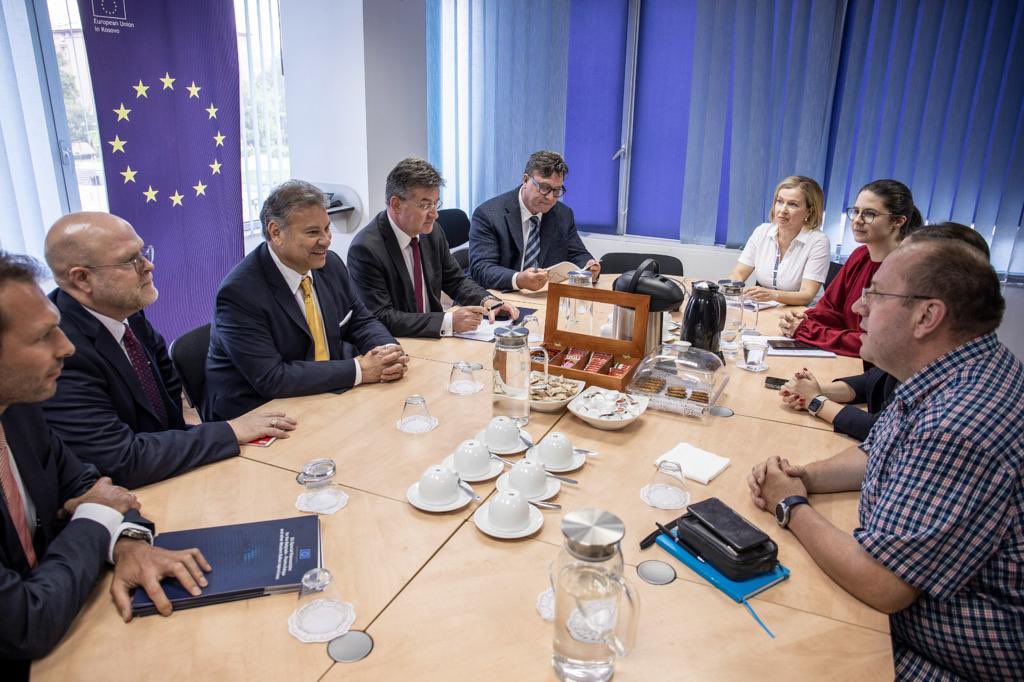
In front of a group of media outlets, following a series of meetings Escobar held together with the European envoy for Belgrade-Pristina dialogue, Miroslav Lajcak, over the past two days in Pristina, he paid special attention to the letter the Kosovo Serb civil society members delivered to the countries of the Quint.
The letter in question was signed by over 160 Serbian NGOs, activists and individuals from Kosovo, who demand from the international community the withdrawal of all special police units from the north of Kosovo and the simultaneous deployment of KFOR and EULEX units, for Albanian mayors to leave municipal buildings and other public facilities, as they „do not have the democratic legitimacy to represent local communities in those areas“, as well as to ensure unhindered access to existing local administration officials to their offices until the new elections.
They also requested the implementation of Article 7 from the Ohrid Agreement, the formation of the ASM, elections, and the return of Serbs to the institutions.
In a series of points, they demanded a solution to the illegal expropriation of land, but also „an end to the demonization of the Serbian people in the public appearances of the President of Kosovo, the Prime Minister of Kosovo and other high-ranking government officials from the Albanian community.“
Commenting on this letter, and advising the Kosovo public to read it, Escobar underscored the long-term lack of trust between the Serbian minority community and the Kosovo government as a particular challenge.
“I want to highlight a letter presented to Quint by 100 and some members of civil society, people who live here, who want to integrate, talking about how they feel, how this government makes them feel like second-class citizens. I encourage you to read that letter. It really does say that it is not a black-and-white situation,“ the US official said.
He underlined that the Serb community has a lot of concerns related to the access to government services, expropriations, and conduct of some members of police forces.
“They have to be heard. They are uncomfortable voices to hear and uncomfortable messages to receive but that’s part of the underlying problem. We also want to address this.”
If there is one thing that the US is focused on – it is focused on the next generation, he added.
According to Escobar, in places such as Bosnia and Herzegovina, “where you see the continuation of politics of ethnic rivalry, the politicians through populism and nationalism contribute to that and that is their only message to the people.”
He expressed hope that one could emerge from that period in the 90s where that was the acceptable form of political discourse.
“I don’t think we are there yet. But we need to leave that period behind.”
He highlighted that talks must be initiated “not about ethnic division, but interethnic reconciliation and the things that unite us.”
“When I started this job, one of the things that I was keen about was the economic integration of the region. If you invest in a Kosovan worker, you’re going to get, on average, ten years of productivity more from that worker. You have things to offer to the international community, not just Europe, but also your neighbors, including Serbia. Unfortunately, we have been in crisis mode, Jeff his whole time here, has been in crisis mode.”
There are certain politicians that want to keep us in crisis, because it keeps them in power and it keeps them rich
The interesting thing, according to Escobar, is that the people on the ground want to live normal lives, they have moved on and are ready for reconciliation.
“The international community is not going to let another conflict happen again.”
“You have peace-keeping forces both here and in BiH – the two places that are the most challenging in terms of ethnic reconciliation. Those who are partners with us in moving countries further along the European path, to fight corruption and build inter-ethnic trust – they are going to get our support, those who don’t – are not“.
Speaking of the current crisis in Kosovo, he reiterated his confusion as to why people think that the international community is appeasing Serbia – “given all the support that Kosovo has gotten in the last month.”
“Everything we’ve done has benefited Kosovo. Our position on integration, holding the elections, recognizing the elections.”
“We don’t have the same relationship with Serbia that we have with Kosovo. Serbia is not a candidate for NATO, they are having a challenging time in the European integration. We expect Kosovo to be much further along. The amount of money we used to support your institutions, including your security through KFOR, means that we have a different relationship.“
Escobar said that doesn’t mean they don’t hold Serbia to account for some things that are happening. „We’ve made it very clear that attacks on KFOR are unacceptable,“ he added.
“We’ve made it very clear that we believe that Serbs should participate in the joint institutions, in the elections, that was a clear signal that we said the elections were going to happen,“ he concluded.
Read more:
Escobar in Pristina: If you turn your back on this agreement, you’ve turned your back on Europe
Escobar: The ASM is a way to unwind Serbia’s control of the north
Escobar: Whenever we talk to Kurti and Bislimi, they only want to talk about Serbia
Preuzimanje i objavljivanje tekstova sa portala KoSSev nije dozvoljeno bez navođenja izvora. Hvala na poštovanju etike novinarske profesije.